
HP CM Sukhu Perhaps Understands the Economics of Hydropower in Himachal. Himachal needs to have a coherent power policy and should tap its potential in state sector..
SHIMLA: The latest hydropower decisions of the Himachal Pradesh government reveal a contradiction that deserves closer examination.
On one hand, Chief Minister Sukhvinder Singh Sukhu has repeatedly argued that the state's share of free power from Central Public Sector Undertaking (CPSU) projects should be increased once those projects have achieved their break-even point and entered the profit-making stage.
On the other hand, his government has signed fresh Memorandums of Understanding (MoUs) for 19 hydropower projects worth 278 MW with a provision of only 12 per cent free power for the entire 40-year concession period.
This apparent contradiction raises a larger question: Does the government have a coherent long-term hydropower policy, or is it pursuing different economic arguments for different situations?
To understand the issue, one must first understand the economics of hydropower development.
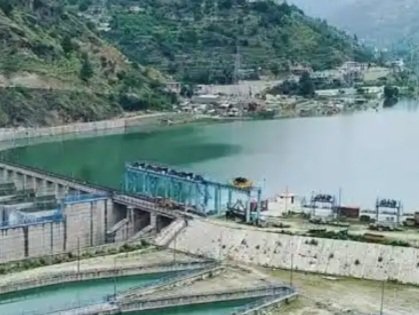
Most of the large hydropower projects executed by CPSUs in Himachal Pradesh were Category-A projects in terms of feasibility, accessibility, geology and economic viability.
These projects were developed on the best available river stretches and carried relatively lower risks.
Such projects generally achieve their break-even point within about 12 years of operation. Once the debt burden is over, revenues begin translating largely into profits.
The Chief Minister is therefore justified in saying that projects which have already recovered their investments should provide a larger share of benefits to Himachal Pradesh.
This is the rationale behind his demand that the free-power slab of 12 per cent should be enhanced in those CPSU projects where break-even has already been achieved.
However, the same economic reasoning appears absent in the government's latest hydro policy decisions.
Most of the projects for which MoUs have recently been signed fall into Category-D in terms of feasibility and economic viability.
These projects remained unattractive to developers despite a policy framework that provided three slabs of free power—12 per cent during the first 12 years of operation, 18 per cent from the 13th to 30th year and 30 per cent beyond 30 years.
Because developers considered these projects financially challenging, the government has now agreed to a uniform free-power obligation of 12 per cent for the entire 40-year period.
The objective is obvious: improve economic viability and attract investment into projects that had remained stalled for years.
The move may succeed in attracting developers. Yet it also exposes the contradiction at the heart of the government's position.
If the state believes that projects should contribute a larger share of benefits after recovering their investments, why should newly allotted projects continue to enjoy the same 12 per cent free-power regime even after they too cross their break-even point and enter the profit-making stage?
One cannot argue for higher returns from mature projects while simultaneously locking future projects into a lower obligation for four decades.
The debate, however, should not be restricted to free-power percentages alone.
The real question is whether Himachal Pradesh is making the best possible use of its remaining hydroelectric resources.
The state still possesses nearly 10,000 MW of unharnessed hydropower potential.
In my view, this remaining potential should be reserved largely for development in the state sector.
This is where both the Congress, the BJP znd entire political leaders need to rise above politics and evolve a long-term consensus.
State-owned hydropower projects offer several advantages. They create employment during construction and operation, build local technical capacity and retain profits within the state economy.
More importantly, power generated by state-sector projects is cheaper because there is no obligation to provide free power.
The absence of this burden can reduce levelised tariffs by 50 paise to ₹1 per unit.
The economic implications are enormous.
A planned state-sector programme for the remaining 10,000 MW of hydro potential has the capacity to generate nearly 20,000 permanent jobs and annual revenues of approximately ₹20,000 crore.
Such a transformation cannot happen overnight. It requires a carefully structured 20 to 25-year roadmap, institutional continuity and bipartisan political support.
Hydropower remains the single biggest opportunity for Himachal Pradesh to achieve genuine economic self-reliance.
To the Sukhu government's credit, it has taken up several long-pending issues with the Centre. The demand for settlement of arrears due from the Bhakra Beas Management Board (BBMB) and the transfer of the Shanan Power Project to Himachal Pradesh are both legitimate claims supported by law and historical precedent.
Similarly, the government's success in convincing the Government of India that Haryana, Delhi and Rajasthan should bear the cost of the power component of the Kishau Dam project is a significant achievement.
The decision could save Himachal Pradesh hundreds of crores of rupees and reduce the state's future financial burden.
These successes demonstrate that when the state negotiates from a position of economic clarity, positive outcomes are possible.
That is precisely why the current contradiction in hydro policy becomes more significant.
Himachal cannot afford to view hydropower merely as a source of free power. It must be viewed as a strategic economic asset capable of shaping the state's future for generations.
The debate should therefore move beyond percentages and concessions. The central issue is ownership, long-term revenue generation, employment creation and economic sovereignty.
The rivers of Himachal have already transformed the fortunes of many states outside its borders.
The challenge before the present generation of policymakers is to ensure that the remaining hydroelectric wealth becomes the foundation of Himachal Pradesh's own prosperity.
#HimachalPradesh #HydroPower #EnergyPolicy #EconomicSelfReliance