
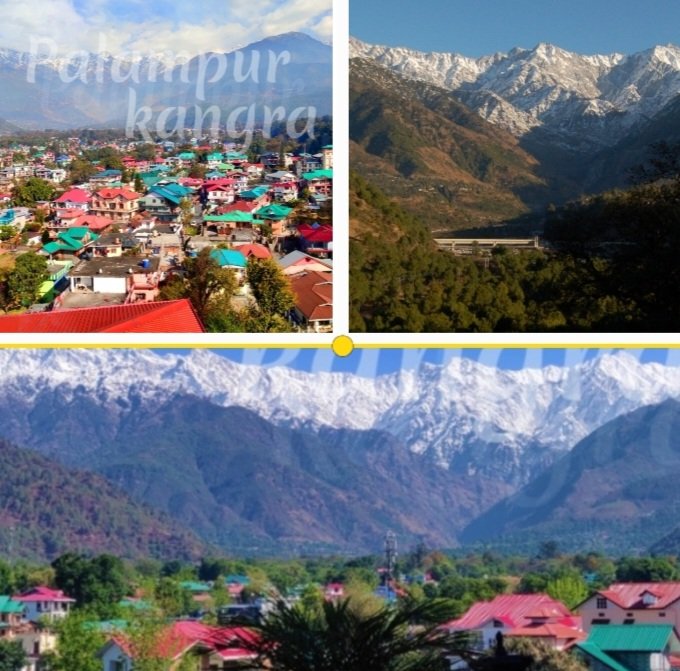
Citizens chart 20-year development roadmap for Palampur; government faces test of funding and delivery
Citizen-led 61-page report accessed by HimbuMail identifies workable solutions for water security, traffic, waste management, tourism, employment and environmental protection; calls for costed projects, departmental coordination and transparent use of public funds*
PALAMPUR/SHIMLA:
Citizens, civil society groups, experts and local institutions have drawn up an ambitious 20-year development roadmap for Palampur, identifying practical solutions to the town’s mounting civic and environmental challenges.
The proposals now place the responsibility on the state government and concerned departments to convert the recommendations into funded projects and ground-level action.
The report, Citizen Inputs for Palampur Development Master Plan 2027–2047, prepared by the Future Master Plan Working Group of the Palampur NGO Group, with technical support from the Himalayan Institute for Transformative Actions (HITA) and contributions from management interns of SPJIMR, Mumbai, has brought together citizen concerns, available data and stakeholder consultations. It is intended as an input to the ongoing statutory Master Plan process, not a substitute for government approval or detailed project reports.
The central proposition is that Palampur's development must build on its identity as a tea, education and research town while protecting its forests, springs, agricultural land, tea gardens, traditional irrigation channels, streams and the Neugal river system. The report argues that roads, water, waste, tourism and environmental management cannot be planned in isolation or confined to municipal boundaries.
Six flagship programmes form the core of the citizen vision. These include a Palampur Mountain Futures Living Lab involving CSIR-IHBT, CSK Himachal Pradesh Krishi Vishvavidyalaya, government agencies, entrepreneurs and communities; a regenerative wellness initiative promoting walking, cycling, nature access and healthy public spaces; and a Youth Enterprise and Livelihoods Mission aimed at training and supporting 25 to 50 young people annually.
The proposed youth programme would open opportunities in regenerative farming, food processing, eco-tourism, local crafts, repair services, digital work, sustainable construction and elder care through training, apprenticeships, mentoring, market access and milestone-based seed grants.
The other flagship initiatives include documenting traditional knowledge of agriculture, water, forests, medicinal plants, food and crafts; a decade-long responsible citizenship programme in schools; and zero-waste demonstration wards linked with water commons and springshed restoration.
Under the waste-management initiative, two to three wards would be selected for source segregation, decentralised composting, dry-waste collection and repair and reuse systems. The report sets a proposed target of achieving 90 per cent household source segregation within 24 months, subject to a baseline assessment and reliable collection arrangements. The water initiative calls for mapping critical springs and recharge areas, scientific monitoring, rainwater harvesting, permeable surfaces and nature-based drainage.
A new economic direction
The report proposes moving beyond conventional tourism towards a broader local economy based on tea, agriculture, research, wellness, food processing and responsible nature-based tourism. It recommends tourism circuits connecting tea gardens, farms, forests, heritage sites, research institutions and Dhauladhar trails, with trained local guides and ecological safeguards.
A proposed tea-tourism circuit would link Wah Tea Estate, Palampur Cooperative and Bir Billing. The report also identifies Saurabh Van Vihar as a potential nature-cum-technology park and suggests visitor programmes around the Nature Awareness Centre at Holta, CSIR-IHBT and CSK HPKV.
For local agriculture and enterprise, it proposes processing facilities for essential oils, herbal products, tea extracts, citrus, kiwi, honey and organic vegetables. An incubation mechanism could help commercialise research from CSIR-IHBT and CSK HPKV, while a common Palampur brand could support Kangra tea, honey and bio-resource products through packaging, GI-related assistance and digital market access.
The report also recommends better access to working capital for homestays and tourism businesses, a Section 118 facilitation cell at the District Industries Centre, and links between graduates of Him Aarambh and Him Utkarsh programmes and government-supported enterprise finance.
Land use, traffic and civic infrastructure*
Unplanned construction, traffic congestion, parking shortages, drainage problems and pressure on natural assets feature prominently in the report. It calls for an audit of earlier development proposals to establish what was completed, partly implemented, abandoned or superseded before fresh allocations are made.
The report recommends using GIS mapping to identify construction on slopes exceeding 30 per cent, development within five metres of nallahs and khads, waste dumping along Maul Khad and Neugal Khad, and vulnerable ecological areas. Deodar forest patches, tea gardens and water bodies should be protected from inappropriate development.
A Tea Garden Conservation Zone, with transferable development rights and restrictions on conversion, has been proposed. The report also suggests examining hill-town-specific building regulations, including a recommended maximum height of 10 metres or three storeys, subject to technical and statutory validation.
For traffic management, it proposes decongesting the old town through pedestrian-friendly streets and peripheral parking near entry points, assessing bypass and alternative connectivity options, improving footpaths and crossings, and examining a ring road after considering terrain, settlements and environmental impact.
The civic infrastructure agenda includes strengthening the Neugal Khad water intake and storage system, improving distribution networks, protecting springs and recharge areas, and reviewing the Bohal Spring arrangement. Drainage and sewerage systems need mapping, maintenance and expansion, with particular attention to untreated wastewater entering streams.
On solid waste, the report calls for urgent attention to the non-functional Material Recovery Facility and composting plant, greater processing capacity, door-to-door collection and source segregation. It identifies a legacy dumpsite footprint of about 3,281 square metres and recommends scientific remediation, boundary demarcation, green buffers and recycling or composting of suitable waste. The existing collection initiatives involving Project Hilldaari, CSIR-IHBT and Aima Panchayat could provide a foundation for expansion.
It also recommends better distribution of parks, public toilets, streetlights, bus stops and community spaces across all 15 municipal wards, along with a coordinated and humane system for managing stray cattle and other animal-related concerns.
Protecting forests, springs and the Neugal basin
The environmental proposals seek to make conservation an integral part of the development plan. The report calls for the Master Plan to be aligned with the next Forest Working Plan, mapping of green spaces and common lands, regeneration of degraded forests and stronger community participation in preventing forest fires.
It recommends mapping springs, recharge zones, traditional kuhls and micro-watersheds, with field verification of water sources. A dedicated Neugal River Basin Plan is proposed from Palampur upstream to at least Menjha, covering land use, forest cover, water quality, waste disposal, extraction, biodiversity and tourism. Awa Khad should also be included in the planning exercise.
The report proposes protecting vulnerable river and stream corridors, restoring traditional water channels and examining payment mechanisms for communities that conserve water sources. Saurabh Kalia Eco Park should have a separate management plan based on nature conservation, visitor limits and waste management.
The crucial question: where will the money come from?
The citizen report recognises that none of these proposals can be implemented without a credible financing plan. It recommends a 20-year planning horizon from 2027 to 2047, backed by a funded five-year action plan and an annually updated pipeline of projects.
The report identifies five broad funding avenues: state and Central government schemes, Municipal Corporation's own revenue, departmental budgets, potential ADB-supported investment, and private or community capital. CSR, philanthropy and technical assistance could support clearly defined public-benefit activities such as baseline studies, GIS mapping, biodiversity documentation, training and pilot projects.
Water supply, sewerage, roads and public infrastructure would primarily require government and departmental funding, with eligible urban and infrastructure schemes explored wherever applicable. Municipal revenue, including water charges and monthly garbage user charges, could contribute towards service operations and maintenance.
Forest restoration, springshed protection and biodiversity documentation could draw on Forest Department budgets, eligible environmental schemes and CSR support. The report also proposes exploring Payment for Ecosystem Services to compensate communities protecting important water sources.
Tourism circuits, homestays, wellness facilities and local experiences could attract private and community investment through transparent partnerships. Agri-processing, herbal products and local branding would require a combination of private enterprise, institutional support and eligible government enterprise schemes. The report cautions that essential municipal services should not depend on optimistic tourism revenue projections.
A reference to an overall ₹600 crore ADB-supported project appears in the report's meeting notes. However, it explicitly states that the amount available to Palampur is unverified. No component-wise allocation or confirmed funding commitment is established. The project report, financing terms, covered components, procurement arrangements and safeguards would have to be disclosed before the amount could be counted as a source of finance.
₹23.4 crore in grants carried forward
The report also raises questions about the utilisation of funds already available to the Municipal Corporation. It records grants of ₹66.5 crore during 2023–24 to 2025–26, against expenditure of ₹58.2 crore, and ₹23.4 crore carried forward at the end of 2025–26. It further states that only 51 per cent of available funds were spent during 2025–26.
The figures underline the need to improve project preparation, technical capacity, departmental coordination and timely execution. The report argues that unspent grants should be converted into completed public projects through a pipeline of costed and approved proposals.
It recommends keeping capital expenditure, recurring operation and maintenance costs, and studies or pilot projects separate. Each proposed project should carry an estimated cost, identified funding source, responsible agency, timeline and measurable outcome. Priorities should be assessed against public-health needs, ecological risks, number of beneficiaries, project readiness, affordability and equity.
From citizen proposals to government action
The report proposes a phased implementation process. During the first three months, departments should establish a coordination mechanism, collect existing planning documents and undertake baseline assessments. Over the following three to 12 months, audits of water, waste, traffic, land use and green spaces should be completed, along with consultations and preparation of project concepts and DPRs.
Years two and three would focus on pilots, statutory integration of agreed proposals and multi-year funding. Successful initiatives could be expanded during years four and five, with periodic reviews and a public scorecard to track progress.
For this purpose, the report calls for a formal coordination platform involving the Municipal Corporation, Town and Country Planning Department, Forest Department, Jal Shakti, PWD, Tourism, Revenue authorities and surrounding Gram Panchayats. It also recommends a shared GIS repository, clarity on land ownership and permissions, and active participation by CSIR-IHBT, CSK HPKV and other educational and research institutions.
Quarterly coordination meetings are proposed. The November–December meeting should identify projects for the following year's budget process, while an April meeting should coordinate implementation after budget allocations. The TCP Department should also clarify the planning boundary, current stage of the Master Plan, consultation schedule and formal route for citizen submissions.
The citizen initiative has brought together proposals on the town's economy, infrastructure, natural resources and governance. Its recommendations now need technical scrutiny, statutory approvals, detailed costing and firm budget commitments. The government must disclose which proposals it accepts, which departments will execute them, how much each component will cost and where the funds will come from.
The larger test for Palampur is whether citizen participation can move beyond consultation and become a measurable part of public planning, budgeting and implementation. The citizens have placed workable ideas on the table; the responsibility to fund and deliver them now rests with the government.
#Palampur #HimachalPradesh #CitizenParticipation #SustainableDevelopment