

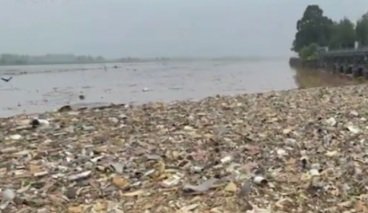
BBN Industries, Himachal Government Face FIR Over Alleged Pollution of rivers/khads feeding Sutlej System. But AAP remains indifferent to pollution being created by its industries in Punjab...
Baddi/Rupnagar, Punjab:
Aam Aadmi Party (AAP) MLA and local panchayat representatives in Rupnagar have lodged an FIR against industries operating in the Baddi-Barotiwala-Nalagarh (BBN) industrial area and the Himachal Pradesh government, alleging that untreated industrial effluents, toxic waste and other pollutants are being discharged into the river system and ultimately contaminating water bodies in downstream Punjab.
But the social media campaign launched by Aam Aadmi Party representatives and MLAs alleging pollution from industries in the BBN area presents a one-sided picture of the issue.
Pollution in the Sutlej river system needs to be assessed across the entire basin rather than attributing the problem primarily to industries in Himachal Pradesh.
The Punjab State Pollution Control Board should examine pollution sources in a holistic manner, including industrial and urban centres along the Sutlej in Punjab such as Ludhiana and Jalandhar. The impact of industries and other activities downstream cannot be overlooked while targeting the BBN industrial belt.
At the same time, environmental concerns in BBN cannot be dismissed. Studies, including research by IIT Mandi, have reported groundwater contamination within parts of the industrial belt, raising concerns over its suitability for human consumption.
The need is for scientific, basin-wide monitoring and accountability of pollution sources in both Himachal Pradesh and Punjab, rather than a one-sided political or social-media campaign.
The AAP representatives have alleged that pollution originating from the BBN industrial belt is flowing downstream towards the Sutlej river system, affecting local water bodies and groundwater sources in Rupnagar district.
They claimed that the contamination has made water unfit for drinking and domestic use and is also affecting farmers dependent on these sources for irrigation.
The allegations have raised questions over the effectiveness of pollution-control mechanisms in the BBN industrial area and the enforcement of mandatory effluent-treatment and anti-pollution measures by industries and regulatory agencies.
The Punjab representatives have argued that there is little industrial activity upstream within Rupnagar district that could account for the scale of pollution being reported in the downstream water system. They have therefore pointed towards industrial activity in the BBN region of Himachal Pradesh as a potential source requiring detailed investigation.
They have demanded that pollution-control regulators conduct a comprehensive assessment of the river system to determine what industrial effluents, toxic substances and other pollutants are entering the waterways. They have also sought testing of river water, groundwater and other affected water bodies to establish the nature and extent of contamination.
The representatives said the Himachal Pradesh State Pollution Control Board and other concerned agencies must examine whether industries are complying with statutory requirements relating to effluent treatment, waste disposal and discharge of treated water.
They have further demanded that industries found violating environmental norms should be held accountable and that government agencies responsible for monitoring and enforcement should also face scrutiny if regulatory failures are established.
The issue has assumed significance as communities downstream depend heavily on the river and groundwater systems for drinking water, domestic requirements and agriculture. Any prolonged contamination, they said, could have consequences for public health, farming and the availability of usable water.
The Punjab representatives have said they will pursue the matter with the concerned authorities and take the issue to the appropriate forums until corrective measures are implemented and further discharge of untreated or toxic waste into the river system is stopped.
The responsibility, they maintained, ultimately rests with the Himachal Pradesh government and its regulatory agencies to ensure that industrial development in the BBN region does not come at the cost of downstream communities and the environment.
They have also demanded that the pollution regulators come out publicly with their findings, identify the sources of pollutants entering the river system and fix responsibility on industries as well as government agencies wherever violations or regulatory lapses are established.
The allegations, however, will need to be established through an independent investigation, scientific water-quality testing and regulatory findings. AAP so far remains partisan in dealing with pollution in Punjab. AAP MLAs must introspect.
#SutlejPollution #BBNIndustries #HimachalPradesh #Punjab