


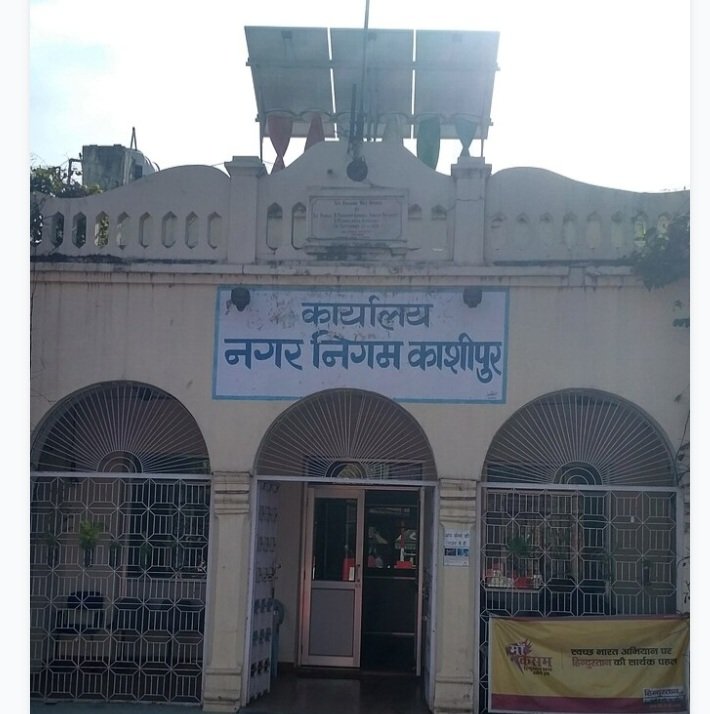
Kashipur’s Swachh Survekshan Turnaround Holds Lessons for Uttarakhand’s Other Cities
From last among Uttarakhand’s urban centres in 2021 to the state’s First Swachh City in 2025–26, Kashipur’s five-year journey puts the spotlight on municipal accountability and waste management
DEHRADUN: Kashipur’s remarkable turnaround in the Swachh Survekshan rankings offers a lesson in urban governance for other cities in Uttarakhand, particularly Dehradun, which continues to struggle to make a mark in the national cleanliness rankings.
A fact sheet released by Dehradun-based Social Development for Communities (SDC) Foundation, prepared by Anoop Nautiyal and Praveen Upreti, traces Kashipur’s five-year journey from the bottom of the state rankings to becoming Uttarakhand’s First Swachh City in the 2025–26 awards.
The assessment underlines how sustained improvements in municipal waste management, monitoring and citizen participation can change a city's cleanliness performance.
The Swachh Survekshan 2025–26 awards were announced on November 11 and presented by President Droupadi Murmu. Kashipur’s recognition is particularly significant when viewed against its earlier performance.
In 2021, it ranked 339th among 369 cities in the 1–10 lakh population category, finishing last among six Uttarakhand cities assessed.
In 2022, it stood at 304th nationally and seventh among eight state cities. Its position slipped further to 348th among 446 cities in 2023, again placing seventh in Uttarakhand.
In 2024–25, Kashipur ranked 372nd among 820 cities in the 50,000–3 lakh population category, finishing eighth among 15 Uttarakhand cities.
Its emergence as the state's leading Swachh City in 2025–26 marks a substantial reversal of its earlier record.
Anoop Nautiyal said the achievement should not be viewed merely as another award but as an example of how a city can overcome years of poor performance through institutional improvements.
He urged other urban local bodies to examine what changed in Kashipur, how its municipal systems improved and which interventions could be replicated elsewhere.
The fact sheet identifies GPS-based monitoring of waste collection vehicles, introduced in December 2024 across all 40 wards, as one of the significant interventions.
Supported by a dedicated control room, the system enables real-time tracking of collection vehicles and their designated routes. With Kashipur generating approximately 60 tonnes of waste daily, such monitoring can improve collection efficiency and fix accountability for missed routes.
Another proposed intervention is a waste-processing facility involving an investment of approximately ₹14.54 crore, intended to serve Kashipur, Jaspur and Mahuadabra.
The 4-Bin Pathshala initiative launched in Ward 20 in October 2026 is another effort to promote segregation of wet, dry, domestic hazardous and sanitary waste at the household level.
Nautiyal emphasised that cleanliness cannot be achieved through periodic campaigns alone. Reliable door-to-door collection, GPS-enabled monitoring, scientific waste processing, household-level segregation and sustained public participation must become integral to municipal functioning.
The Foundation has urged cities such as Dehradun, Haridwar, Haldwani, Roorkee and Rishikesh to study Kashipur’s experience and identify interventions that can be adapted to their local conditions.
However, Dehradun’s absence from the latest recognition has brought the performance of the state capital’s municipal administration into sharper focus.
As Uttarakhand’s largest city and administrative headquarters, Dehradun has a particular responsibility to demonstrate better urban management. Its continued inability to secure comparable recognition raises questions about the effectiveness of its sanitation planning, waste collection and municipal accountability.
While the detailed overall results are awaited, the Nagar Nigam Dehradun needs to undertake a comprehensive review of its performance, identify persistent gaps and establish measurable targets for improvement.
The contrast with Kashipur is difficult to ignore: a city that was once among the poorest performers in the state has demonstrated that a turnaround is possible within five years.
The SDC Foundation congratulated Kashipur’s citizens, municipal authorities, elected representatives and sanitation workers, crediting their collective contribution to the achievement.
Its assessment places the responsibility on other urban local bodies to move beyond cleanliness drives and make sanitation a measurable, everyday municipal priority.
Kashipur has demonstrated that rankings can change. The larger question is whether Uttarakhand’s other cities, particularly Dehradun, are prepared to learn from its experience.
#SwachhSurvekshan #Kashipur #Dehradun #Uttarakhand