

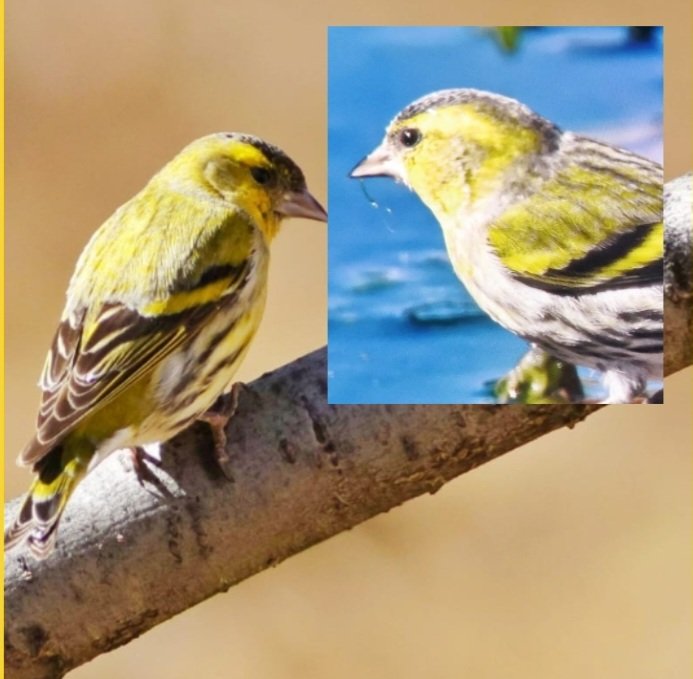
Rare Eurasian Siskin Spotted in Kinnaur Sanctuary, Marking Third Record for Himachal Pradesh
SHIMLA / KINNAUR — Wildlife enthusiasts and conservationists across Himachal Pradesh are celebrating a rare ornithological milestone following the sighting of the Eurasian Siskin (Spinus spinus) in the Rakchham–Chitkul Wildlife Sanctuary. The discovery marks the first-ever documented record of the elusive finch in Kinnaur district and only the third confirmed sighting in the state.
The lively, yellow-green finch was first photographed on November 25, 2026, by visiting birder Srikantha R.G. of Mysore, Karnataka, alongside Himachal-based birder Ankush Thakur. For Srikantha, who had previously documented 1,192 bird species across India, the encounter in Rakchham marked a personal milestone as his 1,193rd species in the country.
"The Eurasian Siskin is a difficult species to locate in India," Srikantha said, expressing his delight at finding the birds in good numbers and capturing clear photographic evidence in the sanctuary.
Confirming the presence of the flock, a Forest Department field team from the Sarahan Wildlife Division—comprising Rakchham Block Forest Officer Santosh Kumar Thakur and Van Mitra Alpna Negi—recorded the species again at the same sanctuary on November 26.
A Rare Visitor to the Western Himalaya
Belonging to the finch family (Fringillidae), the Eurasian Siskin is easily distinguished by the male's bright yellow-green plumage, black crown, and black bib, while females display duller tones with heavily streaked underparts. Native to coniferous and mixed woodlands across central and northern Europe and eastern Asia, the agile seed-eater undertakes seasonal movements southward during winter.
In the Indian Himalaya, however, its appearances are sparse and irregular, making every verified record vital for mapping its migratory ecology. According to ornithological records highlighted by noted birder Dr. Abhinav Chaudhary:
* First State Record (January 25, 1980): A flock of 21 birds was observed in Solang Valley near Manali.
* Second State Record (November 16, 2021): A lone male was photographed at Gushaini in the ecozone of the Great Himalayan National Park, Kullu district.
Beyond Himachal Pradesh, scattered sightings have been reported from Ladakh, Jammu and Kashmir, and Gilgit-Baltistan, including a documented sighting in Pahalgam, Kashmir, earlier in March and April 2026.
Citizen Science Meets Forest Conservation
The back-to-back sightings have drawn praise from senior wildlife officials, who credited the synergy between visiting citizen scientists and local forest personnel.
Smt. Priti Bhandari, IFS, Conservator of Forests (Wildlife), Shimla, congratulated the Wildlife Range Sangla team under DCF Wildlife Shimla, noting that systematic field observations are essential to uncovering the rich biodiversity of protected areas.
Echoing her sentiments, Mr. Ashok Negi, IFS, DCF Wildlife Sarahan, commended Range Forest Officer Wildlife Sangla and the frontline staff—including BFO Rakchham Santosh Thakur, BFO Sangla Wildlife Gopal Negi, and Van Mitra Alpna Negi—alongside birders Srikantha R.G. and Ankush Thakur for their contributions to state avian records.
For Ankush Thakur, the find underscores the untapped ecological potential of the region. Calling the Rakchham–Chitkul Wildlife Sanctuary a "paradise for birders," he emphasized that sustained seasonal monitoring and close collaboration between wildlife enthusiasts and the Forest Department will continue to bring new Himalayan treasures to light.