Engineers’ Day should be more than a ceremonial remembrance of Bharat Ratna Sir M. Visvesvaraya.
At a time when artificial intelligence is reshaping economies, industries and governance, India’s engineering fraternity must ask a more fundamental question: Are engineers merely executing technology, or are they prepared to shape India’s technological future?
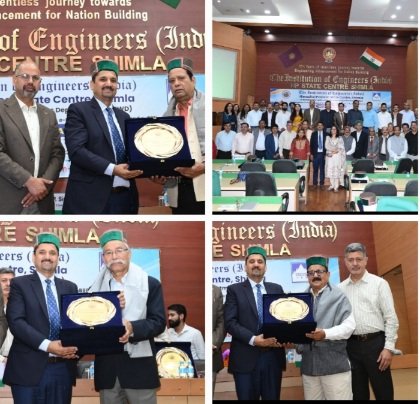
This question assumes particular importance as the Institution of Engineers (India), Himachal Pradesh State Centre, celebrated Engineers’ Day at Nigam Vihar, Shimla, on September 15, with the national theme “Engineering Excellence for a Sustainable and Technologically Sovereign India.”
The function brought together engineers from different generations and disciplines.
Chief Guest Er. N.P. Singh, Engineer-in-Chief, HPPWD, addressed the gathering, while Er. Anita Kathuria, Chief Engineer, PMGSY, spoke about the challenges of engineering in Himachal Pradesh, where steep terrain, landslides, heavy rainfall and snowfall demand safer and more resilient infrastructure.
The occasion also recognised the contribution of senior engineers, with Er. Sonam Rinchen Negi, Engineer-in-Chief, HPPWD (Retd.); Er. S.D. Rattan, Former Director, HPSEBL; and Er. Dinesh Kumar Kashyap, Former CEO-cum-Secretary, HIMUDA, being felicitated. Er. Pankaj Dadwal, Former Chairman of the IEI and former Chief Engineer, HPSEBL, and Er. Ravi Bhushan Vasishta, Assistant Engineer, Municipal Corporation Shimla and IEI member, were also associated with the programme.
But the occasion should also become an opportunity for some serious introspection.
India has no shortage of engineers. What it needs is a stronger engineering voice.
For decades, the public image of engineers has largely been associated with roads, bridges, buildings, power projects, water supply and other physical infrastructure.
These remain critically important, particularly in a mountainous state like Himachal Pradesh. But engineering today has moved far beyond concrete and steel.
AI, robotics, automation, advanced materials, cybersecurity, semiconductor technology, renewable energy, drones, climate technology and data-driven governance are creating an entirely new technological landscape.
Engineers cannot afford to remain confined to departmental files, conventional procedures and narrow professional silos.
This is where technological sovereignty acquires real meaning.
A technologically sovereign India cannot merely be a large consumer of technologies developed elsewhere. It needs engineers capable of designing, adapting, questioning, improving and ultimately creating technologies suited to India's own needs.
The engineering fraternity therefore needs to come out of its tunnel vision.
Engineers understand systems. They understand risk. They know why infrastructure fails, why projects overrun, why technology does not reach the last mile and why an apparently attractive solution can become environmentally or financially unsustainable.
That knowledge must enter the larger public policy debate.
Engineers must become technocrats with a public purpose — professionals willing to question outdated practices, challenge inefficient systems and offer technology-led solutions rather than merely implement decisions taken elsewhere.
The message from the Shimla function itself was significant. Er. N.P. Singh stressed professional ethics, technical excellence, innovation, public service and the adoption of modern and environmentally sustainable technologies.
These should not remain Engineers’ Day vocabulary. They should become the profession's working culture.
The age of AI makes this transition unavoidable. AI will change engineering itself. The engineer of tomorrow will work alongside intelligent machines, algorithms, autonomous systems and data platforms.
The advantage will belong to those who combine engineering fundamentals with technology, creativity, ethics and an understanding of society.
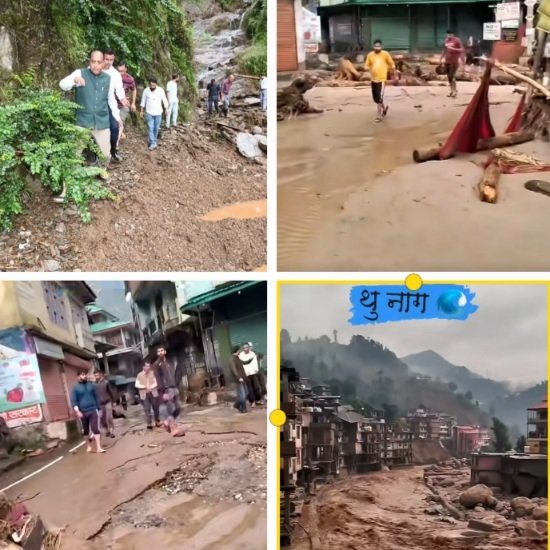
For Himachal Pradesh, the challenge is even more pronounced. Landslides, extreme rainfall, fragile mountain ecology, road connectivity, water security, hydropower and disaster resilience require solutions designed specifically for the mountains. Conventional engineering approaches cannot always answer unconventional mountain problems.
The Institution of Engineers and its State Centre can therefore play a much bigger role — not merely as a professional body organising annual observances, but as a think tank for Himachal's technological future.
Engineers should be at the table when policies on AI, climate resilience, urbanisation, infrastructure, energy, water and disaster management are framed.
The real tribute to Visvesvaraya is not another ceremony. It is to revive the spirit he represented — competence, innovation, integrity and nation-building.
Engineers’ Day 2026 should become a turning point: from infrastructure engineers to nation-building technocrats; from technology users to technology creators; from departmental silos to interdisciplinary problem-solving.
India has entered the AI age. Its engineers must not merely adapt to the transformation.
They must lead it.This also aligns with IEI's own 2026 national framing, which explicitly places AI-driven solutions, digital transformation and technological sovereignty alongside sustainable engineering.
#EngineersDay #AIIndia #TechnologicalSovereignty #EngineeringExcellence