
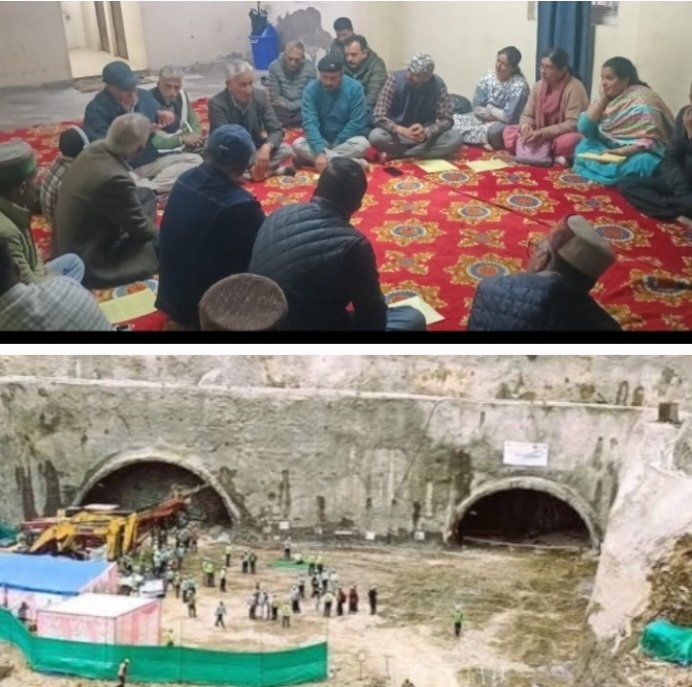
HOLLOWED OUT: HOW NHAI’S SECRET TUNNEL BLASTING PUSHED SHIMLA TO THE BRINK
SHIMLA:
Beneath the steep, tightly packed ridges of Sanjauli and Bhattakufer, thousands of residents go to bed listening for the shudder of the mountain.
Over the past weeks, that shudder has left behind jagged, yawning cracks through concrete floors, buckled retaining walls, and tilted multi-storey buildings.
Now, a damning collision of administrative crackdowns and technical disclosures has put the National Highways Authority of India (NHAI) and its private construction cartels firmly in the dock.
Faced with mounting panic and a formal memorandum submitted by the Four-Lane Affected Committee (फोरलेन प्रभावित समिति), Shimla Deputy Commissioner Anupam Kashyap has clamped down on the project, ordering a high-level joint inquiry panel to storm the sites on October 22.
The move follows explosive allegations by residents that private contractors have been executing clandestine, underground excavation and blasting under the cover of darkness, in direct violation of previous stop-work orders.
The Secret Beneath the Slabs: A Disregard for Geology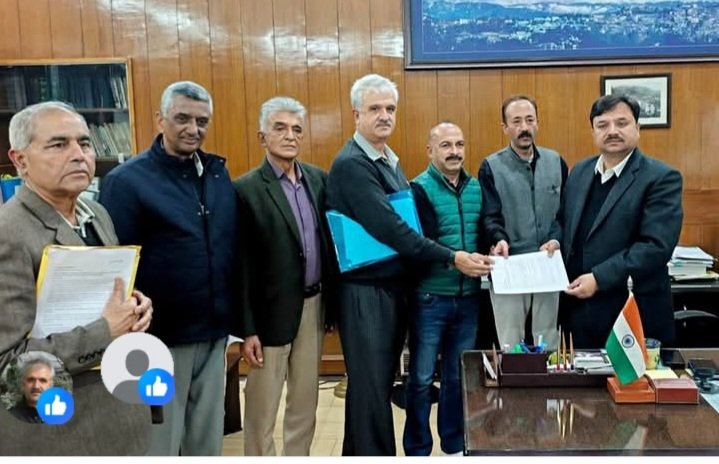
While NHAI has publicly downplayed the link between its four-lane tunnel works and the structural fractures scarring the hillsides above, technical evaluations and Geological Survey of India (GSI) inspection reports reveal a project flirting with disaster:
Rock Reduced to Rubble: GSI field investigations at Package II tunnel faces revealed rock mass conditions officially designated as Class V (“Very Poor”), clocking an abysmal Rock Mass Rating (RMR) of 14 and a rock tunneling quality index (Q-value) of just 0.036.
Fractured slates, phyllitic quartzites, and sheared fault seams have left the excavated crown prone to deformation and squeezing.
Drilling Beneath Living Rooms: Standard engineering norms demand substantial rock cover when tunneling beneath urban settlements, yet documents show sections near T5 plunge to an overburden of an astonishing 5 to 12 metres.
Along parts of T4, vertical cover drops to a mere 14 metres directly underneath multi-storey homes.
A Recipe for Ground Loss: Bound by the active Jutogh and Jaunsar tectonic thrust belts, these shattered strata lose their lateral confinement the moment blasting tears through them.
As blast-induced vibrations rattle the hill and underground water courses shift, ground loss migrates straight up into building foundations.
A Disaster Foretold, Repeatedly Ignored
The cracks appearing through Sanjauli and Shanti Vihar are not isolated anomalies; they are the latest links in an unheeded chain of catastrophic red flags.
In December 2025, Bhattakufer saw severe road subsidence that nearly swallowed moving transit, where GSI directly flagged tunnel vibrations alongside water leaks and urged an end to blasting.
By January 2026, widening fractures ripped through a six-storey building in Chalonthi, forcing families onto the street with their belongings.
Yet, rather than undertaking transparent, conservative ground-support modifications and comprehensive monitoring, work pressed on until public anger boiled over into the DC’s office this week.
The October 22 Reckoning
DC Kashyap’s newly constituted joint investigative panel is headed jointly by both Additional District Magistrates (ADMs) and includes the Sub-Divisional Magistrate (SDM, Shimla Rural), the Executive Engineer (XEN, PWD Kasumpti Circle), and the Tehsildar (Shimla Rural).
The task force has been ordered to execute an aggressive, on-site inspection on October 22 to verify whether construction norms were systematically breached, uncover evidence of clandestine nighttime operations, and assess the immediate physical threat to residents.
Simultaneously, an emergency technical team from IIT Roorkee has completed preliminary geotechnical surveys across the fractured buildings, with their definitive safety audit due within days—a report that will determine whether the tunneling alignment must be radically redesigned, realigned, or shut down entirely.
"No More Empty Assurances": The Citizens' Ultimatum
The Four-Lane Affected Committee has issued a ten-point charter of demands that leaves no room for corporate evasion.
"We are not opposing connectivity," the committee affirmed, "we are demanding that development must not endanger people’s lives and homes", Saud Govind Charanta, a member who live at Bhattakufer.
Their demands include a permanent ban on blasting in low-cover zones, an immediate end to project secrecy through the mandatory release of NHAI's Detailed Project Report (DPR) and borehole data, and legally binding compensation packages for displaced homeowners.
Most crucially, they demand the fixing of direct criminal and institutional liability on NHAI officers and contractors who turned a blind eye to GSI’s warnings.
As the administration prepares its October 22 raid, the spotlight is now locked on NHAI: explain how multi-ton machinery and explosive charges were detonated beneath a 5-metre sliver of fractured hill—or answer for the catastrophic collapse of Shimla’s fragile slopes.