
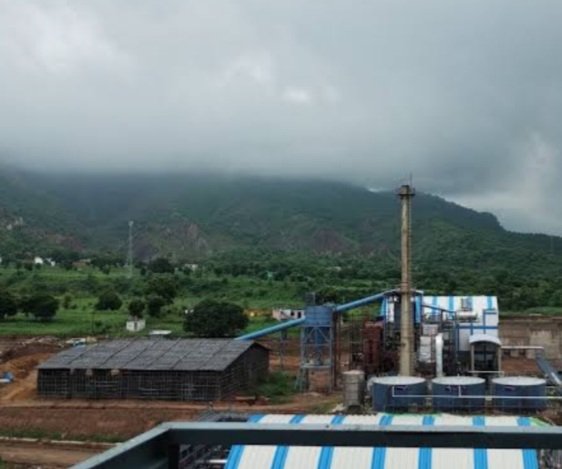
Nalagarh Pollution Battle Spreads Across Villages as High Court Slaps Notice on Kinvan, Seeks Answers. High Court gives company an opportunity to hear its side of the story.
Shimla/Nalagarh, August 12: The environmental battle against pharmaceutical unit M/s Kinvan Private Limited at Plasara in Nalagarh has now reached the Himachal Pradesh High Court, with pollution grievances spreading across Seri, Sodi, Bhomiya, Chuhuwal, Datowal, Ghansot, Radiyali, Jhidiwala, Gol Jamala, Behli, Nangal, Suneth, Bhatian, Rakh Ghansot, Plasara, Johrian and Preetnagar.
The growing opposition has brought together 11 Gram Panchayats, Nalagarh Municipal Council, the Nalagarh Bar Association and 857 residents, creating a broad-based challenge over alleged air pollution, foul-smelling emissions, contamination of water sources and excessive groundwater extraction.
The Himachal Pradesh High Court has responded at the very first hearing by issuing notice to the company and ordering an immediate multi-agency fact-finding exercise into the allegations.
A Division Bench comprising Chief Justice G.S. Sandhawalia and Justice Bipin C. Negi, while hearing CWPIL No. 90 of 2026, Himparivesh Paryavaran Sanrakshan Sanstha versus State of Himachal Pradesh and others, on August 11 directed the Secretary, District Legal Services Authority, Solan, to inspect the premises along with officials of the Himachal Pradesh State Pollution Control Board, Ground Water Authority and Jal Shakti Vibhag.
The Court has specifically sought reports on the company's borewells, groundwater extraction, water quality, alleged discharge of industrial effluents into adjoining water bodies and air pollution.
The case has assumed significance because the allegations are no longer confined to one village or one group of residents, but have been repeatedly raised by elected local bodies and residents across a larger belt surrounding the industrial unit.
Gram Panchayat Radiyali was among the first to formally record the grievance, with its resolution of April 8, 2025 alleging excessive air, noise and water pollution, contamination of natural water sources and deterioration in drinking-water quality.
The Radiyali resolution referred specifically to villages including Seri, Sodi, Bhomiya, Chuhuwal, Datowal, Ghansot and Radiyali, where residents allegedly complained of foul-smelling fumes and gases, particularly during night hours.
Residents in these areas alleged that the smell was so strong that they were unable to sleep properly and were forced to keep doors and windows shut.
The complaints also expressed apprehension over possible respiratory ailments, skin problems, cardiac complications and other health consequences from prolonged exposure, although these concerns remain allegations requiring factual and scientific verification.
The grievances subsequently spread to adjoining Panchayats, with Dhang Nihali, Dhang Uparli, Riya, Mittiyan, Rajpura, Ramshahar, Kheda, Suneth, Koidi and Gol Jamala also passing resolutions between June and July 2026 raising concerns over air pollution, foul smell, water sources and the impact of industrial operations on daily life.
The geographical spread of the complaints has become a significant feature of the PIL, as several Panchayats raising the issue do not host the industrial unit within their own territorial limits.
The petition separately records complaints from Jhidiwala, Gol Jamala, Behli, Seri, Datowal, Radiyali, Nangal, Suneth, Bhatian, Rakh Ghansot, Plasara, Johrian and Preetnagar, where residents have alleged breathing difficulties, eye irritation, persistent coughing and sore throats.
Residents from these areas have also complained that the alleged smell enters their houses, preventing them from sitting outdoors and forcing them to keep windows and doors closed.
Some residents have alleged that even clothes cannot be left outside to dry because of the smell, while others have claimed that they cannot comfortably go out for morning walks.
A communication submitted to the authorities in February 2026 alleged that residents could not open their windows because of the conditions outside, while another complaint claimed that a foul smell entered homes at around 2.40 am, waking residents and causing breathing difficulty.
The petition also relies upon the sworn statement of Kuljeet Singh, Up-Pradhan of Gram Panchayat Radiyali, who stated that he reached the Soudi Gurudwara at around 11 pm after residents called him and personally experienced the alleged foul smell spreading through the area.
The alleged pollution controversy has meanwhile reached Nalagarh town, with the Nagar Palika Parishad, Nalagarh, passing a unanimous resolution on January 16, 2026, alleging discharge of industrial effluent into the Chikni Nadi/Khad and pollution from the unit.
The Municipal Council has raised particular concern over the Chikni Khad because of its connection with the drinking-water supply of Nalagarh.
The civic body sought scientific and chemical testing of drinking-water sources and demanded stringent preventive and punitive action if industrial contamination was established.
The alleged discharge into the Chikni Khad has now been placed directly under the High Court's scanner, with the inspection team specifically directed to examine water quality and alleged discharge of effluents into adjoining water bodies.
The Nalagarh Bar Association has also joined the growing opposition, unanimously passing a resolution on July 13 expressing serious concern over the alleged pollution and its impact on public health and the environment.
The Bar Association has raised concerns for residents as well as advocates, litigants and judicial officers because of the proximity of the industrial unit to the new Court Complex at Nalagarh.
The lawyers have sought immediate inspection and action under environmental laws, including closure of the unit if violations are established.
The scale of the public mobilisation is further reflected in protest documents carrying the names, addresses, contact details and signatures of 857 residents from the affected area.
The petition has also placed before the Court repeated representations to the Chief Secretary and other authorities, public meetings, protests and communications seeking action against the alleged pollution.
The groundwater issue has added another serious dimension to the case, with the petitioner alleging that the Ground Water Permit authorised only one borewell and extraction of a maximum of 6.71 lakh litres per day, while actual extraction was allegedly around five times that quantity.
The High Court has not treated the allegation of excessive extraction as an established violation and has instead ordered that the borewell and groundwater issue be independently verified.
The Court's intervention has brought four major aspects of the controversy under immediate scrutiny—air pollution, groundwater extraction, water quality and alleged discharge of industrial effluents.
The case has consequently moved far beyond a dispute between an industrial unit and a section of villagers, with Panchayats, the Municipal Council, the Bar Association and hundreds of residents placing their concerns before the Court.
The High Court has, however, not prejudged the allegations against Kinvan Private Limited, and the company will have an opportunity to respond to the claims after receiving notice.
What makes the August 11 order significant is that the Court has chosen to establish facts on the ground at the notice stage itself rather than simply awaiting departmental replies and counter-affidavits.
The DLSA-led inspection, involving the Pollution Control Board, Ground Water Authority and Jal Shakti Vibhag, is now expected to establish the factual position regarding the allegations raised by residents and local institutions.
The matter has been fixed for September 21, 2026, when the inspection findings and responses are expected to provide the next direction in the escalating environmental battle.
For residents of Seri, Sodi, Bhomiya, Chuhuwal, Datowal, Ghansot, Radiyali, Jhidiwala, Gol Jamala, Behli, Nangal, Suneth, Bhatian, Rakh Ghansot, Plasara, Johrian and Preetnagar, a prolonged series of complaints has now entered a new phase.
The alleged pollution battle that began in villages and spread through Panchayat resolutions, civic intervention, public protests and the Bar Association has finally reached the High Court, which has now put the allegations under direct judicial scrutiny and demanded answers.