
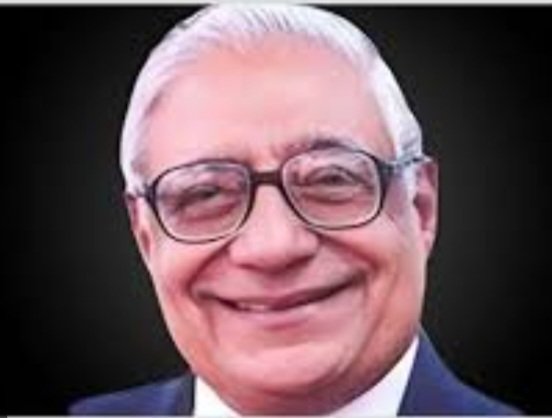
H.K. Dua: The Editor Who Stood Firm for Truth. A HimbuMail Tribute to a Veteran.
SHIMLA/CHANDIGARH: Veteran journalist and former Editor-in-Chief of The Tribune, Hari Krishan Dua, passed away on March 4, 2026, at the age of 88.
With his passing, Indian journalism has lost one of its most respected editors — a man known for integrity, courage and a unshakable commitment to truth.
Beyond the newsroom, HK Dua played several important roles in public life.
Apart from being Editor and Editor-in-Chief of leading newspapers such as Hindustan Times, The Indian Express and The Tribune, he also served the government and the nation in key diplomatic and advisory positions.
Dua worked as Media Adviser to Prime Ministers H. D. Deve Gowda and Atal Bihari Vajpayee, bringing his deep understanding of media and public policy into governance.
Later, he represented India abroad as Ambassador to Denmark. He was also nominated to the Rajya Sabha, where he contributed to debates on foreign affairs and national security.
For his distinguished contribution to journalism and public life, he was honoured with the prestigious Padma Bhushan.
Dua belonged to a generation of editors who believed journalism was a public duty. He spoke clearly. He wrote fearlessly. And he expected the same from reporters working under him.
In a moving tribute published in Punjab Today, senior journalist A. J. Philip described him as “a byword for integrity” and a fearless editor whose life reflected the finest traditions of Indian journalism.
Philip wrote that with Dua’s passing, Indian media has lost not only a formidable editor but also a man whose career intersected with many major moments in the country’s public life.
Philip also recalled one defining moment of Dua’s editorial courage — the powerful editorial titled “National Shame” written on the day of the Babri Masjid demolition in 1992.
The strongly worded editorial reflected Dua’s conviction at a time when the country was deeply shaken by the event. In later years, however, journalists and commentators from the right-leaning school of thought disagreed with that position, illustrating how Indian journalism itself has evolved into sharply divided ideological camps.
As Editor-in-Chief of The Tribune between 2003 and 2009, Dua strengthened the newspaper’s credibility and encouraged young reporters to pursue serious and meaningful stories.
I consider myself lucky to have worked under him during that period while reporting from the central region of Himachal Pradesh — covering districts like Mandi, Kullu and Lahaul and Spiti.
In 2007, I carried out a series of reports on the growing menace of drug abuse in Himachal Pradesh.
The stories exposed how drugs were slowly destroying families in the hills. The reports drew strong attention from policymakers and enforcement agencies, including the Narcotics Control Bureau and the police, who later intensified efforts to curb the menace.
Behind such reporting stood an editor who trusted his reporters.
H.K. Dua was remarkably accessible. Even a young reporter could walk into his office and discuss a story idea.
If he found substance in it, he would encourage the newsroom to pursue it. He believed good journalism could come from the ground — from reporters who were close to people and real issues.
What set him apart was his grace and humanity. He valued originality, respected hard work and never hesitated to appreciate a reporter who produced a strong story.
I still remember meeting him during his visits to Himachal Pradesh. He would sit easily over a simple cup of tea, listening carefully, asking questions and encouraging new ideas.
Those conversations revealed the real editor behind the powerful bylines — calm, thoughtful and deeply committed to the craft of journalism.
Today the profession faces a different challenge. Fake news travels faster than facts. Artificial intelligence and social media have created a flood of so-called “content creators”.
Many who cannot even draft a simple application now claim to be journalists, producing artificial or unverified content in the name of journalism.
Yet the essence of journalism remains unchanged — the search for truth.
As Sundar Pichai has noted while discussing artificial intelligence, technology may transform media, but it cannot replace the ethics, experience and courage of real journalists.
That was the creed H.K. Dua believed in — report honestly, write fearlessly and never compromise with truth.
As long as there are journalists who still care about facts and courage, the legacy of H.K. Dua will continue to live on.
May his soul rest in peace.