Ladakh Pushes ₹56 Crore Check Dam Plan to Secure Water for Drinking and Irrigation
LEH, AUGUST 23:
Ladakh is looking to turn its seasonal snow and glacier melt into a more dependable source of water for drinking and agriculture, with the Union Territory Administration proposing a ₹56 crore-plus programme for 36 check dams across Leh and Kargil.
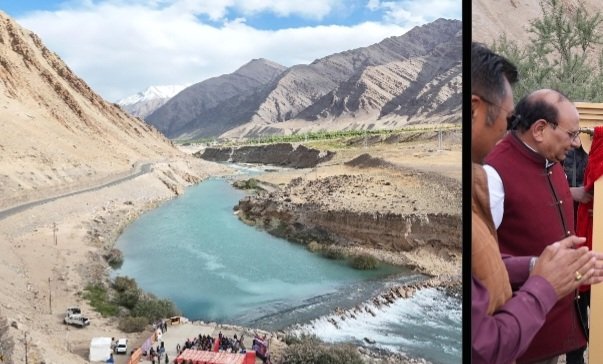
The proposal submitted to the Union Ministry of Jal Shakti envisages seven rock check dams on the Sindhu River in Leh and 29 RCC check dams/weirs on the Suru River in Kargil. The projects are aimed at storing water during periods of high flow and making it available for agriculture and other local requirements during the dry months.
The projects are expected to irrigate more than 18,600 acres of agricultural land and help capture a larger share of the snow and glacier melt that currently flows out of the region. The Administration says less than one per cent of this flow is presently being utilised.
Lieutenant Governor of Ladakh said the proposal is aimed at creating long-term water and agricultural security for the region.
“The Administration has taken a monumental step to ensure a water-secure, agriculturally prosperous, and climate-resilient Ladakh,” the LG said.
In Kargil, 29 check dams have been proposed in response to agricultural requirements and the acute water crisis highlighted by villagers during the LG's recent visit to the region.
The proposal builds on the experience of five pilot rock check dams, which, according to the Administration, can safely store up to 30 million litres of water, withstand high seasonal river pressure and enhance cultivable command areas by up to 30 per cent.
“The Administration is committed to conserve and harness every drop of our precious glacier meltwater,” the LG said, stressing that the initiative was guided by Prime Minister Narendra Modi's principle of conserving water for future security.
The proposed structures could have significance beyond irrigation. Ladakh continues to face seasonal water shortages, and communities are looking towards more dependable water availability for both drinking and agriculture. Greater local storage of snow and glacier melt could help reduce dependence on increasingly uncertain seasonal flows.
The LG expressed confidence that the proposed interventions would help address the water needs of farmers.
“I am confident, these eco-friendly, cost-effective interventions will help overcome the acute water shortages for our hardworking farmers,” he said.
For Ladakh's villages, the larger challenge now will be converting the proposed infrastructure into a dependable year-round water network.
If implemented as planned, the 36 check dams could strengthen local water storage, expand irrigation and provide a greater buffer against climate-driven water stress.
The initiative marks a shift towards capturing and storing Ladakh's own water resources locally, with the objective of making water availability more reliable for agriculture and community needs.
#Ladakh #WaterSecurity #Irrigation #ClimateResilience