
Beyond the Four Bs: Farmers Need Real Solutions, Not Just Vision Statements
Shimmla/New Delhi, October 30, 2025
The Modi government’s Viksit Bharat dream rests heavily on the four Bs of agriculture — Beej (Seed), Beema (Insurance), Bank (Credit), and Bazaar (Market) — but for millions of farmers across India, these pillars remain more on paper than on the ground.
Marred by natural disasters, crop failures, and the flood of fake fertilizers, pesticides, and seeds, India’s farmers today need far more than policy slogans and summit speeches.
The reality is that even the four Bs are collapsing in the field.
Farmers are not getting certified Beej; and even when they buy branded seed packets, many fail to germinate in the next season — forcing farmers to purchase new seeds every year at higher prices.
Beema in the agriculture sector has turned into a national scam — farmers rarely get compensated for climate-induced crop failures, and when they do, it’s mere crumbs. The cream, meanwhile, is locked away by insurance companies flourishing like cartels.
The third B, Bazaar, is equally broken. Farmers don’t get profitable markets for their produce even in bumper years — prices crash at harvest time as middlemen move in to maximize their profits, while farmers are forced to sell in distress.
The farmers are trapped in debt crisis. The banks multiply their interest hooking the farmers as loaners to banks. There's no respite and debt multiply year after year.
The Viksit Bharat model still offers no safety net or assured MSP for most crops. In fact, farmers are selling horticultural produce today at nearly the same prices they did a decade ago, even though the cost of production and farm inputs has skyrocketed tenfold.
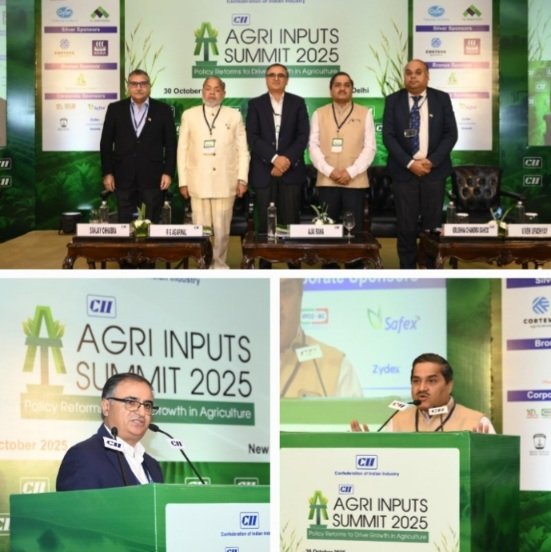
Against this stark backdrop, the Confederation of Indian Industry (CII) hosted the Agri Inputs Summit 2025 in New Delhi on Thursday. It brought together policymakers and agri-business leaders to discuss the future of Indian agriculture.
The event painted a high-tech vision of Viksit Krishi (Developed Agriculture), yet it largely overlooked the grim reality faced by cultivators in the fields.
Chairing the session, Ajai Rana, Managing Director of Savannah Seeds Pvt Ltd, urged the need to accelerate agricultural growth through advanced seed technology and greater private sector participation.
He highlighted that while 46% of India’s workforce depends on farming, the sector’s GDP contribution remains disproportionately low.
Citing the rapid jump in hybrid corn adoption — from 15–20 percent to 90 percent — he called it a success story of tech-driven productivity.
But he also admitted that India’s cotton sector, once an export pride, has slipped into import dependence — a warning sign of policy stagnation and neglect.
Sanjay Chhabra, Executive Director of DCM Shriram Ltd, described agriculture as “India’s most discussed yet least reformed sector.”
He proposed the creation of a National Agriculture Council to align central and state policies.
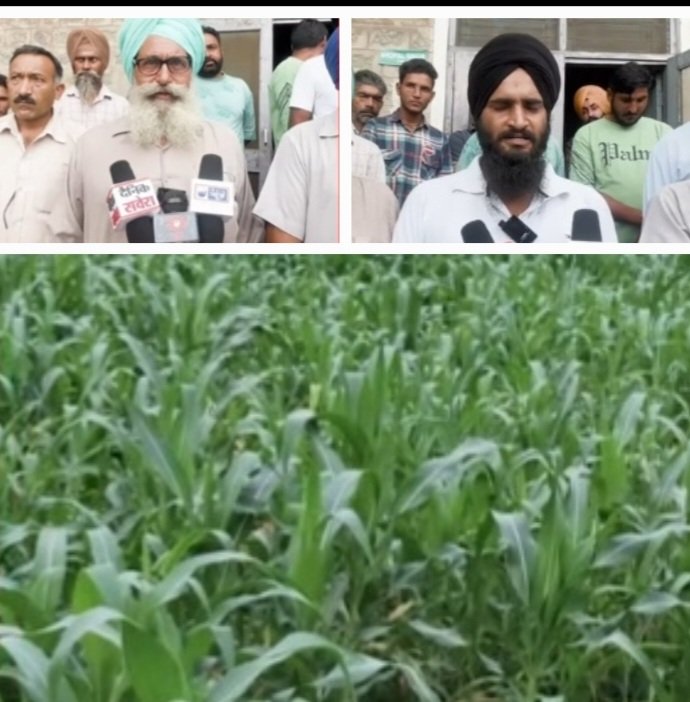
However, many in the farm community argue that no council or committee can fix what lax enforcement has allowed to rot — the unchecked sale of counterfeit chemicals, fake seeds, and poor-quality fertilizers that cripple small farmers season after season.
Dr. R. G. Agarwal, Chairman Emeritus of Dhanuka Agritech Ltd, likened agri-inputs to “plant medicines” and emphasized faster technology adoption to compete globally.
Yet, for farmers battling financial distress and erratic weather, such “medicines” often turn toxic when adulterated or fake — with no agency taking responsibilit, no proper lab testing to pin fake fertilizers, seeds and pesticides.
Delivering a special address, Dr. Krushna Chandra Sahoo from the National Seeds Corporation reiterated the Prime Minister’s four-B vision — Beej, Beema, Bank, and Bazaar — and called for blending traditional wisdom with modern science.
“Seed quality is the foundation of growth,” he said, stressing that access to technology is every farmer’s right.
But in practice, seed purity and input quality remain India’s weakest links, allowing spurious traders to thrive under weak surveillance and broken testing systems. The traditional seeds have gone and new seeds are ruling the roost.
Experts warn that there cannot be a one-size-fits-all model for Indian agriculture.
Each state faces unique challenges — from drought-hit Rajasthan to flood-prone Assam and apple orchards in Himachal and acidic soils and water logged Punjab and Haryana fields.
Everywhere, the farmer are battling unpredictable weather and the noxious grip of "poison cartles of chemical companies".
Integrating technology with local wisdom requires region-specific policy, not a centralised vision conceived in conference halls.
The CII summit was an attempt to ring in an optimism — about innovation, sustainability, and digital transformation.
But for farmers on the frontline of climate change, what’s needed first is a cleanup of fake inputs, fair pricing, and real accountability.
Until then, the “four Bs” will remain an unfinished promise.
#ViksitBharat #FarmersFirst #AgriRealityCheck #FakeFertilizersCrisis