Nepal’s Climate Disaster Raises Global Responsibility Question as Glacier Floods Wipe Out almost Entire River Basin Population in Central Nepal
Kathmandu: Nepal’s devastating glacier-linked floods have triggered a larger question than rescue and relief—who will help rebuild Himalayan Nepalese homes and source of livelihoods destroyed by a climate crisis they did little to create?
Sustainable-development experts in Nepal are out on social media and other mainstream media saying that the catastrophe cannot be viewed simply as a Nepalese disaster. The changing Himalayan climate, glacier instability and extreme weather are part of a wider global climate crisis.
Professor Dinesh Poudel, a sustainable-development scholar at State university in Nepal who has studied post-disaster reconstruction in Nepal during Last earthquake there said the latest catastrophe is fundamentally different from the 2015 earthquake.
The earthquake was largely a Nepal-centred disaster. The present crisis, he argued, has a strong connection with global climate change and rapidly changing Himalayan conditions, making reconstruction a shared international responsibility.
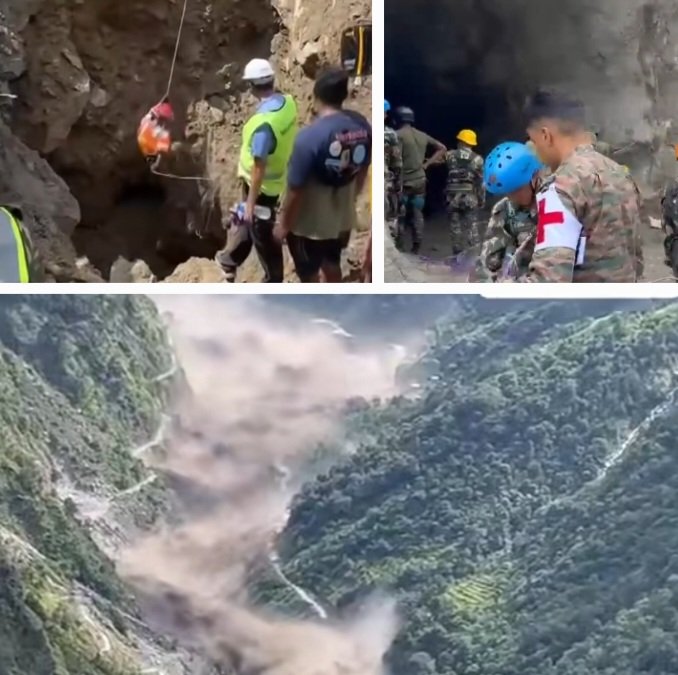
Entire communities along the affected river corridors have been wiped out. Homes, roads, businesses, farmland and critical infrastructure have disappeared beneath enormous quantities of water, mud, rocks and sediment.
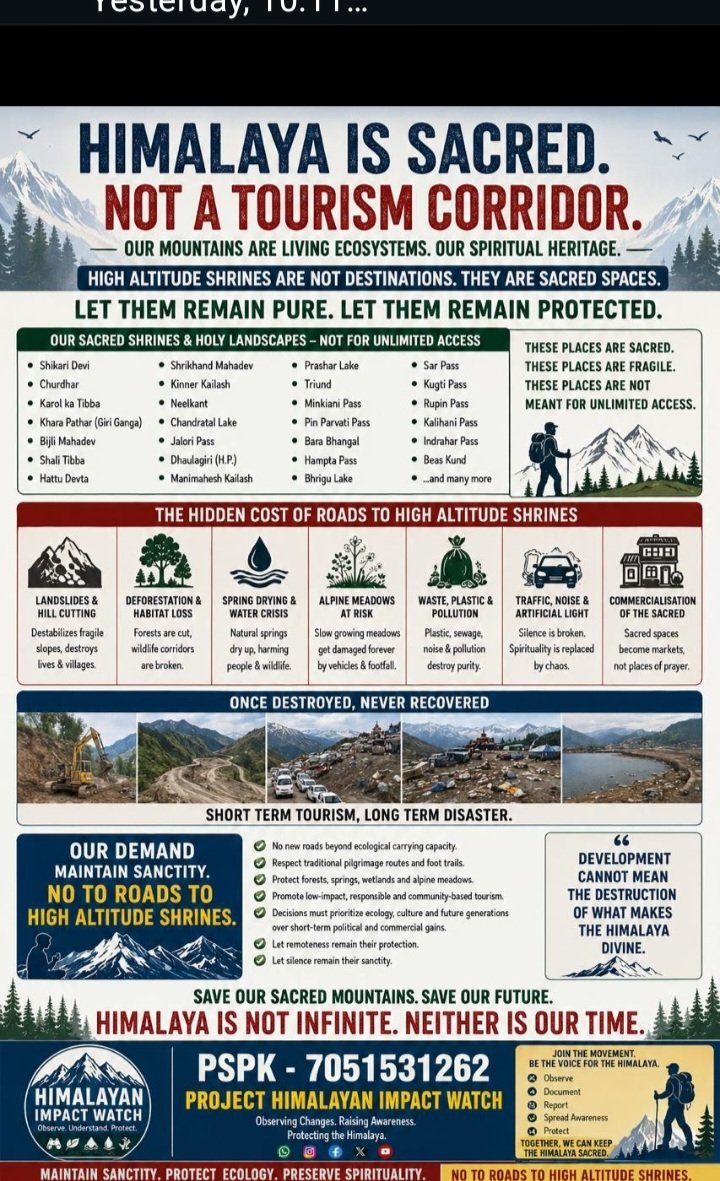
But there is another dimension to the catastrophe. The fragile Himalayan landscape has simultaneously been subjected to aggressive road construction, hydropower development, tunnels and other infrastructure projects.
These projects generate enormous quantities of excavated rock and soil. When such material is dumped on unstable slopes or near river channels, it can become additional fuel when extreme floods and landslides strike.
Construction activity associated with both Chinese and Nepali projects has therefore raised questions over the management and disposal of excavated debris.
Climate change may have created the extreme conditions, but poorly managed construction debris and disturbed mountain slopes can magnify the destruction.
A glacier collapse, glacial lake outburst or extreme rainfall event can unleash huge quantities of water downstream.
When that water picks up boulders, sediment, landslide material and construction debris, the river can turn into a moving wall of destruction.
It becomes, in effect, a mountain tsunami. The torrent can travel downstream with devastating speed, sweeping away settlements and leaving behind kilometres of mud and debris.
In the worst-hit areas, rescuers are still searching through thick deposits for survivors and bodies.
Families remain desperate for information about missing relatives. The scale of destruction has raised concerns about the fate of entire mountain communities whose homes and land have effectively vanished.
Professor Poudel has stressed that the affected region is not an insignificant mountain outpost.
It is a strategically important corridor connecting Nepal with China and supports hydropower, tourism, agriculture, trade and hundreds of small businesses.
Major hydropower projects are also located in the wider corridor, making the disaster a serious blow to Nepal’s economy and energy ambitions.
The challenge now is not simply to replace destroyed buildings. In some places, there is no village left to rebuild.
That makes the reconstruction fundamentally different from the 2015 earthquake, when damaged houses and agricultural land generally remained identifiable.
This time, entire landscapes have been reshaped by water, mud and debris. Nepal therefore faces the enormous task of rebuilding communities while making the Himalayan region safer against future disasters.
That requires scientific glacier monitoring, early-warning systems, climate-resilient infrastructure, safer river corridors and much stricter control over construction debris.
Roads, tunnels and hydropower projects must also be designed around the geology and extreme vulnerability of the Himalayan environment.
But experts say Nepal cannot shoulder the reconstruction burden alone.
If global warming is accelerating glacier instability and extreme weather in the Himalayas, the countries and industrial systems responsible for the largest historical share of greenhouse-gas emissions must also accept greater responsibility for helping vulnerable mountain nations adapt and recover.
The disaster therefore presents the international community with a much larger test. Nepal needs relief today, reconstruction tomorrow and climate justice for the future.
The question is no longer merely how to rebuild what the flood destroyed. It is whether the world will help Nepal build a safer Himalaya before the next glacier collapse, landslide or extreme flood turns another Himalayan river into a wall of destruction.