
From Bullets to Bots: Journalism Under Siege in the ‘Reel World’ — A World Press Freedom Day Reality Check. The FIGHT is for survival of Truth Itself.
Shimla/New Delhi, May 3: We live in a new world. It is a virtual Reel World.
It will be no exaggeration to say here that this virtual Reel World is ruled digitally by a “virtual global media houses” powered by Elon Musk’s X and Mark Zuckerberg’s Facebook, world's Billionaires.
No doubt these social media platforms have democratized the ways news is seen, consumed and shared.
But it has blurred the line between truth and theatre — turning today’s information macrocosm into a “reel world,” where anyone with a smartphone is a publisher, content creater, a commentator, a “journalist or reporter reporting to two" Mega Virtual Editors: Musk and Marc".
From President Donald Trump to PM Modi, they talk and publish on the powerful digital platforms, not to press to reach out into public domain.
These digital 'media houses' run No newsroom. They employ No editor. They have little or No accountability.
And yet, they have massive phenomenal influence as they carry most Internet Traffic.
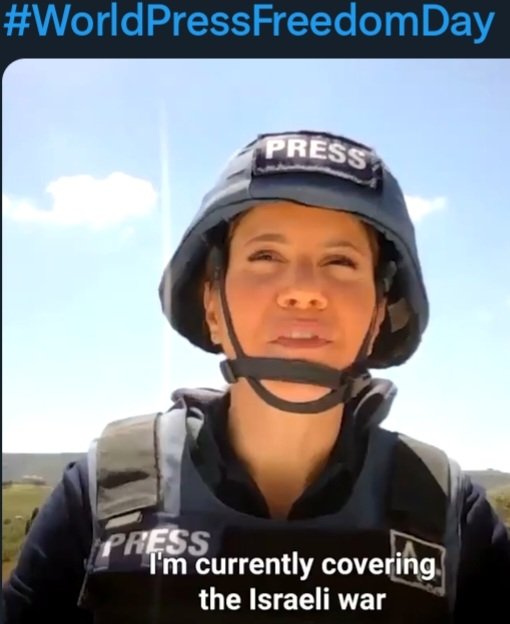
As the world marks World Press Freedom Day 2026, the crisis confronting journalism is no longer confined to bullets and bans.
It is deeper, layered — a well planned toxic mix of violence, porn, impunity, political polarisation, and an algorithm-driven flood of misinformation and disinformation and fake news.
Journalism’s Deadliest Reality.
Start with the hardest fact. According to the Committee to Protect Journalists (CPJ), 2025 was the deadliest year on record with 129 journalists killed worldwide.
Data from UNESCO shows over 1,800 journalists have been killed since 2006, while nearly 90% of these cases remain unresolved.
The United Nations itself acknowledges the grim truth: “Nine out of ten killings of journalists go unpunished.”
This is not random violence. They are the victims of militarised political systemic attack. From conflict zones to crime beats, journalists are being shot, bombed, abducted, or silenced for exposing truth.
War regions alone account for the bulk of recent killings, underlining how reporting has become a life-risking profession for working journalists deployed in the war zones by TRP hungry media houses.
Over the past decade, UNESCO has pushed the UN Plan of Action on the Safety of Journalists, creating protection mechanisms in more than 50 countries, training thousands of judicial and security officials, and building global coalitions. Yes, on digital space, progress exists.
On the hard ground, the story is starkly different. In large parts of the developing world, including India, journalists continue to face threats from criminal networks, political actors, and even local power structures — often without meaningful protection.
Critics say global institutions, including the UN, have struggled to translate resolutions into real enforcement.
The UN speaks. The ground bleeds,” as one field reporter put it bluntly.
India’s Media: Labels, Loyalties, and Loss of Trust
Back home here in India, the crisis has taken a different — and dangerous — turn. Television channels and their anchors are increasingly seen through political lenses: “Godi media,” “Left-liberal Nd Naxals,” “Right-wing,” pro-Narendra Modi or pro-Rahul Gandhi.
News is no longer consumed — it is decoded. Prime-time debates have become battlegrounds. Paid news, sponsored poll campaigns, planted narratives, sensational videos, and vilification drives are no longer whispered allegations — they are widely discussed realities.
The question viewers now ask is not “What happened?” It is “Whose side are you on?”
It is the Rise of ‘Copy-Paste Experts’ and Algorithm driven Journalism in India that has become a serious threat.
Adding to the churn is the emergence of AI-driven “experts.” A new class of commentators, analysts, columnists now dominate op-eds, editorial spaces, and digital platforms.
Armed with AI tools, they churn out “analysis” at speed, often recycling narratives in a copy-cut-paste ecosystems.
The print legacy media, battling falling revenues and shrinking readership, is increasingly tempted to fill columns with such low-cost, high-volume content which have virtually no readers or takers.
These voices don’t stop at print. They migrate to YouTube, podcasts, and social media — shouting, debating, dramatizing — chasing views across Himachal Pradesh, Uttarakhand, Chandigarh, Delhi, Chennai, and Bangalore, making their noises through reels and YouTube channels taking advantage of psychology of 'confirmation bias', a tendency to add new evidence to one's belief system, of each who surf the web.
They are competing not just with each other, but with official narratives pushed directly by executive heads. In this race, virality has replaced verification.
From Bullets to Bots: The New Threat Matrix
The danger today is hybrid and synthetic media. Journalists face Physical attacks and killings, Arrests and legal harassment. Online trolling, doxxing, and abuse. AI-generated disinformation and deepfakes.
The same platforms, be it on X and Facebook, Insta or other that promise free speech are, in fact driven by their engagement algorithms on which "outrage travels faster than truth".
The result: credibility is in a big crisis under the weight of speed and spectacle.
The optimists say the Core Still Holds. Amid the chaos, one reality offers a sliver of hope. Public trust — though dented — has not disappeared. It still rests with nearly a distinct breed of real objective journalists.
Those who try to report ground truth- Who verify before publishing, Who question power rather than amplify it.
These reporters continue to highlight public issues, give voice to the voiceless, and remind politicians of their place in a democracy.
The Bigger Question still reamins. As the world reflects on press freedom, the crisis has clearly evolved. It is no longer just about protecting journalists from bullets or prisons.
Big question is: Can a spineless body like UN protect journalism itself from Political capture, Market pressures, Digital manipulation, Algorithmic distortion?
Because in this new “reel world,” perception often overtakes reality. And it is becoming darker and graver for the vanishing breed of journalists.
It boils down to say: The fight is no longer just for press freedom. It is for the survival of truth itself.