
From GLOF to Tunnel Horror: Teesta-VI Claims 25 Lives, Did Safety Warnings Go Unheeded at NHPC Project?
GANGTOK/NEW DELHI:
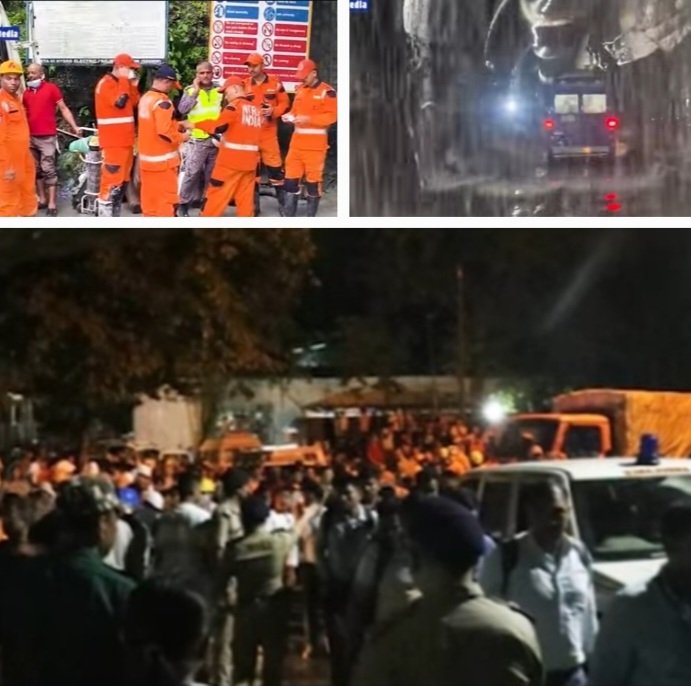
The under-construction Teesta Stage-VI Hydroelectric Project in South Sikkim has been rocked by one of the worst industrial disasters in recent years, with all the 25 bodies recovered from the collapsed Head Race Tunnel (HRT) after a grueling rescue operation inside the tunnel.
The tunnel collapse, which occurred at around 1.04 pm on Monday, has transformed a flagship hydropower project into the centre of a growing debate over safety standards, risk management and accountability within NHPC and its executing agencies.
A massive multi-agency rescue operation involving the District Administration, NDRF, SDRF, NHPC, Patel Engineering Limited (PEL), Eastern Coalfields Limited, Western Coalfields Limited and other specialised agencies continued round the clock till all the trapped workers were rescued dead.
NHPC's top management remains stationed at the project site to oversee rescue efforts.
The collapse trapped 25 personnel, including:
Two NHPC officers—a Senior Manager (Civil) and a Senior Manager (Geology). They are identified as Manish Prakash and Anish Mohan.
Twenty employees of Patel Engineering Limited, the contractor executing the Head Race Tunnel;
Three employees of the project consultant.
The fact that NHPC's own senior officers were among those trapped underscores the scale of the tragedy, which affected not only contract workers but also project management personnel.
NHPC has announced an ex-gratia payment of ₹5 lakh to the next of kin of each deceased and expressed profound grief over the loss of lives.
Safety Under Scanner
Even as rescue operations continue, serious questions are being raised about safety practices at the project.
According to sources familiar with the project, methane gas had reportedly been detected inside portions of the tunnel before the accident. Some insiders allege that despite concerns over gas accumulation, personnel entered the tunnel without specialised respiratory protection or other safety equipment.
NHPC has also stated that methane gas caused or contributed to the collapse.
Methane is a highly combustible gas that can reduce oxygen levels in confined spaces, posing risks of asphyxiation as well as explosion if present in sufficient concentrations and exposed to an ignition source.
Project insiders have questioned why work allegedly continued if gas leakage had been detected, asking whether adequate gas monitoring systems, ventilation, evacuation protocols and protective equipment were in place before workers entered the tunnel.
Questions Over Safety Staffing
The tragedy has also triggered scrutiny of NHPC's internal safety management.
According to employees, NHPC has eight Safety Officers, but three are presently posted at the corporation's headquarters rather than at construction projects.
Some employees contend that deploying these officers to high-risk tunnelling projects could have strengthened on-site safety monitoring and enforcement. This claim has not been independently verified, and NHPC has not responded to these allegations.
NHPC Projects Dogged by Setbacks
The Teesta projects have already faced enormous challenges.
The devastating Glacial Lake Outburst Flood (GLOF) in the Teesta IV had earlier exposed the vulnerability of hydropower infrastructure in the fragile Himalayan region, causing widespread destruction across Sikkim. But NHPC learnt no lesson.
CAG Audit, see himbumail.com, has detected avoidable losses to the tune of Rs 580 Crore project suffered in 2023.
Now, the tunnel collapse has shifted attention from natural disasters to construction safety, geological risk assessment and emergency preparedness inside underground works.
Experts have consistently warned that tunnelling through the young Himalayan geology requires continuous geological monitoring, real-time gas detection, adequate ventilation, strict adherence to underground safety protocols and independent safety audits.
Demand for Independent Probe
With 25 workers confirmed dead demands are growing for an independent investigation into the tragedy.
Among the questions that need answers are:
Was methane or any other hazardous gas detected before the accident?
Were gas-monitoring and ventilation systems functioning properly?
Were workers and engineers equipped with appropriate safety gear?
Were standard operating procedures followed before entry into the tunnel?
Did geological instability or another factor trigger the collapse?
Was there any lapse in safety supervision or project management?
As rescue teams continue their grim operation, the Teesta Stage-VI disaster calls for accountability at one of India's largest public sector hydropower projects.
The reported methane leak and alleged safety lapses are based on accounts from project sources.
The precise cause of the tunnel collapse remains under investigation by the competent authorities but no FIR is lodged to ascertain the reason behind the tragedy.