
New Power Policy Puts Ball in States’ Court on Tariffs, Consumers Fear Another Bill Shock
NEW DELHI /SHIMLA, AUGUST 10: The Draft National Electricity Policy, 2026 has effectively thrown the ball into the court of state governments on one of the most politically sensitive questions in the power sector — how much ordinary households will ultimately pay for electricity.Massive power expansion: thermal stays, but green capacity dominates the long-term plan
The Centre’s power roadmap shows that India is preparing for a massive expansion of electricity capacity, with the National Electricity Plan projecting 874 GW of installed generation capacity by 2031-32.
Importantly, this is installed capacity, not actual annual electricity production. Of the 874 GW, the government has earlier stated that about 570 GW is expected from renewable sources — solar, wind, biomass and hydro — while around 304 GW will come from conventional sources such as coal, lignite, gas and nuclear.
The government is nevertheless keeping thermal power firmly in the mix. It now estimates a requirement of around 315 GW of coal- and lignite-based thermal capacity by 2035-36 and plans to add at least 105 GW of new thermal capacity.
Thermal projects of about 21,080 MW have been commissioned since April 2023 to June 2026, while another 47,545 MW is under construction and contracts for 16,000 MW have been awarded, reveal the policy.
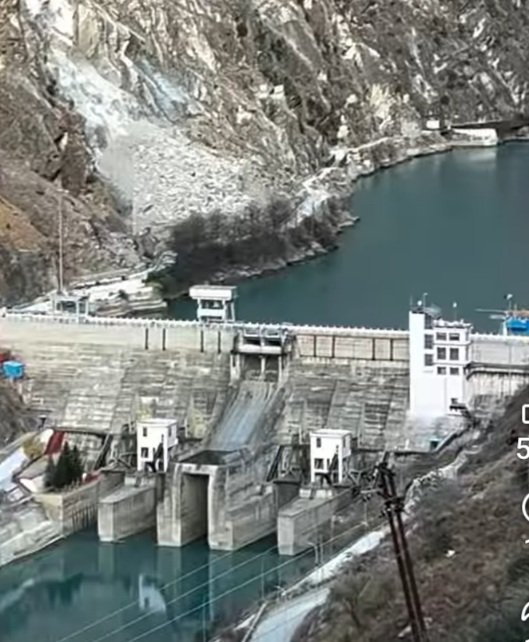
Hydropower is also being expanded, with the Central Electricity Authority projecting about 16,448 MW of additional hydro capacity between 2026-27 and 2031-32; 400 MW had been commissioned by June 2026 and 12,973 MW was under construction. Nuclear power is set to grow too, with 8,000 MW under construction and another 5,600 MW at various stages of planning and approval.
The biggest expansion, however, is in renewables. The Centre says 147,720 MW of renewable capacity — including 119,580 MW solar and 27,720 MW wind, including hybrid projects — is currently under construction, while another 47,830 MW is at various planning stages, targeted largely for completion by 2029-30.
Alongside this, huge investments are planned in battery storage and pumped-storage hydro to deal with the intermittent nature of solar and wind power.
The numbers reveal the central tension in the new power policy: India wants substantially more clean electricity to meet its climate commitments and rising demand, but it is simultaneously expanding coal-based generation to ensure round-the-clock reliability.
The real policy challenge will be whether this transition can deliver more renewable power without making electricity unaffordable for ordinary consumers.
While the draft promises financial sustainability of the electricity sector, reliable 24×7 supply and better consumer services, its proposal to progressively make tariffs reflect the actual cost of supply could put pressure on states to either raise tariffs or spend more from their own exchequers to keep electricity affordable for baseline and middle-class consumers.
The draft is now open for debate, and that debate needs to move beyond the technical language of power-sector reforms.
For the common consumer, the question is simple: Will electricity remain affordable, or will the cost of making distribution companies financially viable increasingly be recovered through household bills?
The policy says tariffs should progressively reflect the “prudent cost of supply”. In ordinary language, this means distribution companies should increasingly recover the cost of supplying electricity through the tariff paid by consumers.
States, however, retain the power to subsidise selected categories of consumers.
That provision could become crucial for low-income and middle-class households if tariffs rise under the new cost-reflective approach.
Himachal’s state government 300 unit free promise still remains on paper
Himachal Pradesh provides a striking example of the gap that can emerge between political promises and actual electricity bills.
The promise of 300 units of free electricity has been made to consumers, but for many households the benefit remains a non-reality.
At the same time, consumers have been complaining of sharply higher electricity bills following the installation of smart meters.
In Himachal Pradesh, Uttarakhand and several other states, consumers have raised concerns that their bills have increased — in some cases, they allege, even doubling after smart meters were installed.
The government and power utilities maintain that smart meters are intended to improve billing accuracy, reduce theft and bring down technical and commercial losses.
But the consumer's concern is different.
If a meter is supposed to make billing more accurate, why are so many consumers reporting dramatically higher bills after its installation?
That question cannot simply be dismissed as resistance to technology.
There needs to be an independent, transparent mechanism through which a consumer can challenge a smart-meter reading, have the meter tested and receive a clear explanation of the difference between the old and new bills.
Draft policy shifts the tariff burden debate to states.
The draft does not itself announce a uniform national electricity tariff.
Electricity tariffs are determined by State Electricity Regulatory Commissions after considering the cost of power purchase, transmission, distribution and supply.
The state government can then provide subsidies to specified categories.
This means that if a state wants to keep electricity cheap for ordinary consumers, it may increasingly have to finance the difference from its own budget.
That could create a difficult choice for states already struggling with fiscal pressures. Power boards are in mess.
Either electricity tariffs move closer to the actual cost of supply, potentially increasing household bills, or state governments bear a larger subsidy burden.
For consumers, the difference may ultimately appear either on the electricity bill or indirectly through the state budget.
The private-sector question
Another major issue that deserves greater public scrutiny is the proposed transformation of electricity distribution.
The government is encouraging reforms aimed at improving the financial and operational efficiency of distribution companies and has opened the door to greater participation by private players in the distribution sector.
This raises an important question for states considering the privatisation or restructuring of their electricity boards:
Who will ultimately benefit from a distribution network built over decades with public money?
State electricity boards and their successor distribution utilities have created extensive transmission and distribution networks, substations, feeders and other infrastructure using public resources.
Critics of privatisation argue that private distribution companies could potentially enter the sector with access to an already-established network and a captive consumer base, while the state continues to carry much of the historical financial burden.
The concern is that the public sector could be left with debt and difficult rural or loss-making areas, while commercially attractive consumer segments become increasingly valuable to private operators.
That is why any move towards privatisation or unbundling of state power boards requires much more than an argument about efficiency.
It needs a transparent answer on asset valuation, consumer protection, employee interests, cross-subsidy, rural supply obligations and who bears the legacy liabilities of the existing electricity utility.
“Distribution licensee” — the consumer should know who it is. The draft repeatedly uses the term “distribution licensee”.
In simple language, this is the company authorised to supply electricity to consumers in a particular area.
It buys electricity, operates the local distribution network, installs meters, sends bills and collects payments.
If private distribution companies are given a greater role, consumers need to know precisely what obligations these companies will have.
Will they be required to supply every consumer, including those in remote and commercially unattractive areas?
Will tariffs remain regulated? Who will pay for network expansion?
Who will compensate consumers for prolonged outages or billing errors?
And most importantly, can a private distributor simply pass rising costs on to consumers?
The draft proposes regulatory scrutiny of cost recovery, but consumer groups are likely to demand much stronger safeguards.
Monthly adjustment could bring monthly anxiety
The proposed Fuel and Power Purchase Cost Adjustment (FPPCA) is another area that deserves close public scrutiny.
FPPCA is essentially a mechanism through which changes in the cost of purchasing electricity — including fuel-related costs — can be passed through to consumers after regulatory examination.
The proposal for automatic monthly adjustment means that consumers could potentially see more frequent changes in their electricity bills.
The draft also proposes a stabilisation fund to moderate sudden fluctuations.
But the fundamental issue remains: How much cost should consumers be expected to absorb, and how much should electricity companies absorb through greater efficiency?
The distinction is critical.
Smart meters cannot become a one-way street. The government's case for smart meters is built around efficiency, accurate billing, reduction of theft and lower commercial losses.
But smart-meter reform cannot become a one-way street where consumers are expected to accept higher bills while being told that the technology is more accurate.
If a consumer disputes a bill, there must be a simple and inexpensive process for verification.
The consumer should be able to see: Previous meter reading and new reading; Actual units consumed, Fixed charges, Electricity purchase or adjustment charges; Government subsidy, if applicable, Any arrears, Any FPPCA adjustment; and The reason for any significant increase in the bill.
A digital meter without transparent digital accountability can only shift the dispute from the meter reader to the computer screen.
The government’s case: more power, fewer losses
The Centre argues that its reforms will ultimately benefit consumers.
Under the Revamped Distribution Sector Scheme, projects worth ₹1.53 lakh crore for reducing distribution losses and ₹1.31 lakh crore for smart metering have been sanctioned.
The government says the average electricity supply in rural areas has increased from 12.5 hours a day in 2014 to 22.6 hours in 2026, while urban supply has increased from 22.1 hours to 23.4 hours.
It also plans a huge expansion in generation, with installed capacity projected to reach 874 GW by 2031-32.
The direction is clear: more generation, modern transmission, smart distribution, storage and financially stronger utilities.
But financial sustainability cannot mean consumer insolvency
The central argument of the new draft policy is that the electricity sector must become financially sustainable.
There is little disagreement with that objective. A financially bankrupt distribution company cannot provide reliable electricity indefinitely.
But financial sustainability of the power company cannot come at the cost of financial unsustainability of the household.
If consumers are asked to pay the full cost of electricity, they must also receive full transparency about that cost.
If smart meters are being installed, consumers must have effective safeguards against erroneous billing.
If private companies enter distribution, public assets accumulated over decades cannot become a mechanism for private profit without strong public-interest obligations.
And if states promise free or subsidised electricity, those promises must appear on the consumer's actual bill rather than remain election-time commitments.
The Draft National Electricity Policy, 2026 has therefore opened a much bigger debate than the bureaucratic language of “cost-reflective tariffs” suggests.
Renewable energy and India’s Paris commitment
The Draft National Electricity Policy, 2026 also seeks to strengthen India’s transition towards a cleaner power system by rapidly expanding the share of renewable energy in the national electricity mix.
Its emphasis on large-scale solar and wind capacity, pumped-storage projects, battery storage, renewable-energy transmission corridors and better integration of variable green power is aligned with India’s broader climate commitments under the Paris Agreement.
The policy envisages a power system capable of absorbing much larger quantities of renewable electricity while maintaining grid stability through storage and flexible generation.
The challenge, however, is to ensure that this green transition does not become an excuse for shifting the cost of expensive new infrastructure disproportionately onto electricity consumers.
India’s climate commitment and affordable electricity for its people must move together — a cleaner grid cannot come at the price of making basic electricity unaffordable.
The real battle is no longer simply about generating more electricity. It is about deciding who pays for it — the consumer, the state government, the distribution company, or the taxpayer.
For the ordinary household, the ultimate test of the new policy will not be the number of gigawatts added to the national grid or the number of smart meters installed.
It will be visible in one place: in the monthly electricity bill. This issue is likely to be debated in Parliament in the coming days.