
The surge in series of Natural disaster, GLOF or HLOF, Dam safety has assumed urgency among stakeholders in India.
SHIMLA: With Himalayas Facing HLOF and Flash Flood Threats, SJVN Pushes Dam Safety Awareness at Nathpa Jhakri
In the backdrop of rising threats from Himalayan Lake Outburst Floods (HLOF), cloudbursts and recurring flash floods in the fragile Himalayan region, public sector hydropower major SJVN on Wednesday organised a major dam safety awareness programme at the Nathpa Jhakri Hydro Power Station (NJHPS) in Kinnaur district.
The programme, organised in association with the National Dam Safety Authority at Jhakri, focused on strengthening disaster preparedness, flood management and community participation at a time when extreme weather events are becoming more frequent across Himachal Pradesh and other Himalayan states.
CMD Bhupender Gupta, said the initiative aimed at enhancing awareness on dam safety and promoting proactive measures for risk mitigation and emergency preparedness among local communities, especially those living downstream of major dams.
Highlighting the growing vulnerability of mountain regions, officials stressed that dam safety can no longer remain confined to engineering structures alone, but must include local communities, scientific agencies and disaster response mechanisms working in tandem.
Director (Personnel) Ajay Kumar Sharma said the initiative underlined the importance of coordinated stakeholder engagement, environmental responsibility and public awareness in fostering a stronger culture of dam safety in the Himalayan region.
The programme was inaugurated by Amit Sharma and Saurabh Agarwal. Rajeev Kapoor, Head of Project at NJHPS, said such awareness drives were essential for sensitising communities residing in vulnerable mountain terrains.
Experts and officials from India Meteorological Department, National Disaster Response Force, Indian Space Research Organisation and National Remote Sensing Centre delivered presentations on dam safety, disaster management, weather forecasting, early warning systems and the role of communities during emergencies.
The discussions assumed significance as Himachal Pradesh has witnessed repeated disasters linked to cloudbursts, glacial activity and sudden surges in river systems over the past few years, raising concerns over the safety of critical hydropower infrastructure and downstream habitations.
Officials said modern technologies, real-time monitoring and coordinated response systems are becoming increasingly crucial for preventing disasters and minimising damage during extreme events.
A community interaction session saw residents from downstream villages voicing concerns over safety measures, warning systems and emergency response preparedness. Locals also shared past experiences of floods and disaster situations, while demanding timely alerts and better coordination during emergencies.
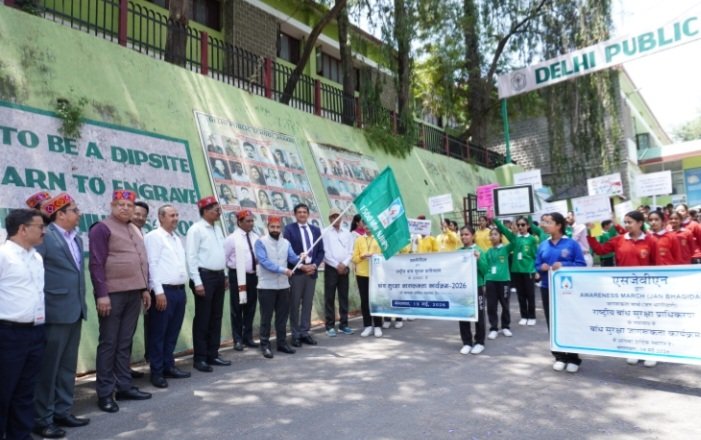
Students later took out an awareness march, while plantation drives and cultural performances, including skits on flood safety and disaster awareness, were organised as part of the programme.
The event reinforced the growing consensus that in an ecologically fragile Himalaya facing climate-linked disasters, dam safety and community preparedness must now become as important as power generation itself.