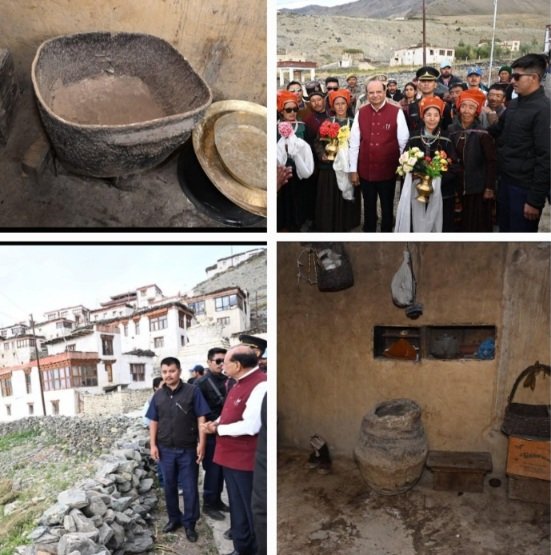
Kumik becomes Ladakh’s first Heritage Village, but can the tag transform lives?
Kumik Village in Zanskar has got its historic tag. It has been declared the first Heritage Village of Ladakh, a recognition that puts the remote Himalayan hamlet on India's cultural map.
But the bigger question is whether the prestigious designation will translate into better livelihoods, stronger local infrastructure and a meaningful improvement in the economic lives of its people.
The declaration was made on Tuesday, coinciding with the Ladakh Zanskar Festival 2026 by LG Ladakh VK Saxena.
Kumik is known for its traditional mud houses, sacred spaces, agricultural practices and long-preserved Buddhist traditions.
The village also holds an important textual heritage, including Kanjur manuscripts and other Tibetan Buddhist materials that reflect Zanskar’s history as a centre of faith, learning and scholarship.
The Heritage Village status gives Kumik an opportunity to move beyond being a remote hamlet known mainly to historians, pilgrims and travellers.
If backed by a clear development and livelihood plan, the recognition could help create a new economy around heritage tourism, homestays, local food, handicrafts, traditional architecture, cultural experiences and guided visits.
But declaration alone will not change the economic reality of Kumik.
For residents, the immediate question is what tangible benefits will follow. Will the village receive better roads, reliable connectivity, water supply, sanitation, healthcare, digital infrastructure and tourist facilities?
Will local youth find employment opportunities within the village instead of having to leave Zanskar in search of work? And will tourism revenue actually remain with the community?
Kumik’s traditional character could itself become an economic asset if carefully protected.
Restored traditional homes could be developed as community-owned homestays, while local farmers, artisans, guides, cooks and cultural practitioners could become direct beneficiaries of increased tourist footfall.
A heritage circuit linking Kumik with other important Buddhist and cultural sites of Zanskar could potentially extend visitors’ stays and spread tourism income across surrounding villages.
The Buddhist manuscripts and knowledge traditions associated with Kumik could also support cultural and academic tourism.
Even Zanskar’s traditional medicinal heritage can be tapped for greater exposure and branding.
Properly conserved and interpreted, the village could become a place where visitors learn about Zanskari Buddhist literature, architecture, agriculture and community traditions rather than simply stopping for photographs.
However, heritage tourism also carries risks. Unplanned construction, commercialisation of traditional homes, excessive tourist traffic and outside ownership of tourism businesses could gradually weaken the very heritage that the declaration seeks to protect.
Kumik cannot become a heritage destination at the cost of becoming economically dependent on outsiders.
The success of the declaration, therefore, will ultimately have to be measured not by plaques, ceremonies or tourist numbers, but by what happens to household incomes in Kumik.
A meaningful Heritage Village programme should ensure that local residents have the first right to benefit from new tourism and conservation projects.
A share of tourism-related revenue could be channelled into village infrastructure and community institutions, while training local youth as guides, hospitality entrepreneurs, conservation workers and cultural interpreters could turn heritage preservation into sustainable employment.
There is also a larger Himalayan lesson here. Villages such as Kumik often possess enormous cultural wealth but remain economically fragile because their remoteness limits access to markets and opportunities.
Heritage recognition can provide visibility, but visibility becomes development only when it is connected to investment, infrastructure, skills, market access and community ownership.
Kumik is now officially recognised as Ladakh’s first Heritage Village. The real test begins after the declaration: can heritage become a source of livelihood without turning living culture into a commodity?
If Kumik’s people become the principal custodians—and beneficiaries—of its heritage, the declaration could mark the beginning of an economic transformation.
If it remains only a ceremonial recognition, the lives of its residents may change very little.
#Kumik #Ladakh #Zanskar #HeritageVillage