
Lavi Fair's 400-Year-Old Trading Tradition Faces an Uncomfortable Question: Is the Business of Auctions Killing the Spirit of the Fair?
RAMPUR, NOVEMBER 12: For nearly four centuries, the International Lavi Fair has brought traders, farmers, artisans and communities from across Himachal Pradesh and neighbouring regions to Rampur Bushahr.
But beneath its colourful stalls and festive atmosphere, a troubling economic question is emerging: is the historic trading fair becoming too expensive for the very traders and rural communities that have sustained it for generations?
This year, the Rampur Municipal Council has reportedly earned around Rs 89 lakh through the auction of plots allotted to traders for setting up stalls at different locations, including the dome and other designated sites.
The auction proceeds are around Rs 5.8 lakh higher than last year, reflecting the increasing commercial value attached to trading space during the annual fair.
For the municipal council, the higher auction revenue may be an achievement. For traders, however, it means a higher upfront investment before they sell a single item.
The cost of securing a stall, transportation, labour and accommodation must be recovered during the limited trading period. Inevitably, much of this additional expenditure gets passed on to customers through higher prices.
The real customers of the Lavi Fair are not affluent shoppers but ordinary villagers from Kinnaur, Rampur subdivision, Nankhari, Kumarsain and other parts of Shimla district. They visit Rampur to purchase household goods, clothes, footwear, utensils, toys and other inexpensive merchandise. For generations, the fair has offered them an opportunity for affordable shopping alongside a celebration of social and cultural traditions.
A significant portion of the merchandise comprises inexpensive goods brought by traders from different parts of the country and the wider region. These traders operate on tight margins and depend on high sales volumes to recover their investment. Higher plot prices increase their financial pressure, making customers ultimately pay more for goods that are otherwise available at competitive prices.
The municipal council's revenue gains, therefore, cannot automatically be treated as an indicator of a prosperous fair. Higher auction receipts do not necessarily mean better business for traders or greater purchasing power among visitors. The important question is whether the annual trading event is becoming a commercial burden on both sellers and buyers.
There is a larger danger here. If the municipal council continues to pursue maximum revenue from stall allotments without considering the economics of small traders, the Lavi Fair could gradually lose its traditional charm. Traders may find participation increasingly expensive, while villagers may begin avoiding the fair because shopping there is no longer affordable.
A fair that has survived for nearly 400 years through community participation, mutual trust and traditional commerce should not become a victim of an aggressive revenue-generating approach. Its success must be measured by the economic opportunities it creates, not merely by the money collected through auctions.
The concern is particularly relevant this year, when the horticultural economy has taken a beating. Kinnaur's apple growers might have earned better prices this season, while much of the rest of Shimla district has experienced a lean apple year.
Reduced orchard earnings have affected household spending and the wider rural economy, hitting transporters, labourers, commission agents, shopkeepers and small businesses.
The Lavi Fair has historically served as an important trading bridge between Kinnaur and other Himalayan communities across Shipki La from Tibetan region now under China.
Traders and visitors from different parts of the state converged at Rampur to exchange wool, agricultural produce, handicrafts and everyday commodities, dry fruits livestock including Chamurthi horses.
It was not simply a cultural gathering but an economic lifeline for communities separated by difficult mountain terrain, comment traders.
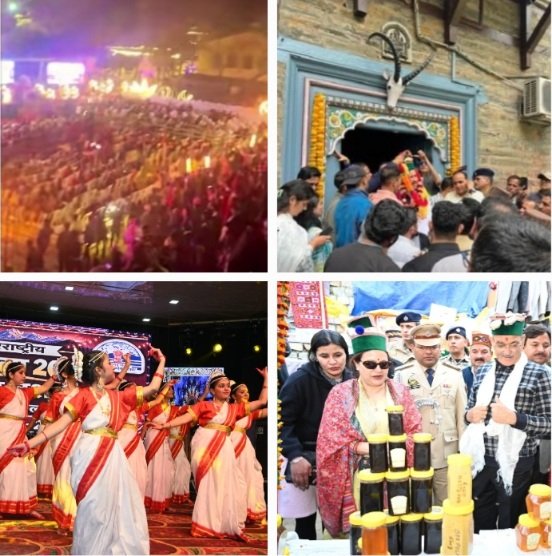
Governor Kavinder Gupta inaugurated this year's International Lavi Fair, placing his address largely within Prime Minister Narendra Modi's Viksit Bharat vision, the Vocal for Local campaign and Central Government schemes such as PM Vishwakarma and the Pradhan Mantri MUDRA Yojana.
He urged visitors to purchase locally manufactured products and called for traditional Himachali goods, including Kinnauri caps, woollens and handicrafts, to be connected with national and international markets through digital platforms. He also stressed the importance of preserving cultural heritage and protecting the fragile Himalayan environment.
While these concerns are relevant to the fair's identity, the inauguration offered little focus on the immediate economic distress facing apple growers, small traders and rural consumers in Himachal Pradesh.
The occasion could have provided a platform to discuss how the state can strengthen traditional markets and protect the purchasing power of rural households.
The organising committee, headed by Deputy Commissioner Shimla Anupam Kashyap, has made efforts to broaden the fair's reach by providing platforms to self-help groups, Farmer Producer Organisations, horticulturists and small industries.
For the first time, an essay competition on the history of the fair was also organised for schoolchildren. Local artists have been given priority in cultural programmes, with efforts to showcase the diversity of Himachal Pradesh.
However, the bigger challenge is to ensure that the fair remains commercially viable for small traders and affordable for ordinary visitors. Reasonable plot rates, preferential arrangements for local producers and small businesses, and a transparent allotment policy could help preserve its traditional trading character.
The municipal council must recognise that the Lavi Fair is not just another revenue-generating event. It is a centuries-old institution whose value extends beyond its annual auction receipts.
An additional Rs 5.8 lakh in revenue may look encouraging in municipal accounts, but if traders recover that amount from customers, the economic burden simply shifts to ordinary families.
The real tragedy would be if a fair that survived for four centuries through affordable trade and community participation eventually loses its appeal because doing business there becomes too expensive.
The Lavi Fair must remain a celebration of the people, not a costly commercial exercise imposed on those who keep it alive.
#LaviFair #Rampur #HimachalPradesh #RuralEconomy