Himalayas Turning Into Plastic Dumps as Pollution Boards Sleep Over Crisis
SHIMLA/DEHRADUN/LEH/SRINAGAR: Himalayas Turning Into Plastic Dumps, Pollution Data Still a “Guessing Game”
Fresh pollution data available on the Central Pollution Control Board (CPCB) website and India’s plastic pollution mapping exercises have exposed a disturbing reality — even after years of environmental campaigns, most states still do not possess any reliable scientific system to accurately measure plastic waste generation, especially in rural and mountain regions.
The latest plastic pollution figures, linked to CPCB datasets and earlier pollution mapping exercises conducted around 2019 onward, are now being strongly contested by environmentalists who allege that much of the data remains based largely on rough estimates supplied by Urban Local Bodies (ULBs), Municipal Corporations and local councils rather than scientific field audits.
Environmental groups say the biggest blind spot lies in rural India and fragile Himalayan states where there is virtually no structured mechanism to assess how much plastic is actually entering forests, rivers, streams and mountain ecosystems.
When questioned about the accuracy of figures, several State Pollution Control Boards reportedly admitted that much of the data is sourced from municipalities and local bodies, many of which themselves lack proper waste quantification systems, segregation infrastructure or real-time monitoring mechanisms.
Environmental lawyer Archana Vaidya questioned the methodology behind the figures and called the present system largely unreliable.
“We would also like to know how these figures have been arrived at. Is there any proper waste audit, population formula or scientific field verification? On what basis have these numbers originated?” she asked.
The controversy has sharpened after recent CPCB-linked datasets showed massive variations in plastic waste generation across states.
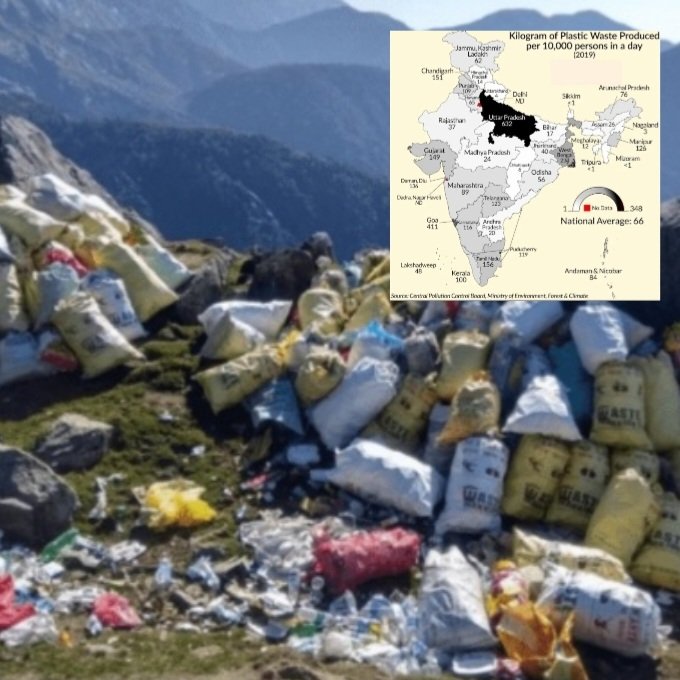
Uttar Pradesh under Chief Minister Yogi Adityanath emerged as one of the biggest plastic waste hotspots, recording a staggering 632 kilograms of plastic waste per 10,000 persons daily — nearly ten times the national average of 66 kilograms.
Meanwhile, Himalayan states showed unusually low official numbers despite booming tourism and pilgrimage pressure.
Official figures placed Himachal Pradesh at 14 kg plastic waste per 10,000 persons daily and Uttarakhand at just 4 kg — figures environmental activists describe as “far removed from ground reality.”
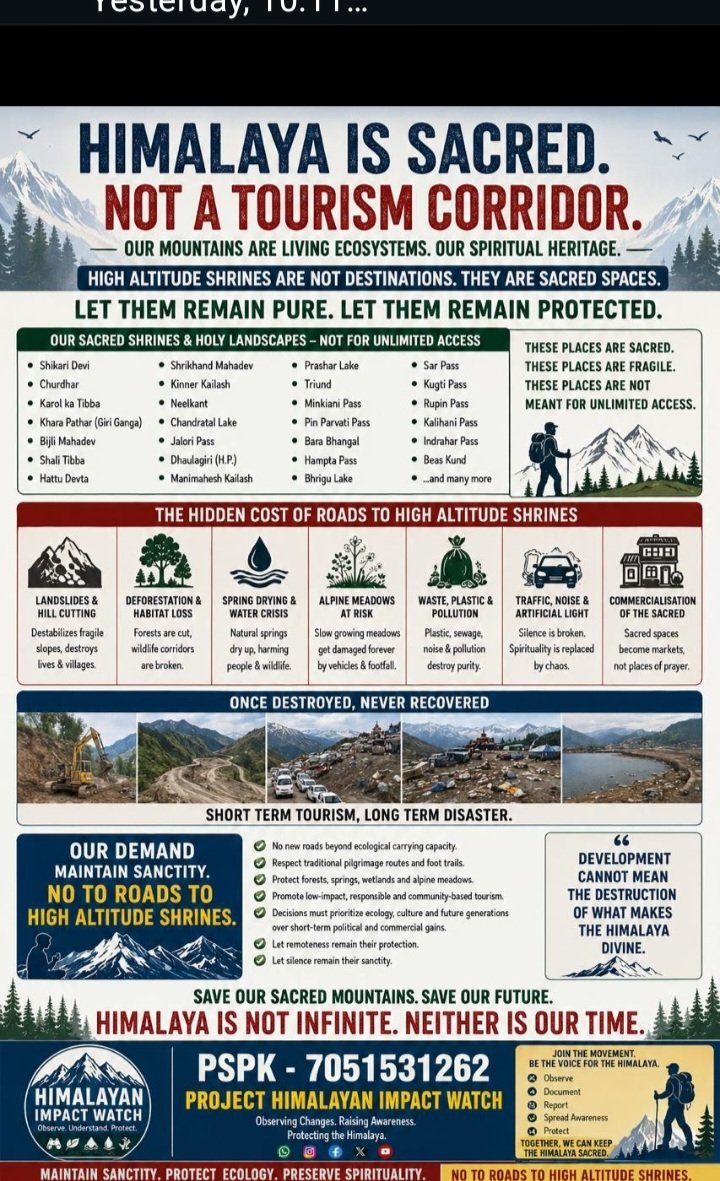
Activists point out that every year millions of tourists and pilgrims travel through the Char Dham circuit, hill stations and Himalayan highways carrying packaged food, bottled water, disposable plates and multilayered plastic packaging.
Yet large portions of rural Uttarakhand, Himachal Pradesh, Jammu & Kashmir and Ladakh still lack formal waste collection and monitoring systems.
From Shimla to Manali and from Nainital to Leh, garbage dumping along roadsides, ravines, forest slopes and riverbanks continues almost unchecked. During monsoon months, tonnes of plastic waste slide downhill into rivers and drinking water sources.
The broader waste management picture remains equally alarming. CPCB’s Annual Report on Solid Waste Management 2021-22 revealed that India generates nearly 1.70 lakh tonnes of municipal solid waste every day, but only 54 percent is scientifically processed or treated, leaving nearly 37,373 tonnes of waste unaccounted daily.
The report also admitted India still has 2,452 dumpsites, many located dangerously close to forests, rivers and habitations.
Environmentalists allege that many State Pollution Control Boards have now effectively reduced themselves to “silent spectators” and “NOC offices,” spending more time clearing industrial files, environmental permissions and compliances than carrying out serious pollution mapping or enforcement on the ground.
Despite crores spent under pollution control infrastructure, Swachh Bharat campaigns and urban waste management projects, scientific landfill mapping, rural waste quantification and real-time plastic monitoring remain largely absent in mountain states.
Experts say unless India develops an independent nationwide waste auditing system using satellite mapping, drone surveys, GIS tracking and third-party environmental audits, the country’s plastic pollution data will continue to remain a “guessing game” — while the Himalayas quietly turn into giant dumping grounds beneath glossy tourism campaigns and cleanliness slogans.
Hoteliers, travel agents, airlines, railways and tour operators should also be legally required to spread environmental messaging through booking tickets, tourism portals, airports, railway stations, taxi permits and entry barriers in hill states.
The Himalayas cannot continue functioning as hidden dumping yards beneath glossy tourism advertisements.
The mountains are already warning India through polluted rivers, dying springs, choked drains and garbage-filled forests.
The tragedy is that the system still appears more interested in slogans than solutions.
#PlasticPandemic
#SaveHimalayas
#WakeUpPollutionBoards
#SwachhIndiaChallenge
#CleanMountainsNow
#PlasticPandemic
#SaveHimalayas
#WakeUpPollutionBoards
RESPONSES:
1.Mountains Turning Into Plastic Dumps, Regulators Reduced To Mere NOC Officers
The Himbumail article has rightly exposed the growing environmental crisis in the Himalayas where mountains are steadily turning into plastic dumps while regulators increasingly appear reduced to mere “NOC officers” instead of protectors of ecology.
The Constitution reminds every citizen of the duty to protect forests, rivers, wildlife and the natural environment. Environmental justice has deep roots in Indian civilisation — from Kautilya’s Arthashastra to Emperor Ashoka’s compassion towards wildlife and conservation.
Today, environmental debates dominate headlines, but public awareness and administrative accountability remain weak. Most people still fail to grasp the serious consequences of environmental degradation on human survival and quality of life.
India, one of the world’s 17 mega-biodiverse countries, is making rapid progress in solar, wind and green hydrogen missions. Yet Plastic Waste Management Rules and Solid Waste Management Rules remain poorly implemented on the ground.
State regulators must act as true guardians of public interest and environment, not just file-clearing authorities. Strict enforcement, scientific temper and public awareness are urgently needed.
PRIs, ULBs, NGOs and Self Help Groups must launch mass awareness campaigns on waste management and plastic pollution. Only then can the dream of living in harmony with nature by 2050 become a reality.
-PREM PAL RANTA, (FORMER DISTRICT AND SESSIONS JUDGE, EX MEMBER SECRETARY, HP STATE LEGAL SERVICES AUTHORITY)