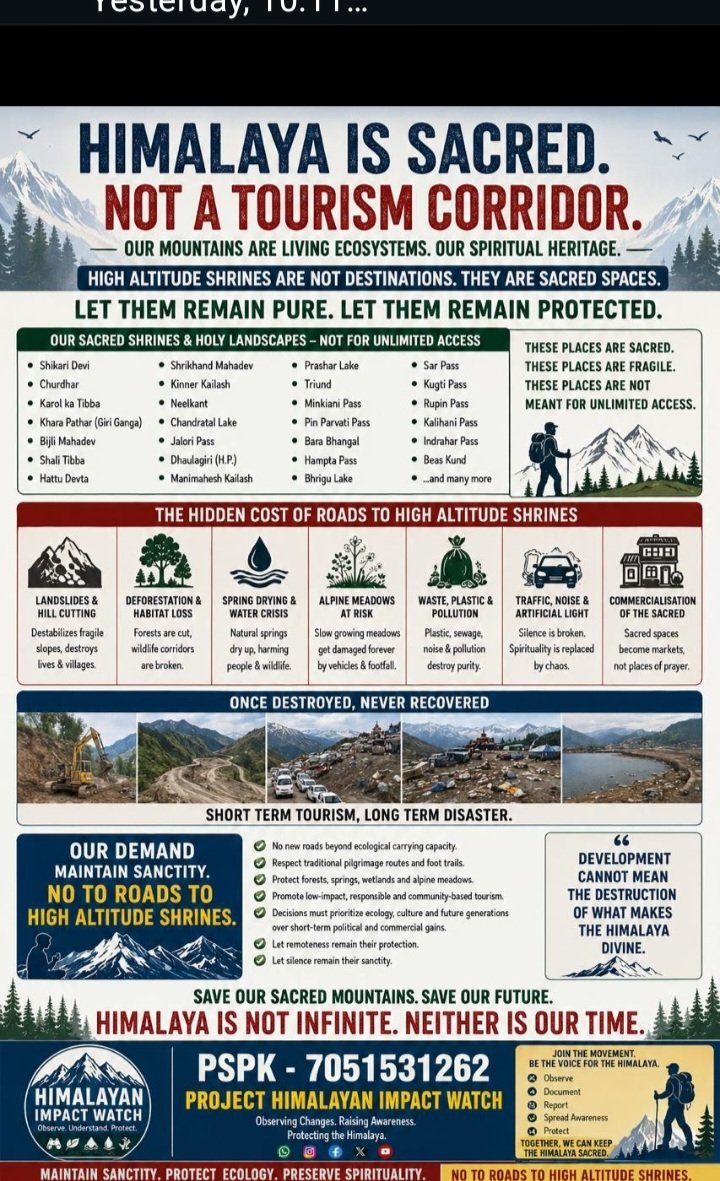
PSPK Himalayan Watch Unearths Eco-Devastation in Karol–Dolag–Srinagar Belt, NHAI–PWD–Forest Failures Exposed
HIMALAYANWATCH–3
Satellite Study Flags Severe Ecological Damage in Solan–Shimla Belt; Urgent Action Sought from DC Shimla and Solan
By Maj Gen Atul Kaushik( SM, VSM)
A comprehensive satellite-based assessment conducted under PSPK’s Himalayan Watch initiative has revealed systematic and accelerating ecological degradation in the Karol–Dolag–Sri Nagar belt spanning Solan and Shimla districts, raising serious concerns over the stability of the Giri catchment and downstream water security.
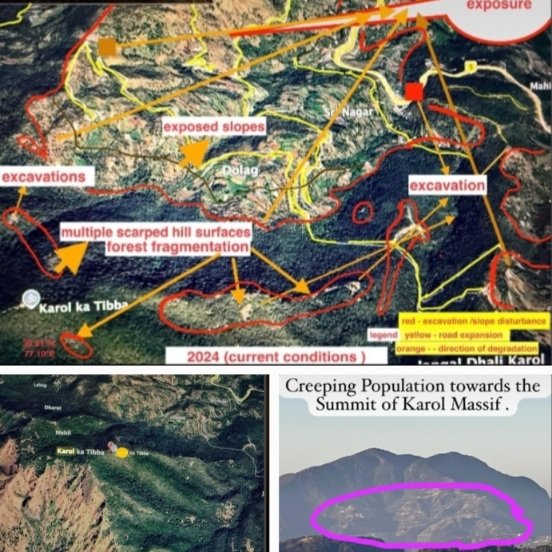
The study, based on multi-temporal satellite imagery from 2013 to 2024, presents hard evidence of environmental decline. It records an 18–25% reduction in dense forest cover, with losses concentrated along infrastructure corridors. During the same period, road expansion has increased by over 30%, leading to fragmentation of previously contiguous forest landscapes.
Using advanced GIS-based change detection and heatmap analysis, PSPK has identified clear overlap between vegetation loss, aggressive hill cutting, and infrastructure development zones, establishing a direct link between ongoing construction activities and environmental damage.
The findings highlight widespread slope destabilisation, attributed to unscientific excavation, near-vertical hill cutting, and absence of adequate slope protection measures. These conditions have already manifested on the ground in the form of frequent minor landslides, slope slips, and visible cracks along road stretches, particularly during monsoon periods.
The study further points to hydrological disruptions in the region. Altered drainage channels, disturbed micro-watersheds, and increased surface runoff are contributing to reduced groundwater recharge and rising sediment flow into streams feeding the Giri River.
This has direct implications for the Renuka Dam project, which relies on the Giri catchment for sustained water supply. The report warns that continued upstream degradation could lead to accelerated siltation, compromised water quality, and reduced reservoir lifespan, undermining the long-term viability of the project.
Ecological stress is also being observed in habitats linked to the Renuka Wildlife Sanctuary, where forest fragmentation and terrain disturbance are impacting biodiversity and wildlife movement corridors.
The study raises critical questions on accountability, pointing to lapses by executing and regulatory agencies, including the National Highways Authority of India, the state PWD, and the Forest Department. Key issues flagged include improper debris disposal, inadequate slope stabilisation, and weak enforcement of environmental safeguards.
The report urges the Deputy Commissioners of Solan and Shimla to take immediate cognisance of the findings by initiating joint field inspections of all identified hotspots, involving district administration, technical experts, and line departments to verify the extent of on-ground damage.
It further calls for fixing responsibility on executing agencies and their contractors, particularly in cases of unsafe hill cutting, violation of environmental norms, and unregulated debris disposal. Invoking the Polluter Pays Principle, the study emphasises that restoration costs, ecological compensation, and slope stabilisation measures must be recovered from those responsible for the damage.
The report underscores that the Karol hill system functions as a critical ecological buffer and water recharge zone, and its degradation poses cascading risks, including landslides, water scarcity, biodiversity loss, and infrastructure vulnerability.
Due to dense oak forest large number of natural spring water provide solace to villages all around the Karol Massif. Further degradation of Forest will negatively effect the natural water sources.
With scientific evidence now clearly establishing the scale and causes of damage, the study places the onus squarely on district administrations and executing agencies to act decisively.
The warning has been mapped. The responsibility is identified. The response will determine whether this becomes a case of timely intervention—or a preventable Himalayan disaster.
#HimalayanWatch #SaveGiriCatchment #RenukaDam #EnvironmentalAccountability #HimachalPradesh
(ABOUT AUTHOR: Atul Kaushik, SM, VSM, is a decorated Army veteran, currently CEO, PSPK, committed to safeguarding the environment, and former Chairperson of the Himachal Pradesh Private Educational Institutions Regulatory Commission)