
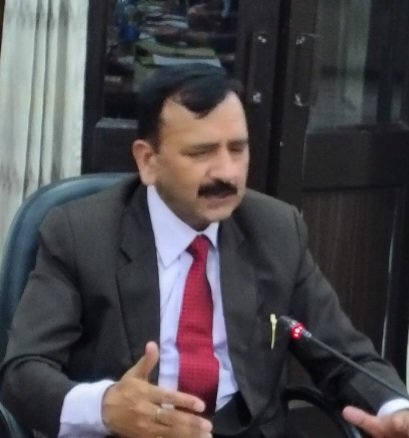
When Voters Bow Before Those They Elect: Time to Rethink Political VIP Culture. It is a time for making them accountable what they say and do.
Shimla: A rainy afternoon in a village can sometimes trigger questions that go far beyond the weather.
One such question is becoming increasingly difficult to ignore: why does a visit by an MLA or Minister to his own constituency require ordinary people to spend heavily on welcomes, shamianas, chairs, lunches, garlands, caps, shawls and mementos?
There is no constitutional requirement that voters should spend money to receive their elected representatives with elaborate ceremonies. Yet this practice has become so normal in political life that its logic is rarely questioned.
A constituency visit is supposed to be an exercise in public engagement. Instead, it can turn into a display of political status, with local leaders competing over the size of the gathering, the scale of hospitality and their proximity to the visiting politician.
The deeper issue is not the cost of a garland or a lunch. It is the mindset that has developed around political power.
India is a constitutional democracy in which sovereignty ultimately rests with the people. Elected representatives derive their authority from citizens and hold office for a limited term. They are public servants entrusted with public power.
Yet in practice, the political relationship often appears inverted.
Voters travel from remote villages to State headquarters to meet their MLA or Minister. They spend money on transport, food and accommodation, assemble delegations and wait for an appointment with the very person they elected to represent them.
The question is whether this should be regarded as normal democratic behaviour.
An elected representative receiving a citizen's grievance should not be treated as a favour. Listening to constituents is part of the responsibility of public office.
The constituency allowance and other facilities provided to elected representatives are intended to enable them to remain connected with the people and perform their responsibilities. The public should therefore expect accessibility, performance and accountability—not personal patronage.
This is where the culture of political sycophancy becomes particularly damaging.
Touching the feet of an elected politician, bending before a Minister or approaching a public representative with an attitude of supplication sends a message fundamentally different from the one intended by a democratic Constitution.
A Namaste, a handshake or a respectful greeting reflects courtesy. Political subservience is something else.
The distinction matters. India's social traditions rightly place great value on respecting parents, teachers and elders. That cultural respect should not be transferred unquestioningly into the relationship between voters and politicians. An elected representative is not a feudal superior.
The public does not owe political officeholders personal obedience. It owes them scrutiny.
This culture also has a financial side that deserves greater attention.
In many places, money is collected locally to arrange meals and receptions for visiting politicians. Such collections may be presented as voluntary contributions, but where a political visit creates social or political pressure on residents to contribute, the character of that contribution becomes questionable.
The practice can place an unnecessary burden on households that may already be struggling with rising living costs.
It also creates a peculiar form of political competition in which local leaders seek recognition by demonstrating how much they can spend on a visiting representative.
The democratic value of such expenditure is difficult to establish.
There is a strong case for bringing greater financial discipline to official constituency programmes. Where public or Panchayat resources are involved, expenditure should be governed by clear ceilings, defined purposes, transparency and audit. Where the visit is official, the cost of official arrangements should not quietly migrate to the pockets of voters.
The same principle should apply to public ceremonies surrounding development projects.
A road does not become more useful because its foundation stone is laid with great ceremony. A water scheme does not deliver more water because a plaque is unveiled. A government building does not serve citizens better because its inauguration attracts a large political gathering.
The real achievement is the asset created and the service delivered.
This is particularly relevant at the grassroots, where every rupee has competing demands.
Panchayats require money for drinking water, sanitation, rural roads, drainage, community infrastructure, disaster preparedness and maintenance of public assets. In such circumstances, unnecessary ceremonial expenditure deserves closer public scrutiny.
There is also an opportunity to redefine political competition in rural areas.
Instead of competing over who can organise the biggest feast, local leaders could compete over who helps bring the most resources to a village, who solves the most pressing public problem or who contributes towards a useful community asset.
That would turn political rivalry into public service.
The issue ultimately goes beyond individual politicians or individual villages. It concerns the political culture that has evolved after decades of democratic governance.
Nearly eight decades after Independence, citizens should no longer be conditioned to believe that access to political power depends upon flattery, garlands or personal proximity.
The political representative should be accessible without ceremony.
The citizen should be heard without having to perform loyalty.
And the elected representative should be judged by delivery rather than reception.
There is nothing wrong with people greeting their MLA or Minister warmly. Public representatives deserve courtesy. But courtesy should never become submission.
The real democratic scene should look very different.
The representative should arrive in the village without a procession of sycophants. People should sit across the table with him or her. The representative should explain what has been achieved, what remains pending and why. Citizens should ask questions and demand timelines.
That is a healthier relationship between the elected and the electors.
The political culture will not change merely because politicians are asked to change it. Citizens themselves will have to reject the idea that a politician must be pleased before public work can be obtained.
The most powerful welcome a public representative can receive is therefore not a hundred-foot garland or a lavish feast.
It is a village full of citizens who know their rights, understand public finances and are prepared to ask difficult questions.
The day voters stop behaving like petitioners and start behaving like citizens will be the day political power begins moving back to where it constitutionally belongs—with the people.