

Records Fall, Ecology Fails: Uttarakhand Breaks All-Time Char Dham Footfall Peaks While Carrying-Capacity Warnings Gather Dust
DEHRADUN: As the 2026 Char Dham Yatra races toward its winter closure, the Badrinath-Kedarnath Temple Committee (BKTC) is celebrating a staggering milestone.
According to BKTC Chairman Hemant Dwivedi, a monumental 6.35 million (63.5 lakh) devotees have already thronged the Himalayan shrines with roughly 20 days left in the season—including nearly 19 lakh pilgrims who braved high-altitude terrain to offer prayers at Kedarnath alone.
With temple portals slated to close for winter—Baba Kedar shutting its gates on November 11 on the occasion of Bhaiya Dooj, followed by Badrinath on November 16—the Pushkar Singh Dhami-led state government is rushing to brand the numbers as a golden era of spiritual tourism.
Yet, behind the triumphant press releases and boasts of broken records lies a glaring, high-stakes paradox: Who is counting the cost to the fragile Himalayas while the state government frantically counts votes and footfalls?
The Political Optics: Stretching Loose Ends in Election Mode
Political observers note that the aggressive promotion of unchecked pilgrimage numbers is hardly coincidental.
With political circles increasingly abuzz and the ruling Dhami administration entering tight election-mode preparations, the monetization and optics of religious tourism have become the government's primary report card.
Every record-shattering statistic is leveraged to project administrative success, glossing over structural stress points in fragile ecologies.
From fast-tracking infrastructure optics to managing multi-million pilgrim logistics, critics argue that the administration is treating the sacred shrines as a numbers game, leaving ecological sustainability hanging by a thread.
The compulsion to showcase endless growth leaves little room for sober environmental introspection, turning every seasonal rush into a high-stakes political campaign asset.
The Silent Elephant: Where is the SC-Monitored Carrying-Capacity Panel?
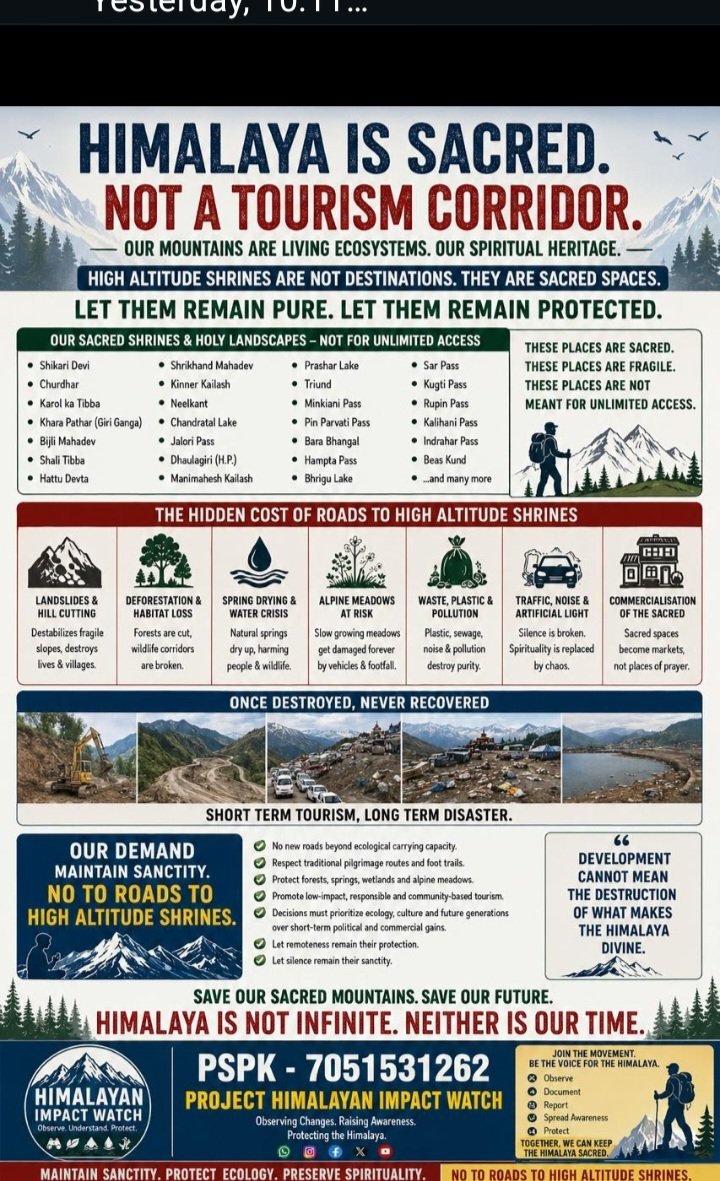
While the BKTC proudly cites the millions walking up the mountain trails, critical questions loom over the Supreme Court-monitored committee and expert panels tasked with determining the scientific carrying capacity of the Himalayan dhams.
Environmentalists point out that fragile alpine ecosystems like Kedarnath and Badrinath have explicit ecological tipping points.
Scientific studies and expert bodies have repeatedly warned that the daily influx of thousands of vehicles, unregulated pedestrian surges, and massive generation of non-biodegradable waste far exceed the threshold capacities of narrow mountain valleys.
Yet, while scientific panels crawl through bureaucratic delays and struggle for enforceable mandates, the state government continues to wave open the floodgates, prioritizing short-term political mileage over long-term planetary survival.
The absence of a transparent, legally binding carrying-capacity threshold leaves these fragile zones entirely unprotected against unbridled commercialization.
SDC Foundation’s Unheeded Warnings & Ground Realities
Civil society groups, most notably the Social Development for Communities (SDC) Foundation, have consistently raised alarms through rigorous data analysis. Time and again, SDC’s periodic Yatra reports have spotlighted compounding crises.
Alarming spikes in high-altitude pilgrim mortality, with Kedarnath historically recording heavy casualties due to sudden medical emergencies, extreme weather, and altitude sickness exacerbated by overcrowding.
Severe waste management gridlocks, where millions of single-use plastic bottles, packets, and non-biodegradable trash choke pristine streams and alpine meadows.
Staggering strain on local water, sanitation, and municipal infrastructure that were never designed to support populations rivaling small cities at altitudes exceeding 3,000 meters.
Despite SDC and other environmental watchdogs repeatedly calling for a shift toward safety-focused, regulated, and carrying-capacity-driven management, their data-backed appeals have routinely taken a backseat to populist political optics.
A Reckoning Waiting in the Wings?
As Baba Kedar prepares to lock its doors for its six-month hibernation on November 11, and Badrinath follows suit on November 16, the 2026 pilgrimage will go down in history books for its unprecedented numbers.
But environmental experts caution that unless the state government bridges the chasm between political grandstanding and scientific reality—operationalizing the findings of carrying-capacity panels before the next season opens—these very "pillars of faith" may crumble under the weight of unmitigated anthropogenic pressure.
For a government busy stitching together loose ends for the ballot box, the real test may not be how many millions walked up the mountain, but whether the mountain will survive the next wave.
#CharDhamYatra #HimalayanEcology #CarryingCapacity #UttarakhandNews