SHIMLA/NEW DELHI: India is selling a new tourism story — powered by artificial intelligence, digital platforms, lesser-known destinations and community participation.
But on World Tourism Day, an older question remains unanswered: why has a country with the Himalayas, vast coastlines, wildlife, heritage, spirituality and extraordinary cultural diversity still failed to enter the world’s leading tourism economies?
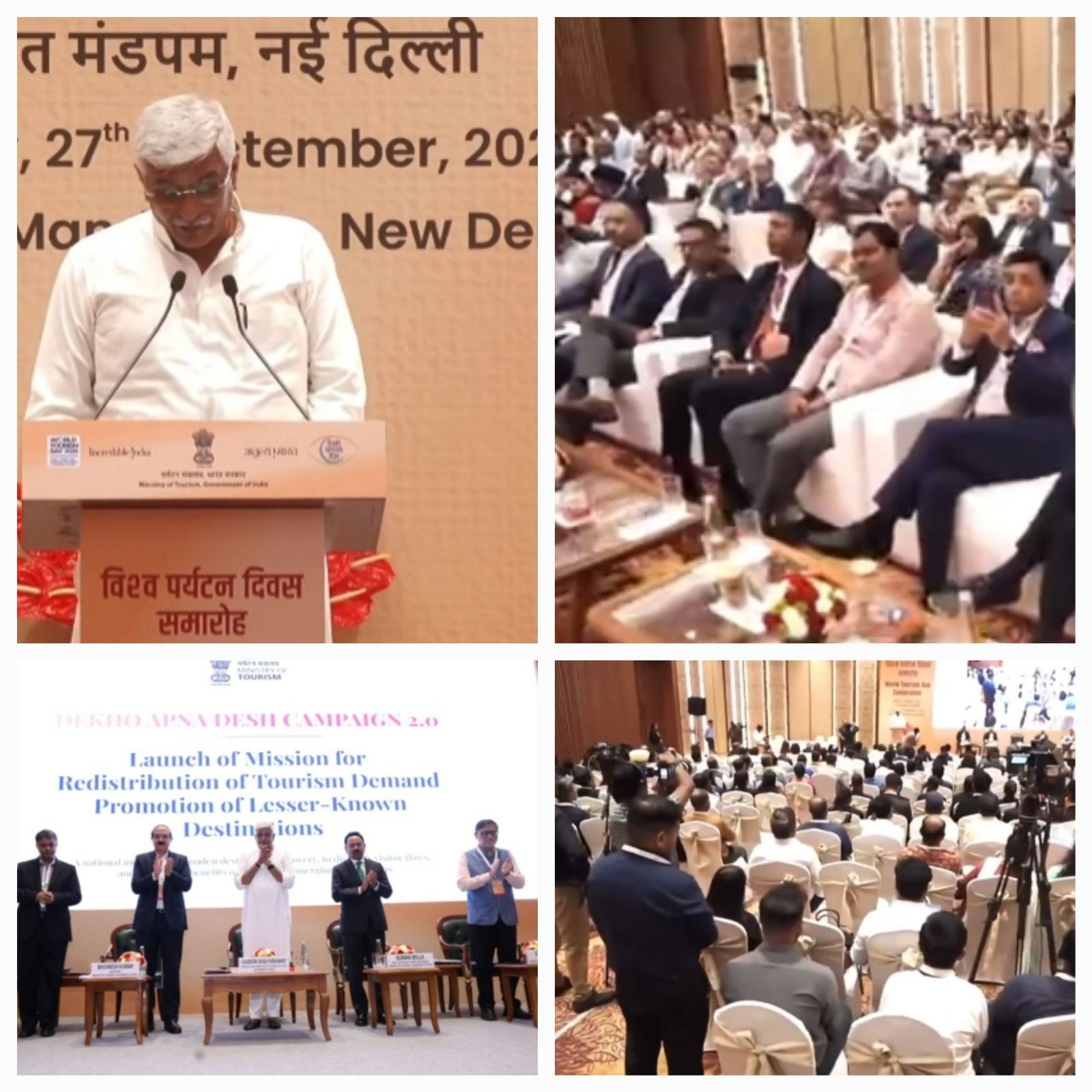
Union Tourism and Culture Minister Gajendra Singh Shekhawat, speaking at the World Tourism Day function at Bharat Mandapam, put technology and wider destination development at the centre of the government’s new pitch naming Prime Minister after almost at every third sentence he uttered at the grand function attending by a vast number of entrepreneurs representing the tourism industry.
He launched the National Digital Tourism Stack and Dekho Apna Desh 2.0, saying tourism must move beyond the established circuits and open new opportunities for local communities, entrepreneurs, women and young people. In fact, Prime Minister has been telling Indians at every business forums that they should avoid visiting foreign countries and instead explore India to strengthen the Rupee.
Shekhawat also stressed artificial intelligence, digital discovery, responsible tourism, heritage conservation and longer tourist stays. The direction is clear: use technology to make more of India visible to travellers.
But visibility is only one part of the tourism equation.
The latest World Economic Forum Travel & Tourism Development Index puts India at 31st among 110 economies. India has climbed nine places, but remains outside the global top 20, while Japan, the United States, Spain, Australia and France occupy the top five positions.
The ranking is not simply a tourist-arrival table. It measures the conditions that allow tourism to grow — connectivity, infrastructure, visitor services, business conditions, workforce, natural and cultural assets and destination readiness.
And that is where India's problem becomes more visible.
India has the attractions. What it has struggled to build at the same pace is the complete visitor experience around them.
The numbers tell another part of the story. India recorded about 20.22 million international tourist visits in 2025, while 32.83 million Indians travelled abroad during the year.
At the same time, domestic tourism is enormous. The Ministry of Tourism recorded 428.55 crore domestic tourist visits in 2025 which was flagged by the tourism secretary Birla at the function and highlighted by Shekhawat.
India, therefore, has no shortage of travellers. It has a shortage of international visitors relative to the size of its tourism potential.
That gap matters because tourism is not just that you open more and more hotels and sightseeing spots.
In the Himalayan states, it is a livelihood chain.
A tourist creates work for the taxi driver, hotel worker, guide, porter, restaurant, homestay owner, photographer, artisan, shopkeeper and local producer. In mountain villages, tourism can also open markets for horticulture, handicrafts, local food and cultural experiences.
The same economic chain runs through wildlife belts, coastal communities, pilgrimage towns, heritage cities and rural destinations across India.
This is why the next tourism push cannot remain confined to Delhi, Mumbai, Goa, Jaipur, Agra, Kerala or a few established or what you may call overtouristy Himalayan circuits like Shimla, Manali, Goa or so.
Tourism experts in Himachal have been arguing for precisely this shift.
At the Manali Expo Devalok closing function on World Tourism Day, tourism professional Nakul Khullar stressed rural and agri-tourism as a way of spreading tourism income into villages and linking visitors with Himachal’s agriculture, horticulture, culture and local products.
The stare governments hardly have a vision as to how to sell tourism to international tourists.
No doubt, the idea fits the government's own new emphasis on lesser-known destinations.
But putting a village on a digital map does not automatically turn it into a tourism destination.
A traveller still needs a road, transport, accommodation, clean surroundings, reliable internet, trained service providers, safety, information and a reason to stay longer.
This is where the familiar “Incredible India” pitch is beginning to look dated to parts of the tourism industry.
The brand remains one of India's best-known tourism campaigns. But industry voices are increasingly asking whether international tourism now needs something beyond a broad national slogan.
The global traveller has changed. Travellers increasingly search for experiences, compare destinations online, expect seamless mobility and look for authenticity rather than simply ticking famous monuments off a list.
India's tourism proposition, therefore, has to become more specific.
The Himalayas cannot be sold only as mountains. They can be sold through village life, apple orchards, trekking, adventure, wellness, cuisine, crafts, spirituality and ecology.
Rajasthan cannot be sold only through forts and palaces. Its food, desert communities, crafts, festivals and living heritage are equally part of the product.
The same logic applies to the Northeast, tribal India, coastal regions, Buddhist circuits, wildlife landscapes and rural destinations.
The tourism industry has also pointed to practical barriers — international promotion, air connectivity, last-mile transport, visa facilitation, infrastructure and trained manpower not fixers and touts rampaging the new guests.
These are less glamorous than AI. But they determine whether a visitor actually arrives, stays and spends. HP Tourism officials don't know and don't go beyond organising a function here or there goblinng up funds to make fast bucks. They never care to know which certain foreign nationals come and why others don't visit their states.
The WEF assessment makes the same distinction in another way. Tourism leaders are no longer competing simply on monuments and scenery. They are competing on the entire system surrounding the traveller.
India's nine-place rise in the WEF index is therefore encouraging, but it cannot hide the larger gap.
The WEF says 92 per cent of the economies covered by the index improved their scores between 2024 and 2026. India is moving. So are its competitors.
That makes the tourism race less about announcing potential and more about improving the visitor experience.
For a country seeking a much larger role in the global economy, tourism offers something few sectors can match: jobs and income can be created where the tourist actually goes.
That makes tourism especially important for the Himalayas.
A new hotel in a mountain town may employ dozens. A well-managed tourism circuit can support hundreds of small businesses. A village experience can put money directly into households that have few other cash-income options.
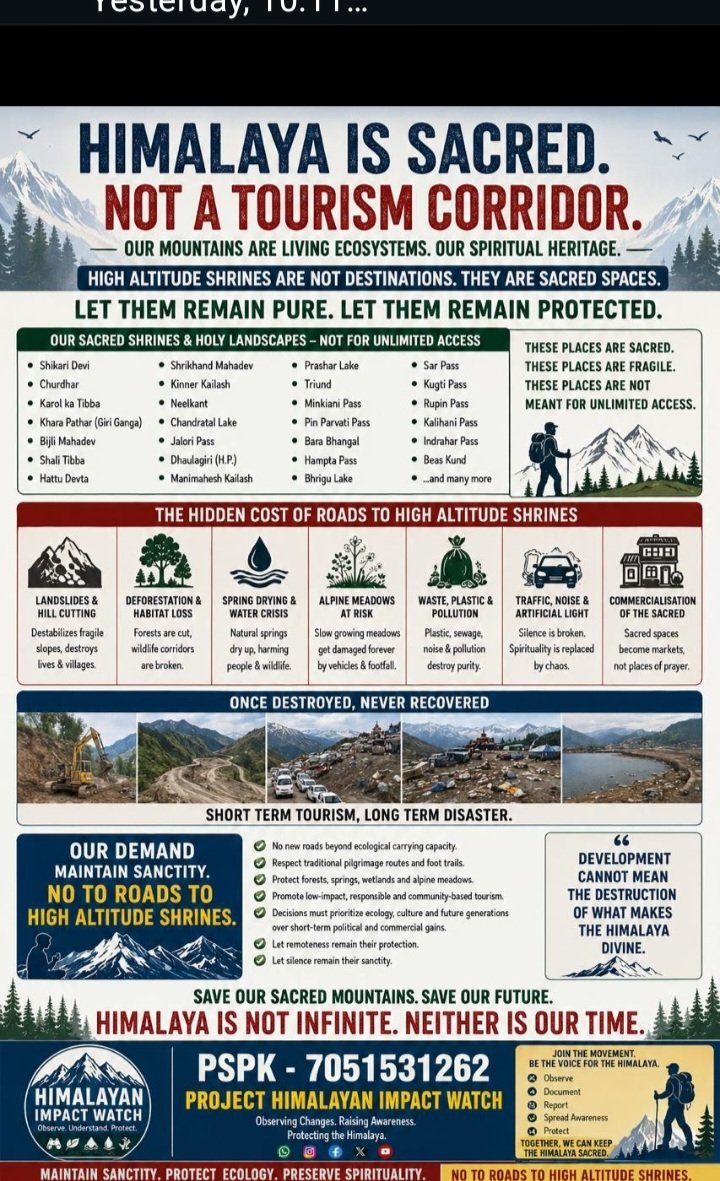
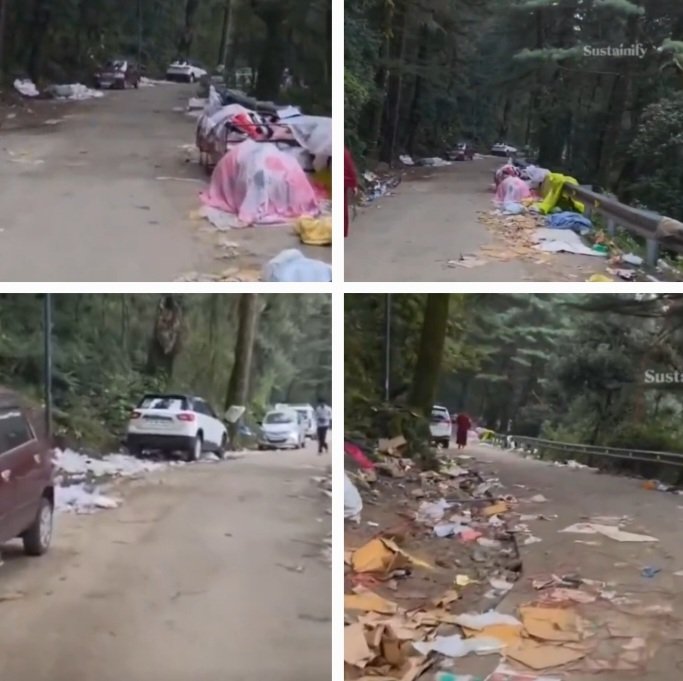
But uncontrolled tourism can also damage the very asset being sold.
Traffic congestion, waste, construction pressure, water shortages and overcrowding can turn a destination's popularity into its weakness and bring more negative publicity.
The next tourism policy therefore has to balance growth with carrying capacity.
Shekhawat's emphasis on responsible tourism, digital tools and new destinations points in that direction. The harder task is execution.
India does not need to convince the world that it has something to offer.
It needs to make reaching, experiencing and recommending those places easier.
That is the real gap between “Incredible India” as a campaign and India as a competitive international tourism destination.
The country has an enormous domestic market, a rapidly expanding economy and an unmatched variety of landscapes and cultures. Yet international tourism remains smaller than that potential suggests.
For the Himalayan states, where tourism sustains entire local economies, the issue is even more immediate.
The next tourism revolution will not be created by another slogan alone.
It will come when a foreign visitor can discover an unfamiliar Indian destination online, reach it without difficulty, stay comfortably, experience something genuinely local, spend money in the community and leave wanting to return.
That is the benchmark India now has to meet.
On World Tourism Day, Shekhawat spoke of taking Indian tourism to new heights. But he didn't mention why his ministry has failed to rope in international tourists and why more Indians are traveling abroad. Why our Char Dham Chock?
The question for the industry is no longer whether India has the height, depth or diversity to do it.
The question is whether the system around the tourist is ready.
#WorldTourismDay #IndiaTourism #IncredibleIndia #HimalayanTourism