
SHIMLA: Chief Minister Sukhvinder Singh Sukhu has activated a high-stakes political gamble by setting up a panel to redraw Himachal Pradesh’s administrative map just ahead of the state assembly elections.
The state government announced a high-powered commission to evaluate the creation, merger, and bifurcation of districts, sub-divisions, tehsils, and development blocks.
Headed by retired High Court Judge Dharam Chand Chaudhary, the commission must submit its final report within six months.
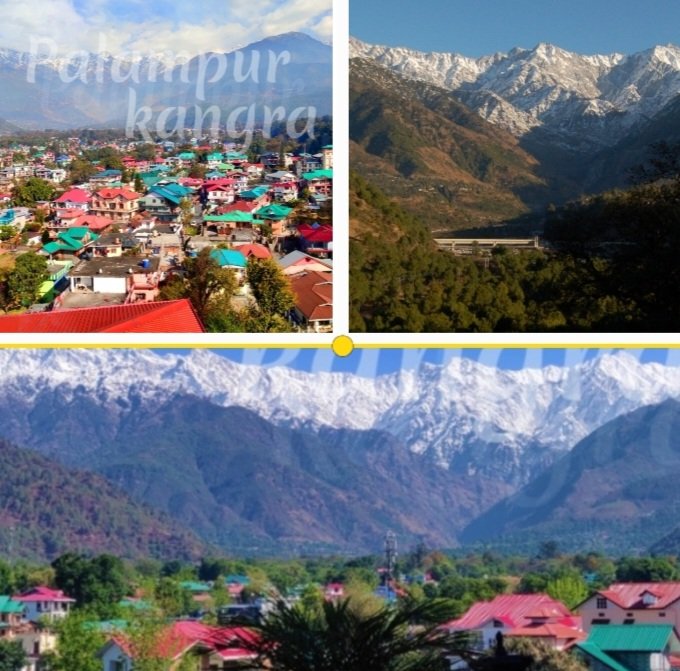
The move directly revives the long-pending demand for smaller administrative units across politically sensitive belts like Kangra, Mahasu, and Seraj.
Political observers view this step as a calculated effort to woo regional electorates with the promise of self-governance.
Fiscal experts have immediately raised red flags over the move, describing the exercise as financially reckless for a state already trapped in a chronic debt cycle.
Carving out new districts demands massive capital investment to build mini-secretariats, district courts, police lines, and staff quarters.
Even more damaging are the recurring non-plan expenditures, which permanently inflate the state’s wage and pension bills with new cadres of bureaucrats, police chiefs, and administrative staff.
Himachal Pradesh already spends the lion’s share, 80 percent, of its revenue receipts on salaries, pensions, and debt servicing. The reforms should aim at cutting down this bill rather than adding to the bill.
Diverting scarce state funds into brick-and-mortar headquarters risks tipping the fragile treasury into deeper insolvency.
Digital governance has fundamentally dismantled the traditional justification that citizens need physical district headquarters near their homes.
Over the past decade, platforms like e-District, online land registries, and direct benefit transfers have shifted routine paperwork to mobile phones and local village kiosks.
People no longer need to travel long distances through difficult mountain terrain just to meet a Deputy Commissioner or obtain a revenue certificate. It is ironical that the government has been spending crores on digitalised services and e-governance and now spending aimlessly on these commission to create new units which are needed not at all.
Public administration experts stress that citizen delivery is now governed by digital bandwidth, not geographical borders.
Pouring hundreds of crores into constructing new office complexes runs directly counter to modern administrative reforms that prioritise virtual access and streamlined services.
Demographic realities make the push for smaller administrative boundaries look even more illogical, particularly as Himachal Pradesh’s population is now projected to enter a declining mode as the current census gets underway.
The state’s total fertility rate has dropped well below the replacement level of 2.1 children per woman, leading to fewer young people and a rapidly ageing society.
Out-migration from remote mountain villages to urban belts has left numerous rural blocks underpopulated.
When an entire population base is steadily shrinking, the administrative workload per citizen decreases naturally.
Creating brand-new tiers of official machinery to supervise declining populations threatens to produce costly, underutilised bureaucracies funded entirely by public debt.
It appeares HP CM's advisors and his clique are eyeing electoral gains, which are not there.
Historical precedent suggests this controversial proposal is more about pre-election posturing than genuine administrative reform.
Successive regimes, both Congress and BJP, have dangled the new district card before voters in past election seasons.
Yet every single attempt fizzled out once the finance department calculated the crippling financial burden.
Setting up the panel under a strict six-month deadline ensures that the issue will stay front and centre in the news right up to the voting booths.
Whether the Sukhu government will actually bite the fiscal bullet after the polls or let the report gather dust remains the burning question.
But one thing is sure: If government pushes it up it will only push Himachal further into a debt crisis.
#HimachalPradesh #SukhuGovt #NewDistricts #HimachalElections
# New Districts Commission: Populism at the Cost of Prudent Governance
RESPONSES:
1 The Sukhu government’s decision to set up a commission to examine the creation of new districts and subdivisions raises a fundamental question: should Himachal Pradesh expand its administrative machinery at a time when digital governance is making physical distances increasingly irrelevant and the state is already under severe financial stress?
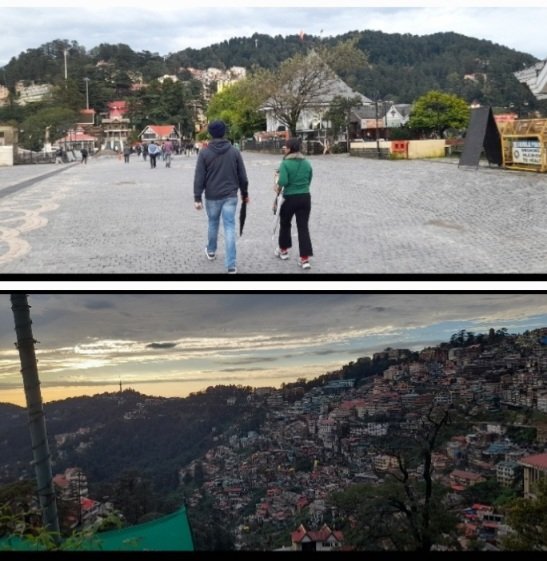
The argument for new districts is not without merit. Residents of remote areas such as Rohru and Chopal travel more than 130 km to reach Shimla, while people in Pangi have to cover around 150 km to reach Chamba. Bringing administration closer to people is a legitimate objective. But creating new districts is not necessarily the most efficient or economical way to achieve it.
Himachal Pradesh was formed with six districts in 1966, and six more were subsequently added over the following decades. In 1972, when connectivity was poor and access to government offices depended largely on physical travel, the creation of new districts was an understandable administrative response. The question is whether the same approach remains appropriate in the digital age.
Today, services such as Himachal e-District, Jan Manch, e-Parivahan and online Jamabandi have changed the relationship between citizens and government. A substantial range of government services is now available online. As digital infrastructure expands and artificial intelligence transforms public service delivery, the need for citizens to travel to district headquarters for routine work should progressively diminish.
Creating new administrative boundaries to solve problems of distance risks applying a 19th-century solution to a 21st-century challenge. The priority should be to make governance accessible, not simply to create more offices.
A more economical alternative would be to strengthen existing subdivisions through adequately staffed mini-secretariats equipped with delegated powers, digital facilities and time-bound service delivery. Karnataka and Kerala offer models of decentralised administration at the taluka level that merit examination. Himachal Pradesh could explore similar arrangements, giving subdivision-level offices sufficient authority to resolve routine matters without requiring citizens to approach district headquarters.
The financial implications of creating new districts cannot be ignored. Establishing a district requires land, buildings, residential accommodation, offices, vehicles, infrastructure and additional staff. Recurring expenditure on salaries, pensions, maintenance and administration adds to the burden. The estimated cost of establishing a new district may run into hundreds of crores, depending on its size and infrastructure requirements. Any proposal must therefore be supported by a transparent financial assessment rather than political assurances.
The state’s fiscal position makes such scrutiny imperative. Himachal Pradesh’s outstanding debt has been reported at more than ₹95,000 crore. With a substantial proportion of expenditure committed to salaries, pensions and arrears, the government has limited room to expand its recurring liabilities without compromising other priorities.
Staff availability presents another challenge. With vacancies reported across departments, creating additional district headquarters could spread an already stretched workforce even thinner. Establishing offices without ensuring adequate staffing, functional infrastructure and timely delivery of services would create administrative expansion without a corresponding improvement in public service.
Population, geographical accessibility, revenue viability and administrative convenience must all be assessed before a new district is considered. The population criterion cited in older central guidelines for hill districts also deserves examination, rather than being treated as either an automatic barrier or an irrelevant consideration. A commission must publish its criteria, cost estimates and findings so that the debate rests on evidence.
There is also a political and social dimension. District boundaries often acquire a strong cultural and regional identity. Altering them can generate competing demands and local disagreements over headquarters, jurisdiction and representation. With the Assembly elections due in 2027, the government must ensure that any exercise is guided by long-term administrative necessity rather than short-term political considerations.
The creation of new districts is, therefore, a classic debate between populism and prudence. The demand may be emotionally compelling, and decentralisation may be administratively desirable, but neither automatically establishes the economic viability of creating a separate district.
The more immediate priority should be to connect citizens, particularly those in remote villages and economically weaker sections, with government services. Common Service Centres at the Panchayat level, reliable internet connectivity, trained operators, digital assistance and effective grievance redressal can bring services to people who lack smartphones, digital literacy or the resources to travel.
Digital governance must not mean leaving the poor to navigate online systems on their own. It must mean taking government services to their doorsteps through accessible local facilities, while ensuring that those unable to use digital platforms can still obtain assistance.
The test of good administration is not the number of districts, subdivisions or government buildings a state creates. It is how quickly and fairly a citizen receives a service, resolves a grievance or secures an entitled benefit.
Himachal Pradesh needs smarter administration, stronger subdivisions and more effective digital delivery—not necessarily more administrative headquarters. Before committing scarce public money to new districts, the government must demonstrate that the proposed expansion will deliver benefits that existing institutions, strengthened with modern technology and delegated powers, cannot provide.
-PREM PAL RANTA, FORMER JUDGE AND MEMBER SECRETARY, HPSLSA