Shimla:
As the Budget Session of the Himachal Pradesh Vidhan Sabha begins today, the state enters the House burdened not just by numbers in the finance bill, but by years of missed opportunities for reform, ballooning non-planned expenditure and political choices that deepened a fiscal crisis now impossible to mask.
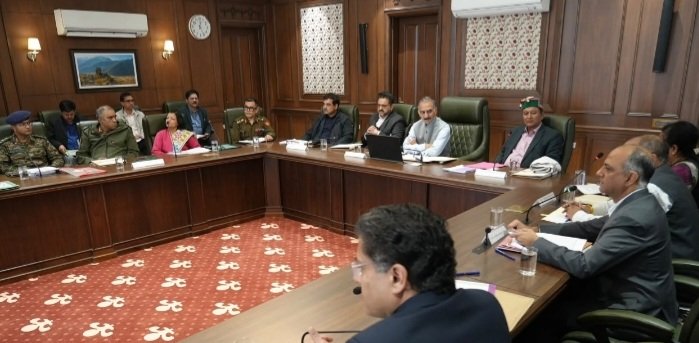
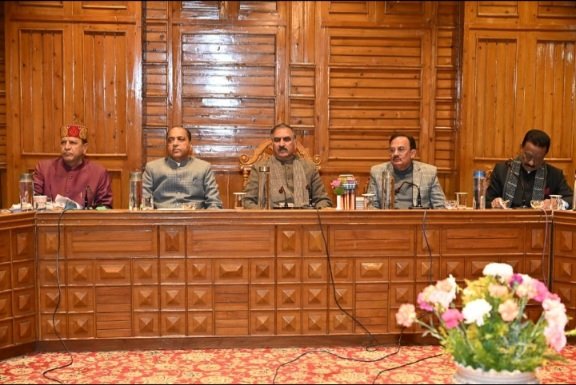
CM Sukhu has already convened an all- party meeting on issueof RDG last week. But it was marred by the political blame game as expected BJP staged walkout blaming Sukhu for politicizing the issue.
The House will also see whether or not it passes an unanimous resolution seeking restoration of the RDG stopped by the 16th Finance Commission from April, 1 2026-27 to 2031.
The timing is telling and there is more than blame-game that has worsened the economy of this tiny hill state.
CM Sukhu started with his appeasement style of functioning masked by Vyastha Parivartan to strengthen his power. He appointed six CPSs.
Barely over 13 months after the Himachal Pradesh High Court struck down the appointment of six Chief Parliamentary Secretaries (CPSs) after BJP challengeed the posts.
The legislators will debate a budget shaped by decisions that continued to drain the exchequer even as the legality of those posts was illegal.
From January 2023 to November 2024, CPSs remained in office, costing the state over ₹5 lakh to Rs 10 lakh per CPS per month once salary, allowances, staff, vehicles, accommodation and protocol expenses are added, sources said.
Under the Himachal Pradesh Parliamentary Secretaries Act, 2006, a CPS officially draws ₹65,000 a month, but the real cost was never placed before the House, a gap the opposition is expected to raise sharply during the session.
The CPS episode is not an isolated case. It mirrors a larger pattern in which political convenience or downright appeasement trumped fiscal discipline, even as the state’s finances grew increasingly fragile.
During the same period, the government pushed through salary and pension revisions for MLAs, including inflation-linked automatic increases under the Legislative Assembly Amendment Act, 2025.
Ironically, all 68 MLAs quietly and quickly passed the Act.
Former MLAs’ pension was raised to ₹50,000 per month, imposing an estimated ₹30 crore additional burden on the exchequer.
All this came when more than 80 per cent of the state’s budget was already locked into salaries, pensions, interest payments and loan servicing.
The result is more visible that will frame today’s budget debate after Governoraddress: Himachal’s outstanding debt has crossed ₹1 lakh crore, a daunting figure for a small hill state with limited own-tax revenue and rising disaster-related expenditure.
This fiscal stress has coincided with the curtailment of the Revenue Deficit Grant (RDG)—a move many economists say is unjustified at this stage given Himachal’s terrain-linked costs, limited sources of income,low industrial base and consumer markets and vulnerability to climate shocks.
Yet, officials concede privately that the state has weakened its own case before Delhi.
The 16th Finance Commission had urged Himachal to cut non-planned expenditure, implement Direct Benefit Transfer (DBT) comprehensively, digitise land and property records to plug leakages, and restructure or shut down loss-making PSUs.
As the Budget Session opens, few of these reforms have moved beyond files.
Instead, the government continued to expand expenditure through post-retirement extensions and re-employment of senior officers, the creation of advisory roles, and politically sensitive spending, freebies that avoided immediate backlash but added long-term liabilities.
Critics argue this turned the administration into a holding zone for retired officials, even as younger recruitment stalled.
Legal expenditure is another fault line likely to surface in the House. Despite engaging 111 government advocates as Deputy and Additional Advocates General—drawing salaries running into crores—the state routinely hires private counsels in the Supreme Court and High Courts. Official estimates peg cumulative legal liabilities at nearly ₹1,000 crore, an amount that dwarfs allocations for several social sectors.
Then there are the public sector undertakings. Of 27 state-run PSUs, 12 are in deep losses, led by HRTC, whose accumulated losses have crossed ₹1,700 crore, along with HPSEBL, HPPCL, HIMFED and HPMC, all hotbed of corruption.
The remaining PSUs together generate less than ₹20 crore in annual profit, while politically appointed boards and chairpersons continue to add overheads. Total losses are estimated at over ₹5,000 crore.
As a result, the burden of fiscal stress has increasingly shifted to citizens—through new taxes, tolls and fees—while structural reforms remain deferred.
As legislators take their seats today, the budget is expected to be sold as a balancing act under extraordinary constraints. But critics say the real question this session must answer is simpler and sharper: why, even as revenues tightened and grants shrank, did the state prioritise pay hikes, pensions and patronage over reform?
For Himachal, the Budget Session opens not just with figures on paper, but with a credibility test—whether the House will confront the cost of political comfort, or once again postpone the hard decisions the state can no longer afford. Himachal’s MLAs need self-introspection.