Mandi, Feb 22:
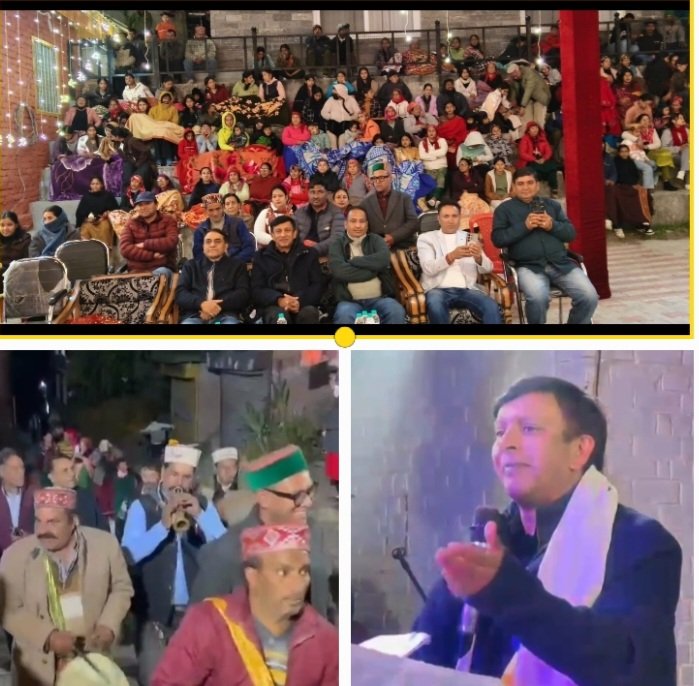
At a time when Mandi district is still healing from the scars left by last year’s devastating floods, the week-long International Shivratri Fair has emerged as a powerful social, cultural and emotional rejuvenator for the temple town, reaffirming its spirit as Choti Kashi and restoring confidence among residents, traders and devotees alike.
The closing ceremony of the International Shivratri Fair at Paddal ground was presided over by Shiv Pratap Shukla, who was accompanied by Lady Governor Janaki Shukla.
The Governor formally declared the fair closed by handing over the Shivratri Mahotsav flag to the Chairman of the Mela Committee and Deputy Commissioner Apoorv Devgan.
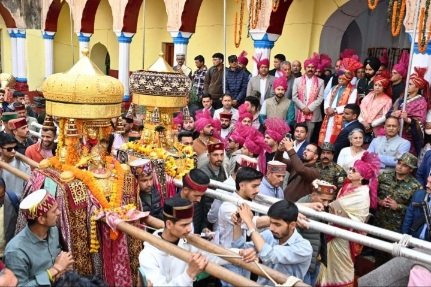
Earlier in the day, the Governor paid obeisance at the historic Madhorai Temple, participated in the traditional Shobha Yatra and attended the Devludham at Mata Bhimakali premises.
He later offered prayers at the Shree Raj Madhav Rai Temple and joined the centuries-old Jaleb procession, led by Shree Raj Madhav Rai.
Addressing a large gathering, the Governor described Shivratri as more than a festival, calling it a reflection of faith, penance and devotion deeply rooted in Himachal’s cultural ethos.
Referring to Lord Shiva as the embodiment of creation and destruction, he said the Trishul symbolises truth, righteousness and justice, while the Damru reflects the eternal cycle of life.
Linking spirituality with contemporary concerns, the Governor underlined environmental responsibility as integral to true devotion.
He said Lord Shiva as Vishwanath represents the oneness of nature and divinity, adding that respecting nature and fulfilling social and moral duties was the true essence of worship—an observation that resonated strongly in a district still recovering from flood-induced destruction.
Calling Himachal Pradesh Devbhoomi, the Governor lauded Mandi’s spiritual legacy and its network of ancient temples.
He noted that the Shivratri Mahotsav had once again become a platform for reviving folk culture, music, dance and handicrafts—offering much-needed economic activity to local artisans, performers and small traders affected by the floods.
Marking 500 years of Mandi town’s establishment, he appreciated heritage walks, literary events and cultural programmes organised during the festival.
New initiatives such as the Beas Aarti near Panchvaktra Temple, laser shows narrating Mandi’s history, participation of international cultural troupes, the first Chhoti Kashi Literature Festival, Saras Mela and promotion of women entrepreneurs were cited as signs of a festival evolving with time.
Over 200 deities from across Himachal participated in the Mahashivratri celebrations, infusing the town with spiritual fervour and drawing thousands of devotees.
Students of Saraswati Vidya Mandir presented a devotional dance depicting the glory of Lord Shiva, adding colour to the concluding ceremony.
Former Chief Minister and Leader of Opposition Jai Ram Thakur, MLAs Chander Shekhar, Anil Sharma, Inder Singh, Deep Raj, Vinod Kumar, Puran Chand Thakur and other leaders.
For a town battered by floods, this year’s Shivratri was more than a religious congregation—it became a statement of resilience.
As the Jaleb wound its way through Mandi’s streets, Choti Kashi stands unbowed, drawing strength from faith, tradition and collective resolve.