KAZA (SPITI) — The biting winter chill of Himachal Pradesh’s high-altitude cold desert may remain unforgiving, but for the residents of Spiti Valley, the perennial winter blackout blues are poised to become a thing of the past.
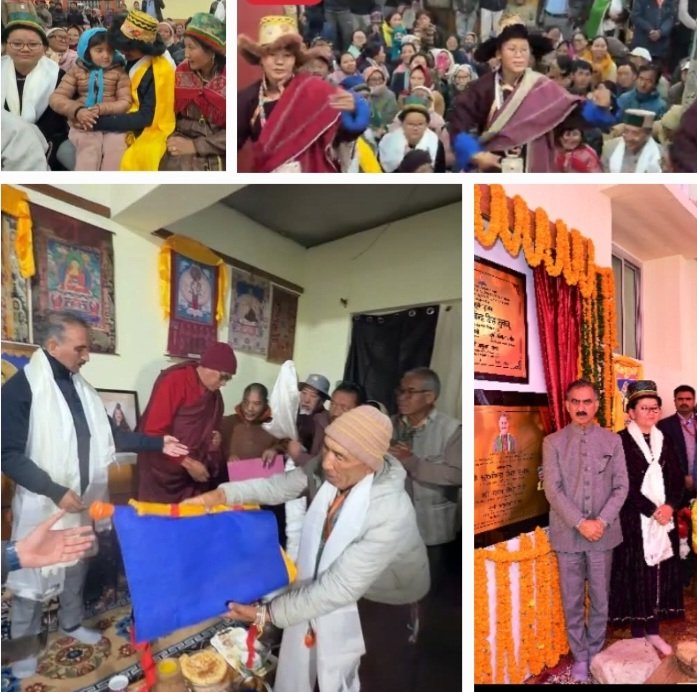
Striking a deep emotional chord with one of the country’s remotest border communities, Chief Minister Thakur Sukhvinder Singh Sukhu spent the night alongside Spitians in freezing sub-zero temperatures, directly witnessing life on the edge of the Tibetan plateau as he dedicated Himachal Pradesh’s first battery-backed solar power project at Rongtong in Kaza.
The visit formed the centerpiece of a sweeping development package worth ₹116.28 crore for the tribal frontier district of Lahaul-Spiti, combining renewable energy security, high-altitude road connectivity, and strategic grid modernization along the Line of Actual Control (LAC).
Lighting the Cold Desert at 3,600 Metres
Perched at an altitude of 3,600 metres above sea level, the ₹4.42-crore Rongtong installation combines a 2 MW solar plant with a 1 MWh Battery Energy Storage System (BESS).
The design is tailor-made to conquer the region's harshest vulnerability: when glacial streams freeze in dead winter, choking traditional hydro generation, the battery storage will ensure homes, clinics, and security posts remain powered through the sub-zero nights.
The plant, which commenced construction in May 2023 and completed commissioning in December 2024, has already delivered 22.58 lakh units of clean electricity across its trial and operational phases through September 2026.
It is calibrated to generate 36 lakh units annually, demonstrating that clean, decentralized microgrids can operate reliably even in extreme Himalayan conditions.
Recalling his maiden visit as Chief Minister to Spiti in 2023, Sukhu noted that the local community’s primary grievance had been chronic voltage collapse and blackouts.
Spending the night in the valley was both an act of solidarity and a personal check on delivery. To complement the solar facility, the Chief Minister announced that an additional ₹6 crore will be spent to bring the local Rongtong Hydel Project back to full operational capacity.
Overhauling a Fragile 200-km Lifeline
Historically, Spiti's electricity has dangled by a thread—routed through a single 200-kilometre-long, 22 kV feeder running from Pooh in Kinnaur to Kaza. Stretched across jagged cliffs and battered by blizzards, this feeder suffered constant technical losses, low voltages, and multi-day disruptions during snowstorms.
To permanently resolve this vulnerability, the Chief Minister laid the foundation stones for two 66/22 kV sub-stations at Sumdo (Kinnaur) and Kaza, carrying a combined budget of ₹47.95 crore:
Strategic Grid Resilience: Situated within 100 kilometres aerial distance of the LAC, the twin sub-stations will stabilize civilian hamlets while guaranteeing uninterrupted electricity to border defense installations and emergency healthcare centres.
Modern Distribution: The new sub-stations will trim line losses, regulate fluctuating voltages, and create the capacity needed to absorb Spiti's surging homestay and eco-tourism economy.
All-Weather Roads for Farmers and Tourists
Alongside power security, the Chief Minister inaugurated two key road projects totaling ₹63.91 crore to break the valley's seasonal isolation:
Chhidang–Tangti Khar Telling Road (₹39.55 crore): Transforms a treacherous unpaved stretch in Pin Valley into a durable, all-weather corridor fitted with crash barriers, parapets, and modern signages.
The route guarantees that Pin Valley’s cash crops—notably premium green peas and seed potatoes—reach lowland markets before frost blocks the passes.
Tanzit–Hikkim Road (₹24.36 crore): A complete 12-kilometre upgrade opening reliable access to Hikkim, home to the world’s highest post office. Beyond easing local commutes, the upgraded blacktop provides a massive boost to high-altitude tourism and local homestay livelihoods.
By coupling resilient off-grid energy storage with hardened road arteries, the state's tribal push aims to turn Spiti from an isolated outpost battling the elements into a self-sustaining frontier economy.