Roads to Every Shrine and the Ecological Crisis Nobody Wants to Discuss
SHIMLA: Across Himachal Pradesh, a silent but far-reaching transformation is underway.
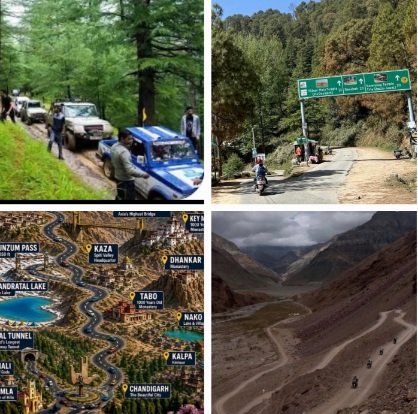
From remote mountain shrines and sacred lakes to alpine meadows and forested ridges, roads are steadily pushing deeper into landscapes that were once protected by their remoteness.
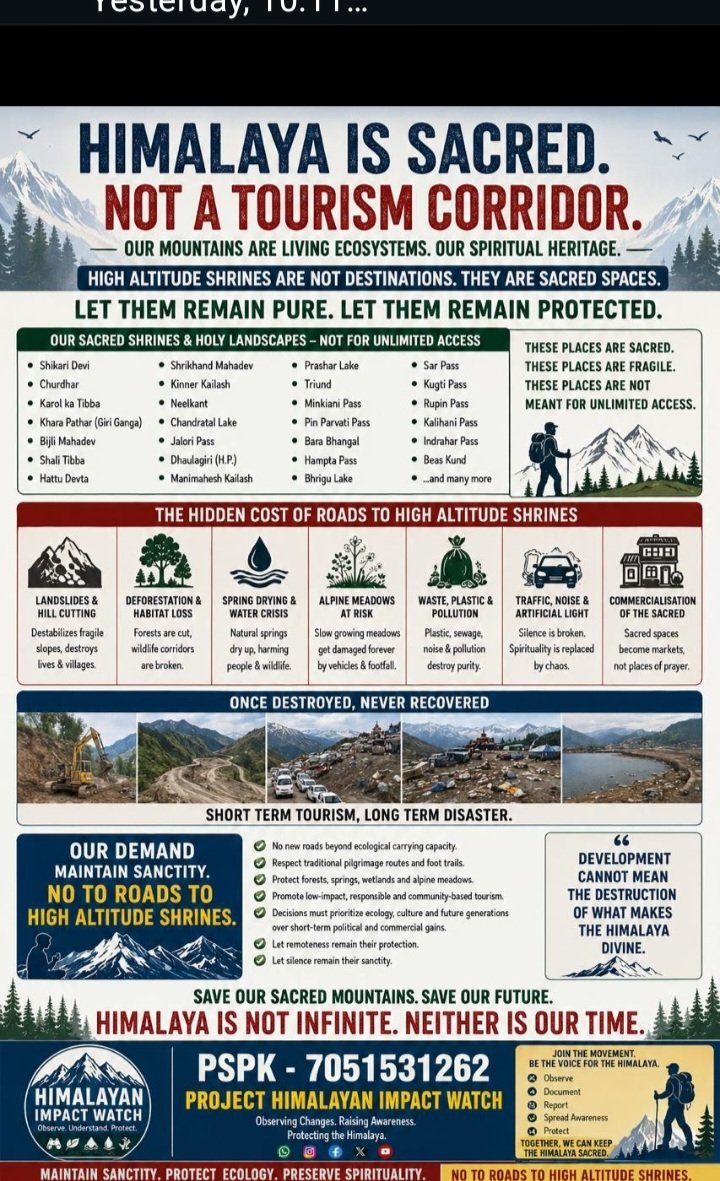
The developmental race is visible around revered destinations such as Shikari Devi, Churdhar, Shali Tibba, Bijli Mahadev, Shrikhand Mahadev, Kinner Kailash, Manimahesh, Prashar Lake and numerous smaller village deity shrines scattered across the state.
What were once arduous pilgrimages involving long treks through forests and high-altitude landscapes are increasingly becoming destinations linked by roads, parking areas, tourism facilities and commercial activity.
For many rural communities, the logic appears straightforward. Better roads bring more tourists. More tourists generate more business. More business creates jobs and economic opportunities.
Consequently, demands for road connectivity now dominate public discourse in many panchayats. Roads are increasingly viewed as the answer to unemployment, migration, economic stagnation and rural isolation.
Yet the Himalaya is posing a difficult question: What happens when every sacred mountain becomes a motor road destination?
Fragile Mountains Under Pressure
Unlike the plains, high Himalayan landscapes are ecologically fragile and slow to recover from disturbance.
Reserve forests, alpine grasslands, wetlands, glaciers, springs and mountain catchments function as interconnected ecological systems that regulate water security, biodiversity, slope stability and local climate.
Ironically, these are the very landscapes now facing the greatest developmental pressure.
Road construction often triggers a chain reaction of ecological impacts—hill cutting, forest fragmentation, soil erosion, landslides, groundwater disruption and habitat loss. Once roads arrive, they are typically followed by parking lots, hotels, eateries, shops and increasing vehicular traffic.
Sacred lakes become tourist attractions. Forest clearings become commercial sites. Wetlands are viewed as available land for infrastructure.
Across the state, we can increasingly observe mountain landscapes losing the ecological silence and natural restraint that once protected them from excessive human pressure.
When Pilgrimage Becomes Consumption
Traditionally, Himalayan pilgrimage was based on effort and restraint.
Devotees walked through forests, crossed ridges and spent days reaching sacred destinations. The journey itself was part of the spiritual experience. Physical hardship fostered humility, while remoteness acted as a natural conservation mechanism.
That relationship is now changing rapidly.
As roads move closer to sacred destinations, pilgrimage increasingly resembles mass tourism. Large vehicles, amplified music, plastic waste, food stalls and commercial construction are becoming common features of many religious circuits.
What we can increasingly see is the transformation of sacred geography into a recreational and commercial commodity. The spiritual discipline associated with pilgrimage is gradually giving way to convenience-driven tourism.
The Tourism Boom — and Its Hidden Costs
The economic benefits of tourism are real.
Road access often leads to rising land values, the growth of homestays, hotel construction and new employment opportunities. For many families, tourism provides much-needed supplementary income.
However, mountain tourism economies often follow a familiar and troubling pattern.
Rapid expansion is followed by overcrowding. Water demand exceeds local supply. Waste management systems become overwhelmed. Traffic congestion grows. Natural resources come under stress. Eventually, environmental degradation begins undermining the very attractions that draw visitors.
The irony is stark.
The forests, snowfields, meadows, springs and silence that attract tourists are gradually damaged by uncontrolled access and excessive infrastructure development.
Panchayats Face a Difficult Choice
Local communities cannot be faulted for seeking better livelihoods and opportunities for younger generations.
But development debates increasingly revolve around visible infrastructure projects—roads, parking spaces and tourism facilities—while less visible ecological assets receive little attention.
Springs, wetlands, aquifers, biodiversity corridors and mountain catchments rarely become election issues until they begin to fail.
Across Himachal, we can see a growing divide emerging between immediate economic aspirations and long-term ecological sustainability. This is raising concerns that two Himalayas are being created—one focused on short-term extraction and another struggling to preserve ecological resilience.
A Different Development Model
Few people advocate complete isolation of remote regions. Connectivity remains essential for healthcare, education and emergency services.
However, many experts argue that Himachal Pradesh urgently needs a more balanced approach.
Measures often suggested include ecological carrying-capacity assessments, stricter regulation of tourism infrastructure, protection of springs and wetlands, revival of traditional walking pilgrimage routes, limits on vehicle access in sensitive zones and stronger environmental governance at the local level.
The debate is no longer about whether roads create development.
The real question is whether development can remain sustainable if every sacred mountain, alpine meadow and remote shrine is eventually transformed into a motorable tourist destination.
As Himachal continues expanding its road network into higher and more fragile terrain, the state faces a defining challenge.
Will it preserve the forests, water systems, silence and sacred ecology that make the Himalaya unique?
Or will short-term gains create a future in which the mountains remain accessible—but the natural and spiritual values that once defined them are gone?
The answer may determine not only the future of tourism in Himachal Pradesh but also the ecological security of millions who depend on the Himalaya's forests, springs, rivers and fragile mountain ecosystems.