
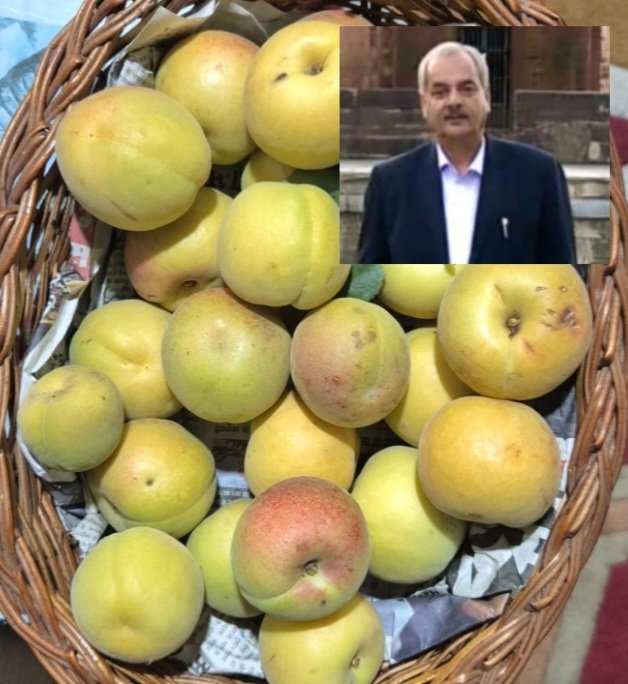
Apricot: The Organic Gold of the Himalayas Driving Rural Economies
SHIMLA/LEH: As orchards across the Himalayan region begin yielding their summer bounty, apricot stands out as one of nature's most remarkable gifts—an almost entirely organic fruit that requires little to no pesticide intervention while offering substantial nutritional and economic benefits.
Unlike many commercial fruit crops, apricots are naturally resilient and generally free from major pest and disease infestations.
This makes them a preferred choice for growers seeking sustainable and low-input farming practices. Orchardists often describe apricot as one of the cleanest fruits produced in the Himalayas.
The fruit, believed to have originated in Central Asia and parts of Asia including India, has adapted exceptionally well to the cold desert conditions of Ladakh.
The Kargil region, in particular, has earned national recognition for producing some of the finest apricots in the country.
Experts attribute the exceptional quality of Ladakh apricots to the region's unique climate.
Dry air, intense sunshine, sandy soils, cool nights, and glacier-fed irrigation create ideal conditions for slow fruit maturation, resulting in superior sweetness, colour, and flavour.
The cultivation system is often cited as a perfect example of "natural farming," where the fruit develops under the influence of the five natural elements—sky, air, water, sunlight, and soil.
Apricot has emerged as a significant source of livelihood for farmers in Ladakh. Beyond fresh consumption, the fruit undergoes value addition through drying, freezing, and processing into jams, oils, and confectionery products.
Packaged dried apricots from Ladakh now find markets across India and abroad, generating substantial income for local communities.
Several traditional varieties such as Raktsey Karpo and Halman have earned Geographical Indication (GI) recognition, highlighting their unique regional identity and commercial value.
Other popular cultivars including Shakar Para and Kaisha are increasingly being cultivated in Himachal Pradesh's Kinnaur, Lahaul-Spiti, Kullu and Shimla districts.
At elevations above 7,000 feet, growers are currently preparing to harvest Shakar Para apricots, while consumers eagerly await the arrival of other seasonal fruits such as plums and early apple varieties.
Among plums, cultivars like Mariposa and Santa Rosa continue to enjoy popularity for their juicy texture and rich flavour.
Agriculture experts emphasize that apricots are rich in vitamins, minerals, antioxidants and dietary fibre, making them an important component of healthy diets.
With growing consumer demand for chemical-free produce, the fruit's market potential is expected to rise further in coming years.
The apricot can be cultivated in kitchen gardens and terrace orchards wherever climatic conditions permit. Its low maintenance requirements, attractive appearance and nutritional value make it an ideal fruit tree for urban households with limited space.
As consumers increasingly seek naturally grown foods and farmers look for climate-resilient crops, apricot is emerging not just as a delicious summer fruit but also as an economic powerhouse supporting sustainable livelihoods across the Himalayan region.