SHIMLA: Imagine living in a capital city where residents wait four to five days for water—and when the taps finally run, the supply is still not sufficient.
This is the grim reality confronting thousands of Shimla residents today.
The erstwhile summer capital of the British Raj and the capital of Himachal Pradesh for nearly eight decades continues to struggle to provide something as basic as a reliable, adequate and quality supply of drinking water to a population of around three lakh.
And this is not a city without institutional history.
The Shimla Municipal Corporation, one of India's oldest municipal institutions, has its roots in the British era.
Yet decades of urban expansion, rising population and growing tourism have failed to produce a water-supply system capable of guaranteeing residents a dependable supply.
The latest rationing schedule for Sanjauli, Chhota Shimla and New Shimla tells the story in stark terms. Localities are being assigned specific supply days, while residents in several areas complain that even after waiting four or five days, the quantity reaching their homes is inadequate.
Four days of waiting. Then insufficient water. Then another wait.
For a modern state capital, this should be unacceptable, said residents.
The crisis is bigger than shortage.The fundamental question is whether Shimla actually has a water shortage—or whether it has a water-management and infrastructure crisis.
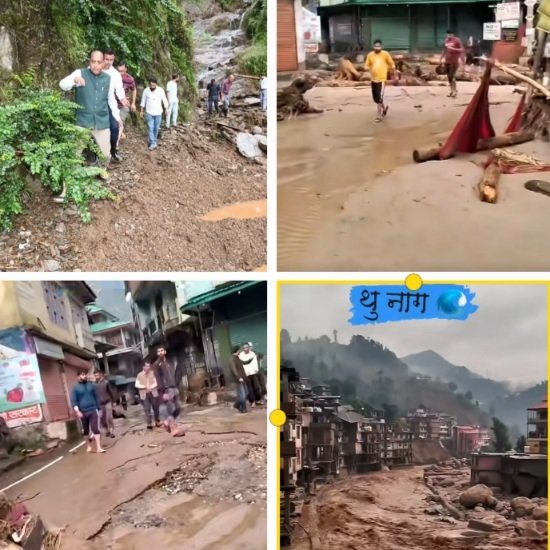
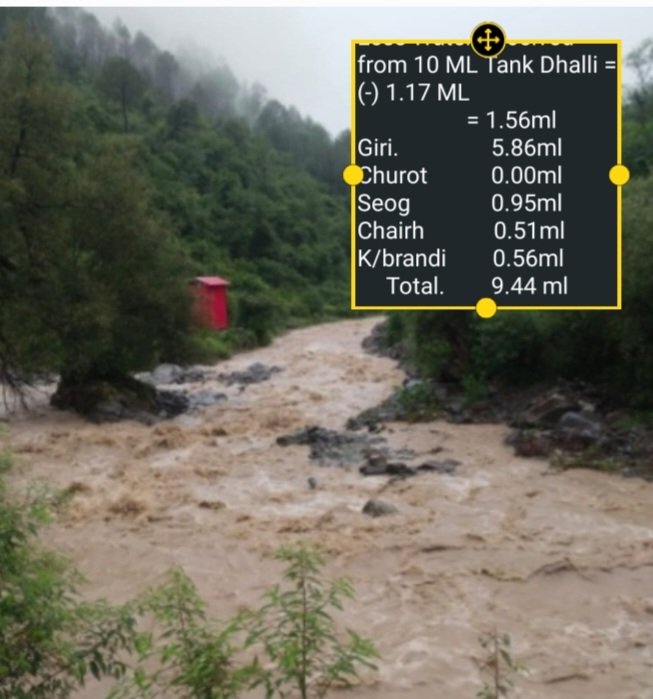
The city remains vulnerable to the same problems every monsoon: excessive silt in the Giri and Guma systems, turbidity, power interruptions and pumping failures.
The Giri, Guma and Koti Barandi sources together provide around 40 MLD, making their protection and reliability crucial to the capital's water security.
Yet where is the comprehensive sediment-management strategy?
Why are there not adequate sedimentation structures, check dams, silt traps and catchment-treatment measures upstream to reduce the impact of monsoon runoff?
Rainfall and silt are not new phenomena in the Himalayas. They are predictable risks that should have been built into the design of Shimla's water infrastructure.
The Satluj lift scheme raises another uncomfortable question
The much-publicised Satluj-based lift scheme was expected to provide Shimla with greater long-term water security.
But the reported failure and burning of a transformer installed for the scheme, only months after its installation, has raised serious questions.
Was the transformer technically adequate? Was it tested properly? Who inspected and certified it? What were the contractual specifications and warranty conditions?
And perhaps most importantly:
Why was the work awarded to Sai Engineering? It is learnt cost has escalated to Rs 600 Crore.
The public deserves to know the firm's technical eligibility, experience, qualification and contractual mandate for such critical infrastructure.
Residents also deserve an answer to another obvious question.
These are legitimate questions for SJPNL, the Jal Shakti Department and HPSEBL to answer transparently through tender documents, technical specifications, inspection reports, commissioning certificates and contractual records.
Who owns the responsibility?
When water does not reach households for four or five days, and the eventual supply is inadequate, responsibility cannot simply be passed from one agency to another.
SJPNL must answer for the schemes under its control. Jal Shakti must answer for source development and water infrastructure. HPSEBL must clarify the electrical and power-related aspects. The government must answer for the larger policy and planning failure.
And the Shimla Municipal Corporation cannot remain merely a spectator when citizens within the capital's municipal limits are struggling for basic water.
The city does not need another temporary rationing schedule. It needs water security.
That means dependable sources, adequate storage, modern treatment and sedimentation facilities, upstream catchment protection, check dams and silt traps, reliable pumping, dedicated power backup and redundancy in the system.
Above all, it requires accountability for every rupee spent and every critical component installed. Water bills have inflated but residents cry "water, water".
After nearly 79 years of Independence, Shimla should not be asking when the next water tanker will arrive or counting the days between supplies.
A capital city where residents wait four to five days for water—and still do not receive enough—is not facing merely a monsoon problem. It is facing a governance failure.
Shimla has waited long enough. The time for rationing excuses is over; the time for accountability and a permanent solution has arrived.
The scheme has not been restored so far. The project cost has shot up to over Rs 600 crore. Yet residents are getting the erratic power supply.