Dehradun:
At a time when textile waste is quietly choking landfills, drains and rivers, a group of civil society organisations in Dehradun has chosen to respond not with seminars alone, but with action inside classrooms.
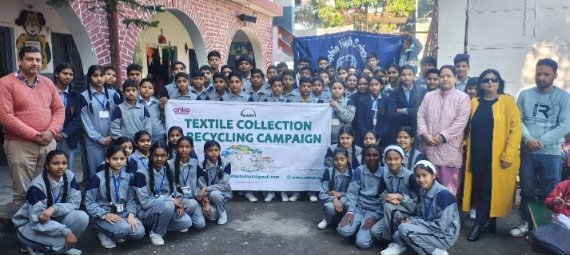
More than 1,000 students from 20 schools across the city participated in the first phase of a Textile Collection and Recycling Campaign, an initiative led by SDC Foundation in collaboration with Anko Sourcing and Vaapsi, a brand of BTR Global.
Conducted during January–February 2026, the campaign moved beyond conventional awareness talks and focused on hands-on learning, making students active participants in understanding and addressing textile waste.
Learning the Real Cost of Clothes
In each school, around 50–60 students attended interactive sessions where the lifecycle of clothing — from production and use to disposal — was explained in simple, relatable language. The sessions highlighted how excessive buying, short usage cycles and careless disposal of garments place an invisible but growing burden on the environment.
Students were also sensitised to the importance of segregating textile waste at home and in schools, and how small changes in consumption habits can significantly reduce environmental damage.
Action in Classrooms, Not Just Words
What set the campaign apart was its emphasis on practice. Old garments were collected from participating schools, and students themselves were involved in sorting and categorising clothes, giving them first-hand experience of how recycling actually works.
According to estimates, India generates nearly 7,800 kilotonnes of textile waste every year, much of which ends up untreated in landfills, drains and water bodies, creating long-term health and ecological risks.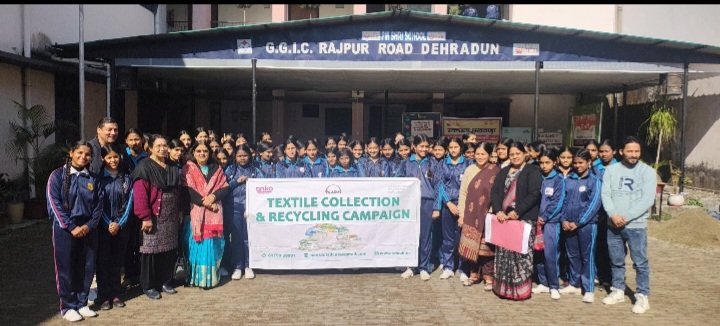
Dinesh Chandra of the SDC Foundation said the problem of textile waste is escalating rapidly and cannot be solved through policy discussions alone.
He stressed that building responsible habits among students early is one of the most effective ways to ensure lasting change.
Pyare Lal, associated with the campaign, noted that the initiative was not just about collecting old clothes but about changing mindsets — from casual disposal to conscious consumption.
Parveen Upreti of SDC Foundation thanked the participating schools, teachers and partner organisations, stating that such collaborations prove that civil society can drive change when awareness is backed by action.
Phase Two Begins Soon
The second phase of the campaign will roll out from the last week of March through April.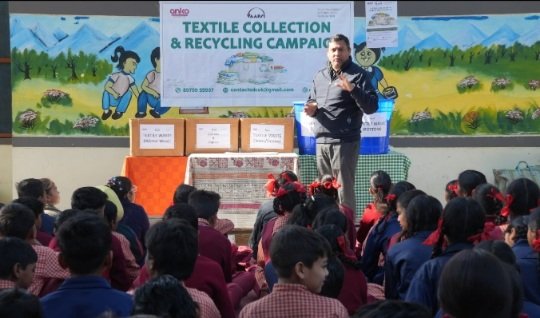
It will focus on advanced practical training, including sorting, labelling and classification of textiles, along with demonstrations on removing buttons, zippers and other metal or plastic components before recycling.
Organisers say the goal is to ensure that a larger volume of used textiles enters formal recycling streams, while reinforcing responsible consumption practices within the community.
Concluding the initiative, Anoop Nautiyal, President of the SDC Foundation, said that India’s waste crisis cannot be addressed through policy papers and panel discussions alone.
“Civil society must walk the talk. If we want long-term solutions, we have to start with children, with habits, and with real action on the ground. This campaign has taught young citizens that sustainability is not a slogan — it’s a daily practice,” he said.