Shimla, August 4: The Himachal Pradesh Government’s notification of comprehensive guidelines for the design, construction, certification and maintenance of jeepable and ambulance link roads has raised more questions than it answers, particularly over funding, departmental responsibility and accountability for thousands of existing rural roads that have remained neglected for years.
While the government has described the guidelines as the first comprehensive framework of their kind in the country, laying down standards for road width, pavement, drainage, retaining and breast walls, slope protection, road safety and maintenance, there is conspicuous silence on the most crucial requirement—money.
The notification does not spell out any dedicated funding mechanism or budgetary allocation for bringing existing roads up to the prescribed standards or ensuring their regular maintenance.
This omission is particularly significant in Himachal Pradesh, where jeepable and ambulance link roads are the lifelines of remote habitations and farming communities. In the apple belt, hundreds of such roads provide the only connection between orchards and the main road network, enabling farmers to transport apples, fertilisers, agricultural inputs and essential commodities. During emergencies, the same roads are used to move patients to hospitals.
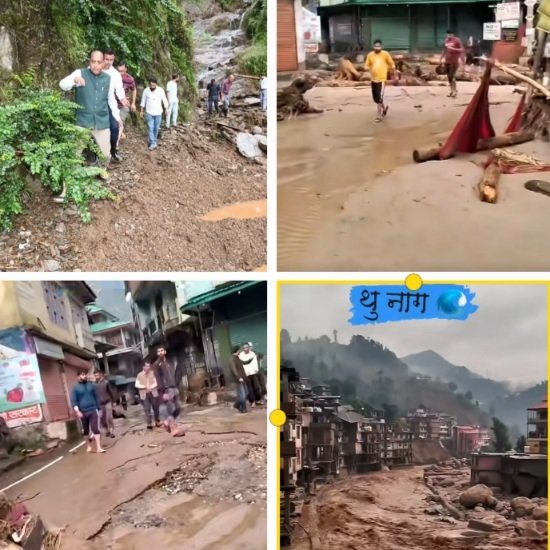
Residents have for years been going pillar to post seeking funds for repairs of these roads. In the absence of a dependable maintenance mechanism, villagers and orchardists have often been forced to pool their own resources and spend from their hard-earned income on hiring JCBs to clear landslides, remove debris and fill potholes merely to keep their roads operational.
The new guidelines therefore raise a fundamental question: who will actually implement and maintain these roads?
Will the Public Works Department be the nodal agency, or will responsibility rest with Deputy Commissioners and Sub-Divisional Magistrates?
What will be the role of the Forest Department where link roads pass through forest land?
Will Block Development Officers and Panchayats be entrusted with roads at the local level? And, most importantly, who will sanction and release funds for their routine and emergency maintenance?
Many of these roads are not new creations. Several were earlier notified as jeepable or ambulance roads at the district administration level, including through orders of Deputy Commissioners.
Yet notification alone did not translate into regular funding or maintenance. The result is that roads officially recognised as essential public links have continued to deteriorate, with local residents often becoming the de facto maintenance agency.
The government’s proposal to inspect existing roads, upgrade them wherever necessary and certify them after they meet prescribed safety standards is welcome, but certification cannot substitute for recurring maintenance.
In the Himalayan terrain, even a scientifically constructed road can be damaged by a single spell of heavy rain, landslide or drainage failure.
Without an assured annual maintenance budget and a mechanism for immediate clearance of blockages, certification could quickly become meaningless.
The issue becomes even more pressing with the apple harvesting season approaching.
A badly damaged link road can delay transportation, increase freight costs and damage fruit before it reaches the market.
For thousands of orchard families, these roads are not simply infrastructure projects; they are the last link between their livelihood and the outside world.
The government must therefore clarify whether certification under the new guidelines will automatically make a road eligible for regular maintenance funding, under which department the expenditure will be booked and how much money has actually been provided for the purpose in the current financial year.
It must also specify who will be responsible for emergency restoration when landslides block these roads and whether Panchayats or district administrations will have access to a dedicated contingency fund.
The guidelines could become an important reform if backed by resources, clear jurisdiction and accountability.
But without dedicated funding and a clearly defined institutional mechanism, they risk becoming an empty, half-baked announcement—impressive on paper but of little consequence to villagers struggling to keep their lifelines open.
For people living in remote Himachal, the demand is not complicated. They do not need another notification sitting in government files.
They need roads that remain open, ambulances that can reach villages and farm produce that can reach markets on time.
The government should now move beyond notification and undertake a comprehensive inventory of every jeepable, ambulance and traditional bridal path currently being used as a motorable link road across Himachal Pradesh.
The PWD, Forest Department, BDOs, Panchayats and district administrations should be directed to furnish their respective lists, which can then be consolidated into a single state-level database, including the road’s location, length, condition, land status and connectivity to villages, orchards and essential services.
Based on this inventory, the government should create a dedicated funding window for these lifeline roads and place their regular maintenance with the PWD, which already has the technical expertise, field network, manpower and machinery required for road construction and emergency restoration.
This would end the present practice of villagers repeatedly approaching different offices or spending their own money on JCBs to keep roads open and establish a clear system of ownership, funding and accountability.
The government now owes the people a clear answer: Who will maintain these roads, which department will be responsible—and where is the money?