Shimla, December 27:
Chief Minister Sukhvinder Singh Sukhu’s much-hyped pitch to turn wild cannabis into “Himalayan gold” through regulated industrial hemp has once again run into a familiar roadblock — the law. While the state government talks big about a ‘Green to Gold’ economy and a hemp-led bio-industrial revolution, the ground reality is that Himachal Pradesh remains legally tied hand and foot by the central NDPS Act, under which hashish is a contraband and cannabis cultivation is largely prohibited.
The core problem is simple but inconvenient: any meaningful hemp policy needs amendments in the NDPS Act, a subject firmly in the domain of the Centre, not the states.
Without that, Himachal’s repeated announcements risk remaining just another political balloon floated over the decades — impressive in rhetoric, empty in outcome.
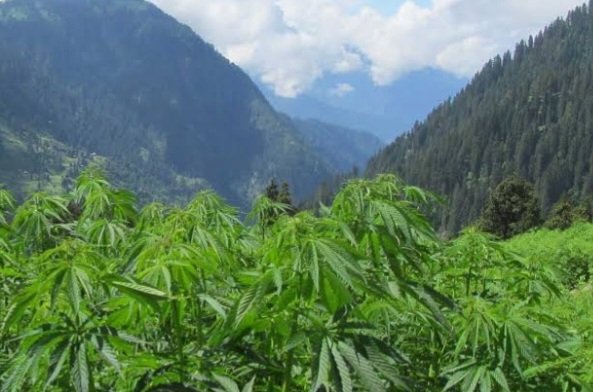
Ironically, cannabis has long been part of Himachal’s rural life. In many villages, cannabis seeds are openly used in traditional dishes, while its fibre is used to make ropes (pulas), especially in Kullu and Seraj belts of Mandi district.
Yet the same plant, when processed into hashish, becomes a serious criminal offence under existing law. This legal contradiction has never been resolved, despite successive governments acknowledging it privately.
The Sukhu government claims that strict regulation and keeping THC levels below 0.3 percent will ensure industrial hemp remains non-intoxicating.
But experts point out that enforcement, testing, and differentiation between industrial hemp and narcotic cannabis remain legally and practically murky, especially in hill terrain where wild cannabis grows naturally across forests and farmlands.
Revenue projections of Rs 1,000–2,000 crore annually sound attractive, but critics argue these figures are speculative unless the Centre amends the law or issues clear nationwide guidelines.
Pilot projects, committees, study tours to Uttarakhand and Madhya Pradesh, and reports tabled in the Assembly have all happened before — under previous governments too — yet not a single farmer has seen a stable, legal hemp market emerge.
What adds to the skepticism is the political history of the issue. For decades, governments of all hues have spoken about “regulated cannabis”, “industrial use” and “medicinal value”, especially when farmer distress peaks due to wildlife damage and crop losses.
But each time, the discussion fades without translating into policy-backed livelihoods, reinforcing the perception that hemp remains more a political talking point than an economic solution.
Even now, without a clear signal from New Delhi on NDPS amendments, Himachal’s hemp dream appears stuck in limbo — caught between tradition and law, promise and paralysis.
Until the Centre moves, the state’s vision of a hemp hub risks remaining what many farmers already call it quietly: a recycled promise dressed up as a new idea.