
SHIMLA:
Cruelty in governance does not always arrive with batons or bulldozers. In contemporary India — and acutely in Himachal Pradesh — it often comes wrapped in files, surveys, notifications and compensation sheets.
Everything looks lawful, even routine. Yet lives are uprooted, livelihoods erased and entire population is hollowed out.
German-American political philosopher, Hannah Arendt warned that great harm can be done not by hatred, but by ordinary people who stop thinking and merely follow rules.
Another prolific thinker writer Michel Foucault showed how modern power works less through repression and more through administration — through the management of land, bodies, and populations.
Read together, they help us recognise a troubling reality in Himachal: harm done as procedure, especially in the context of dams, highways, and mining.
Mountains as “Resources,” Communities as Afterthoughts
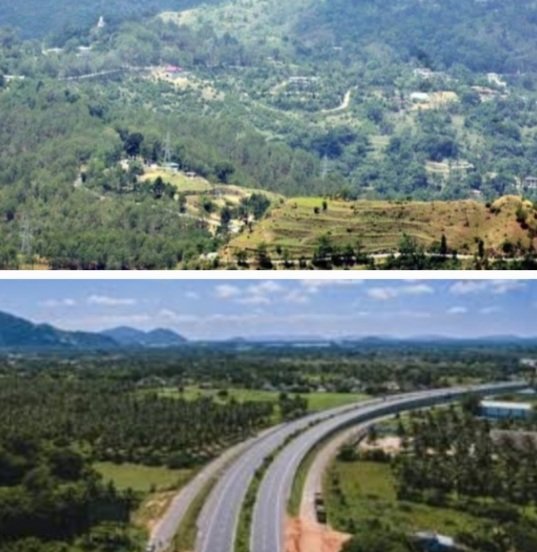
Large dam projects, four-lane highways, and extractive mining are justified in the language of development and national interest.
In files and presentations, mountains become “catchment areas,” rivers become “hydropower potential,” and land becomes “right of way.”
What disappears is the lived reality of villages, commons, grazing routes, forests, and fragile slopes.
This is not accidental. It is the logic of administrative abstraction.
From a Foucauldian perspective, Himachal’s landscape is governed as a technical object — to be optimised, stabilised, excavated, and monetised. From an Arendtian perspective, officials involved in this process rarely see themselves as responsible for its consequences. Each performs a limited function: survey, valuation, clearance, approval. Responsibility dissolves into procedure.
Anticipatory Land Capture: Dispossession Before Acquisition
Long before a dam or highway is formally notified, information circulates quietly. Politicians, senior bureaucrats, revenue officials, PWD engineers, and contractors often know in advance where alignments will pass, where tunnels will be bored, and where reservoirs will rise. Local farmers do not.
This informational asymmetry enables anticipatory dispossession. Land is purchased quietly through intermediaries at prices reflecting current agricultural value, not future commercial worth.
Villagers sell because they are unaware of what is coming — not because they freely choose to exit.
When projects are later announced, land has already changed hands. Compensation flows to those who bought cheaply with insider knowledge.
The state appears neutral; the market appears voluntary. In reality, governance itself has produced the inequality.
Dispossession occurs before procedure. Procedure merely legalises it.
Compensation, Delay, and Rent-Seeking
For those whose land is formally acquired, compensation often arrives late — sometimes deliberately so. Revenue records remain “incomplete.” Demarcations are contested. Objections are “under examination.” Files move slowly between tehsils, collectorates, and departments.
This slowness is rarely innocent.
Lawyers, revenue officials, and local intermediaries form informal ecosystems where speed has a price. Dispossessed farmers are made to understand that compensation — legally theirs — must be accessed through commissions. What should be rehabilitation becomes extraction.
This is not an aberration. It is rent-seeking embedded in procedure.
Arendt helps us see how no single official appears cruel. Each follows rules. Foucault helps us see how power operates through control over records, classifications, and time. Delay itself becomes a weapon.
Ecological Fragility, Administrative Indifference
In Himachal, the cost of procedural governance is not only social but ecological.
Highways carved into unstable slopes, tunnels bored through young mountains, and mining on fragile terrain increase landslides, floods, and subsidence. When disasters follow, relief again depends on forms, categories, and eligibility.
Lives lost in project-induced disasters are rarely acknowledged as such. They become “natural calamities.”
Here, biopower meets denial. Risk is socialised; profit is privatised.
The Constitutional Question
This mode of development governance sits uneasily with the Constitution.
• Article 14 prohibits arbitrariness. Advance access to project information by officials and political actors violates equality in substance.
• Article 21 guarantees life with dignity. Dispossession, coerced sale, and prolonged uncertainty erode dignity even when procedures are followed.
• Article 300A protects property except by authority of law. When land is captured through insider knowledge and compensation delayed through design, legality survives but constitutional morality fails.
The Constitution presumes fairness, good faith, and accountability — not procedural innocence masking private gain.
Cruelty Without Villains, Damage Without Accountability
What emerges in Himachal is not always overt corruption, but structural malice — a system where development proceeds, files are cleared, and profits are made, while responsibility remains diffuse and deniable.
The cruelty is slow. The violence is administrative. The suffering is local.
Conclusion
Himachal’s mountains are not empty spaces awaiting optimisation. They are lived landscapes. When governance treats them as mere resources and communities as procedural obstacles, cruelty follows — quietly, lawfully, and repeatedly.
Harm done as procedure is the most dangerous harm of all — because no one claims it, and therefore no one stops it. A hill state built on fragility cannot afford such blindness.
(Maj Gen Atul Kaushik, former Chairperson, HP Private Educational Institutions Regulatory Commission, Now Runs an NGO, Pahari Samaaj Paryavaran Kwach)
READERS RESPONSES:
1.Farmers undoubtedly share a deep emotional and generational bond with their land, and parting with it is always painful, regardless of compensation. Development also carries environmental costs, which is why sustainability must remain a priority.
However, portraying farmers as helpless victims is not entirely accurate. The land acquisition process includes strong safeguards. Public hearings are mandatory, where local concerns are formally recorded by the Panchayat and administration.
A detailed Rehabilitation and Resettlement (R&R) plan ensures benefits such as preferential jobs, scholarships for children, healthcare access, and creation of schools and hospitals.
Projects like SJVN have already set examples by establishing a DPS school at Jhakri and a hospital near Rampur.
Around 2% of project cost is earmarked for LADA/CSR activities, implemented through local administration.
Monetary compensation is now about four times the market value, helping farmers secure their future.
In Sawra Kuddu, some families received up to ₹12 crore per family. NHAI projects also offer compensation in crores even for middle-class houses.
Additionally, the government provides special packages for families who become landless after acquisition.
In short, while emotional loss is real, the system today provides strong financial and social safeguards for affected families.
(MANOJ KUMAR, HYDROPOWER EXPERT)
2. In the name of development, our government is doing more harm to our ecology. Cutting and tunneling done are in un- scientific manner.
That is why there is a disaster in Pradesh that will happen in the future also.
-Dr MANOJ THAKUR, (SPINE EXPERT, Ex HEAD, DEPARTMENT OF ORTHOPEDICS, IGMC SHIMLA).
3. This article clearly shows a worrying trend in India’s development system, where constitutional values are being ignored for private benefit. Issues like lack of proper information, forced land acquisition and weak accountability reflect serious flaws in governance.
It is alarming that cruelty and violence can happen without anyone being held responsible.
This should serve as a strong reminder for all stakeholders to demand transparency, fairness and justice, so that development truly benefits everyone and not just a few.
- RAMESH MEHTA, (ExSERVICEMAN, INDIAN NAVY)