New Delhi:
As tensions rises across the Gulf and wider West Asia, India has made its first calibrated diplomatic intervention, with Prime Minister Narendra Modi reaching out to Gulf leaders to convey solidarity, condemn attacks on sovereignty, and stress the urgent need for regional stability.
In separate high-level telephone conversations, Modi spoke to Saudi Crown Prince and Prime Minister Mohammed bin Salman and Bahrain’s King Hamad bin Isa Al Khalifa, underscoring India’s concern over the deteriorating security situation and the safety of nearly one crore Indians living and working in Gulf countries.
During his discussion with Prince Mohammed bin Salman, Modi strongly condemned the recent attacks on Saudi Arabia, terming them a violation of sovereignty and territorial integrity.
Both leaders agreed that early restoration of peace and stability in the region was of paramount importance.
The Prime Minister also thanked Saudi Arabia for its continued care of the Indian community during what he described as “difficult times,” a reference to growing anxieties among expatriates as hostilities intensify.
A similar message was conveyed to Bahrain, with Modi condemning attacks on the island nation and expressing India’s solidarity with its people.
He acknowledged Bahrain’s steadfast support to Indian nationals, many of whom are employed in critical sectors.
Why India is not publicly pressuring Iran?
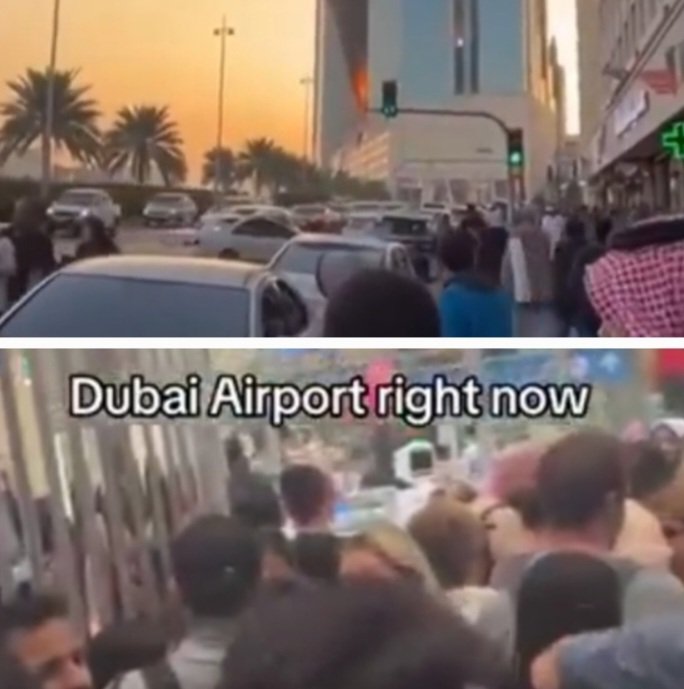
As of now reports suggest that Dubai Airport is flooded with Indians seeking back home journey.
The diplomatic outreach, however, has triggered a key question in strategic circles: Why is India not publicly pressuring Iran, traditionally a friendly nation?
Experts point out that India’s approach reflects strategic restraint rather than silence.
India maintains strong civilisational, economic, and energy ties with Iran, but it also has deep strategic, trade, and diaspora-linked interests with Gulf Arab states such as Saudi Arabia and Bahrain.
Openly naming or pressuring Iran at this stage could undermine New Delhi’s ability to act as a credible bridge between rival regional blocs.
Diplomatic sources indicate that India prefers quiet engagement and back-channel communication with all stakeholders, rather than public megaphone diplomacy that could harden positions and endanger Indian citizens abroad.
India’s balancing act in West Asia
New Delhi’s statements so far reveal a carefully calibrated strategy:
Condemn attacks on sovereignty, without escalating rhetoric
Call for dialogue and restraint, not retaliation
Prioritise expatriate safety, a non-negotiable national interest
Avoid military signalling, keeping India firmly in the diplomatic lane
This balancing act allows India to maintain working relations across fault lines in West Asia, even as the region edges closer to wider confrontation.
Human stakes behind geopolitics
Beyond strategy, Modi’s repeated reference to the Indian community carries weight. For millions of Indian families, Gulf stability is not an abstract geopolitical concern—it directly affects livelihoods, remittances, and personal safety.
By publicly acknowledging their well-being, India has sent a strong reassurance signal: their safety is being monitored at the highest political level.
Diplomatic observers see Modi’s outreach as India’s first foot forward in a fast-moving crisis.
As tensions evolve, New Delhi is expected to deepen engagement with regional and global powers, pressing for de-escalation while safeguarding its national and human interests.
For now, India has chosen dialogue over drama, restraint over rhetoric—and peace as the only sustainable way forward.