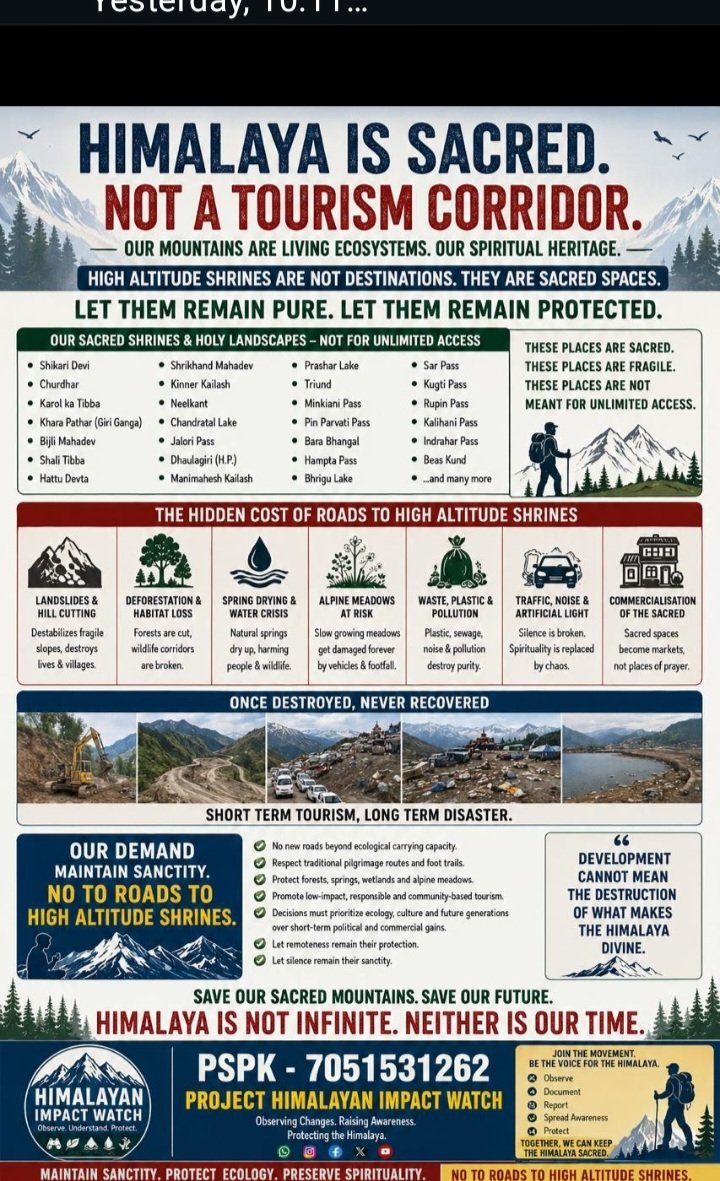
HIMALAYAN IMPACT WATCH
Himachal's Forest Fires: The Flames Are Not the Problem, the Development Model Is
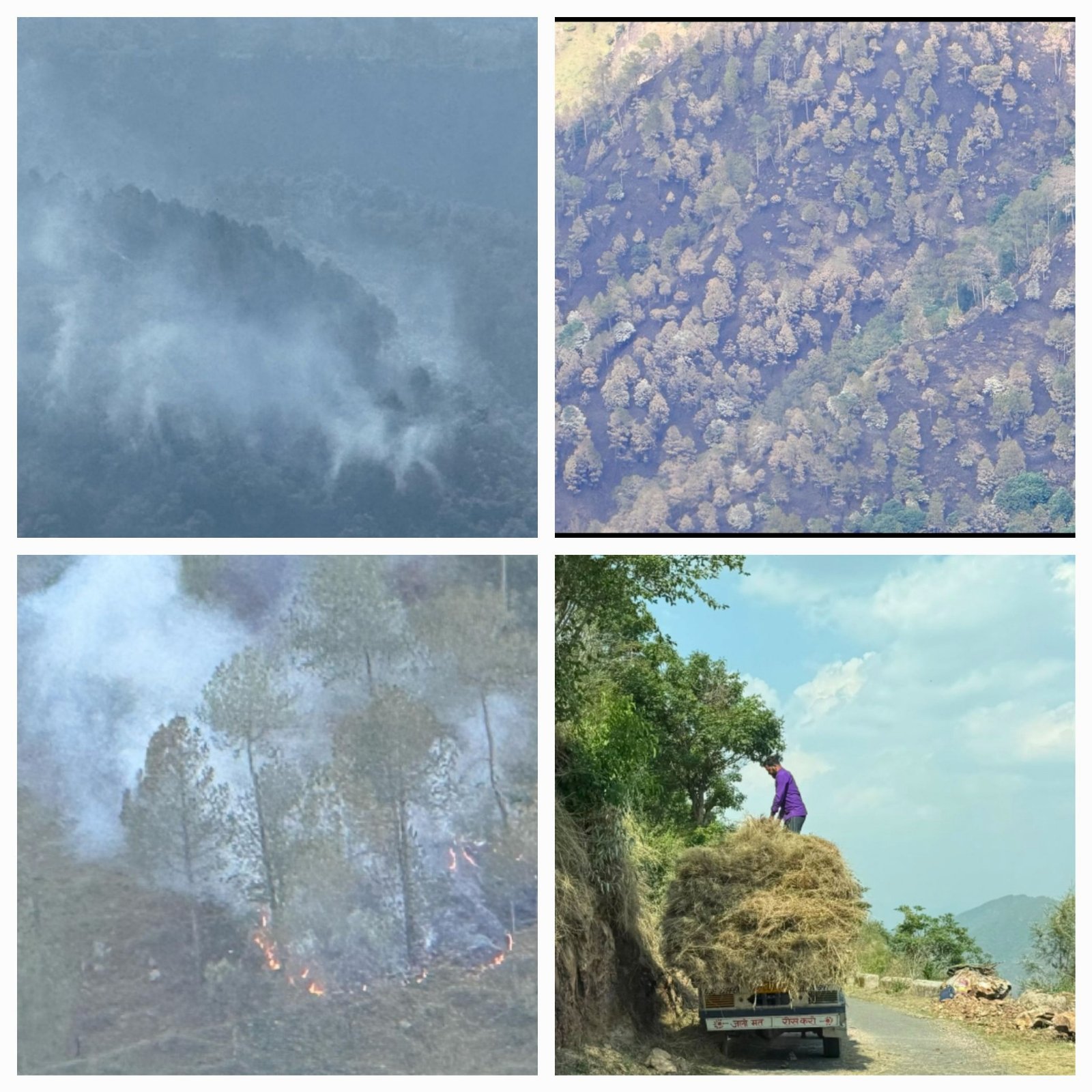
Shimla: Every summer, thousands of hectares of forests in Himachal Pradesh go up in flames. Government departments rush firefighters to the hills, emergency advisories are issued, and demands for more fire-fighting equipment dominate official discussions. Yet the forests continue to burn year after year.
The uncomfortable truth is that Himachal's forest fires are no longer merely a firefighting challenge.
They are a symptom of a much deeper crisis involving land use, commercial exploitation of natural resources, collapsing village institutions, reckless road expansion and an increasingly extractive rural economy.
The visible flames licking mountain slopes are only the final stage of a much larger ecological and governance failure unfolding across the western Himalayas.
For decades, forest fires have been conveniently blamed on careless tourists, rising temperatures and accidental causes.
While climate change has certainly intensified the situation, many recurring fires originate from deliberate burning of grasslands, forest fringes and scrub slopes to promote fresh grass growth before the monsoon.
Traditionally, such burning was localized and linked to subsistence livestock farming. Today, however, the economics have changed.
Grass, leaf litter, fuelwood and other biomass resources have increasingly become commercial commodities.
Fire has emerged as the cheapest tool to clear dry vegetation and stimulate rapid regeneration, allowing larger quantities of fodder and biomass to be harvested and sold.
The ecological costs are borne by forests and watersheds while the economic benefits are cornered by the mafia.
The transformation from subsistence use to commercial extraction has fundamentally altered the relationship between communities and forests.
Earlier, village institutions and customary practices exercised informal but effective control over commons and forest resources.
Migration, weakening community bonds, political interference and the growing cash economy have eroded many of these traditional safeguards. In several regions, there is little accountability over who sets fires, when they are lit and how far they spread.
Road expansion has further complicated the situation.
Roads penetrating remote Himalayan slopes have opened previously inaccessible forests to commercial activity.
They facilitate extraction of biomass, increase human presence, fragment ecosystems and create new ignition corridors.
Ironically, infrastructure celebrated as development often becomes a catalyst for ecological degradation.
Repeated burning is also gradually reshaping the composition of Himalayan forests. Low-intensity fires suppress regeneration of moisture-retaining broadleaf species such as oak while favouring fire-prone chir pine.
The result is a vicious cycle — more pine trees generate more combustible needles, increasing fire risk and making future fires even harder to control. The greatest casualty of these recurring fires may not be biodiversity but water security.
Repeated burning destroys leaf litter, reduces soil organic matter, weakens groundwater recharge and accelerates soil erosion.
Oak forests and mixed broadleaf ecosystems, which act as natural water reservoirs, are steadily losing their capacity to retain moisture.
The consequences are already visible across Himachal, where springs are drying up and rural communities are facing worsening water shortages.
The forests burn in summer and villages pay the price through water scarcity later.
Climate change has undoubtedly intensified the crisis through prolonged dry spells, hotter summers and declining winter precipitation. But experts insist climate change is an amplifier rather than the root cause.
The recurring pattern of fires is closely linked to human activities, economic incentives and policy failures.
Despite this, the official response remains largely reactive — more fire lines, more manpower, more monitoring and more firefighting equipment.
While these measures may reduce immediate damage, they fail to address the deeper drivers of the crisis.
Unless governments tackle unregulated biomass extraction, ecologically damaging road projects, weak commons governance and incentives that encourage repeated burning, forest fires will remain an annual reality.
Many are now calling for a shift from fire suppression to ecological landscape management.
This would involve restoring broadleaf forests, protecting oak ecosystems, regulating commercial biomass extraction, conducting ecological audits of rural roads and reviving community stewardship of natural resources.
The larger question confronting Himachal is no longer how to extinguish fires.
It is whether the state's development model is pushing the fragile Himalayan ecosystem beyond its limits.
Until that larger issue of development model is addressed honestly, the forests will continue to burn. With this, the water security and ecological future of the Himalayas remain at stake.