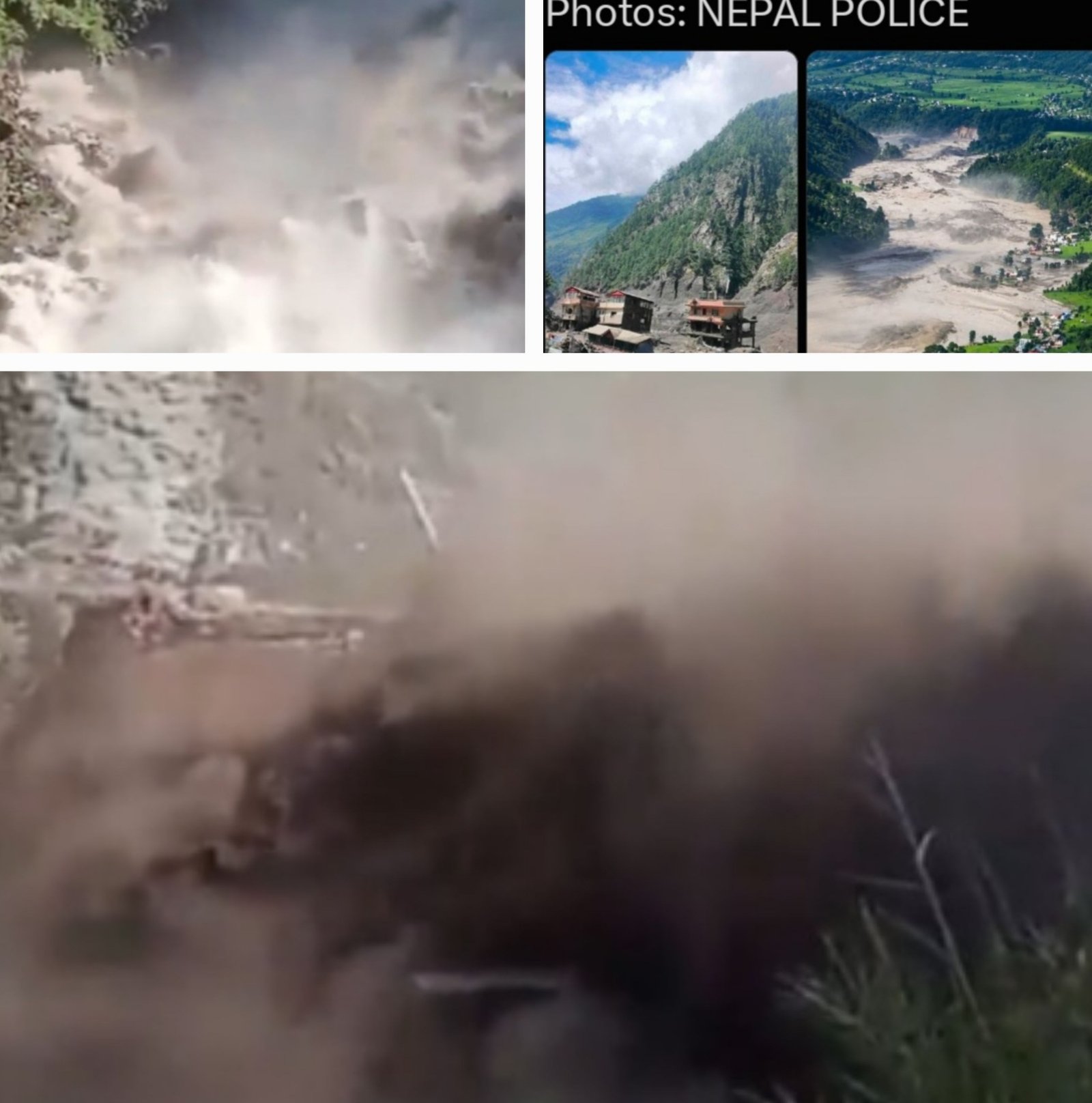

NEW DELHI: A massive mudslide and flash flood struck the Gyirong Port area along the China-Nepal border on Wednesday, causing widespread loss of life and extensive damage.
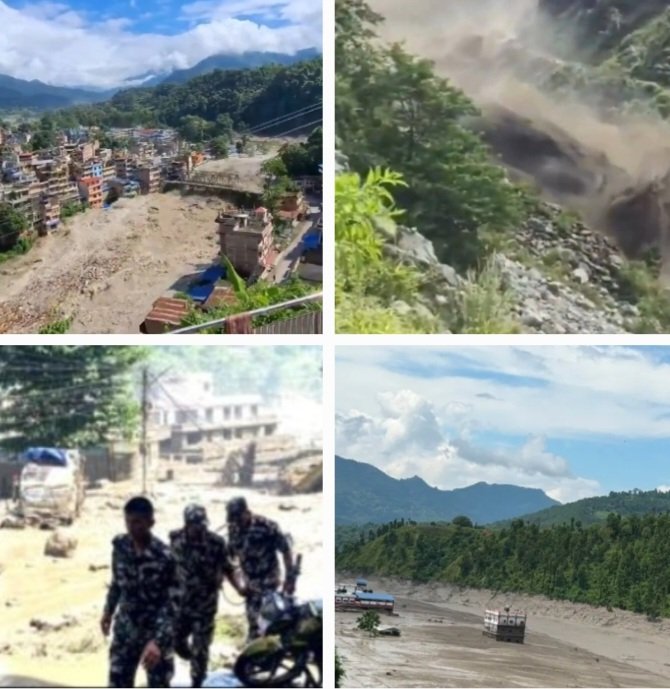
Raging waters swept away homes, vehicles, bridges and roads, while huge boulders, tonnes of mud and uprooted trees were deposited along riverbanks.
Scale of destruction: According to media reports from China, at least 180 people have been killed and more than 800 are missing across the affected border region.
As of Thursday afternoon, three people had been confirmed dead and 265 were missing on the Chinese side, while 177 people had died and more than 644 were missing in Nepal.
However, the US Geological Survey confirmed that no tectonic earthquake had occurred. Instead, the seismic shock wave was reportedly generated by a massive rock and glacial ice avalanche that struck the valley floor.
Rescue agencies are struggling to reach several areas cut off by the disaster. More than a dozen hydropower projects have also reportedly been damaged by floodwaters, adding to the extensive infrastructure losses.
Sadhguru raises alarm: Isha Foundation founder Sadhguru Jaggi Vasudev, speaking about the disaster, said he had planned to travel personally to the affected area but was unable to do so because telecommunications services were down and roads had been blocked.
He said a group associated with the Isha Foundation, comprising 80 participants from several countries, was caught in the affected region.
The group includes nationals from the United States, Canada, Australia, the United Kingdom, Germany, France, Nepal, the Netherlands, New Zealand, Singapore, Spain and several other countries.
80-member group stranded: Sadhguru said the group consists of 34 men and 46 women, along with volunteers and medical personnel staying at nearby hotels. He added that three volunteers and a doctor were also associated with the group.
No communication: “All phones are off, all telecommunications are down, roads are blocked. We are unable to go there,” Sadhguru said, adding that there was still no official confirmation regarding the safety and whereabouts of those in the affected area.
A landscape torn apart: The flood has transformed stretches of the Himalayan river system into a landscape of destruction. Boulders, tonnes of mud and uprooted trees have been deposited along the banks, while vehicles, houses and other structures have been swept away or buried under debris.
Infrastructure battered: Roads and bridges have been submerged or severely damaged, cutting off communities and making rescue operations extremely difficult. Thousands of vehicles are feared to have been damaged or swept away, while houses along the river corridors have suffered extensive damage.
Power projects hit: The disaster has also dealt a major blow to Nepal's hydropower infrastructure, with more than 14 hydropower projects reportedly damaged. The destruction has renewed concerns about the vulnerability of Himalayan infrastructure to extreme floods, landslides and sudden changes in river flows.
India sends immediate relief: Against this backdrop, the Government of India has dispatched two aircraft carrying humanitarian assistance and disaster-relief material, including medicines and other essential supplies, to Nepal.
NDRF ready: NDRF Inspector General Narendra Singh Bundela said India had responded promptly because of its close and friendly relations with Nepal. He clarified that no NDRF team has so far been deployed inside Nepal, but specialised teams have been placed on standby.
Deployment depends on Nepal's request: Bundela said an NDRF team would be sent if the Nepal government requested assistance and the Government of India approved the deployment. “So far, no such order has been issued,” he said.
Rescue challenge: With communications disrupted, roads blocked and vast quantities of mud, rocks and debris choking river valleys, determining the exact death toll and locating missing people remain major challenges.
Himalayan warning: The catastrophe has once again exposed the vulnerability of the Himalayan region, where densely populated river valleys, hydropower projects, roads and settlements coexist with unstable slopes and rapidly changing weather conditions. The immediate priority remains locating the missing, evacuating survivors and delivering relief to communities cut off by the destruction.
#NepalFloods #ChinaNepalBorder #IndiaNepal #NDRF #HimalayanDisaster