
Dehradun Slips, Shimla Stalls: What Swachh Survekshan 2024 Reveals About Sanitation Governance in the Hills
SHIMLA/DEHRADUN/NEW DELHI — Once the pride of hill states in cleanliness campaigns, Dehradun and Shimla now find themselves wobbling under the weight of administrative apathy and broken sanitation systems, as exposed in the latest Swachh Survekshan 2024 rankings.
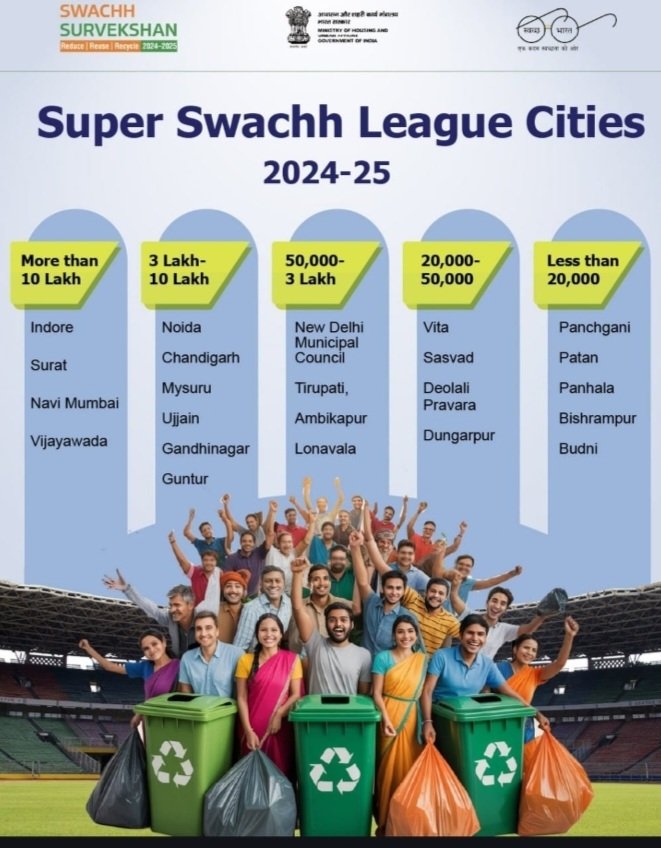
In the Swachh Survekshan 2024-25 Awards, Indore once again retained its crown as India’s cleanest city, marking a remarkable eighth consecutive win and setting a national benchmark for sustainable waste management and citizen engagement.
Surat secured the second position, showcasing its consistent improvements in scientific waste disposal, digital monitoring, and public toilet access.
Navi Mumbai followed close at third, applauded for its efficient sanitation systems and inclusive waste worker policies.
Among smaller towns, Sasvad in Maharashtra emerged as the cleanest city under the population category of 50,000–1 lakh, while Patan in Chhattisgarh ranked best among towns with less than 50,000 population—both driven by local innovation and committed municipal action.
The awards also spotlighted cities that turned their sanitation image around.
Visakhapatnam in Andhra Pradesh and Ahmedabad in Gujarat bagged special honours for citizen feedback and digital governance.
Varanasi stood out among Ganga towns for pushing riverbank cleanliness, while Bhopal and Mysuru impressed with their decentralised composting and robust grievance redress systems.
These rankings highlight that sustained cleanliness is not just about infrastructure, but about empowering local bodies, involving citizens, and treating waste as a resource.
The top-performing cities serve as models for the rest of urban India, especially for struggling ULBs in hilly states, which now need to move from tokenism to transformation.
This annual audit by the Ministry of Housing and Urban Affairs has made one thing clear: urban local bodies (ULBs) in the Himalayas are falling behind—and fast.
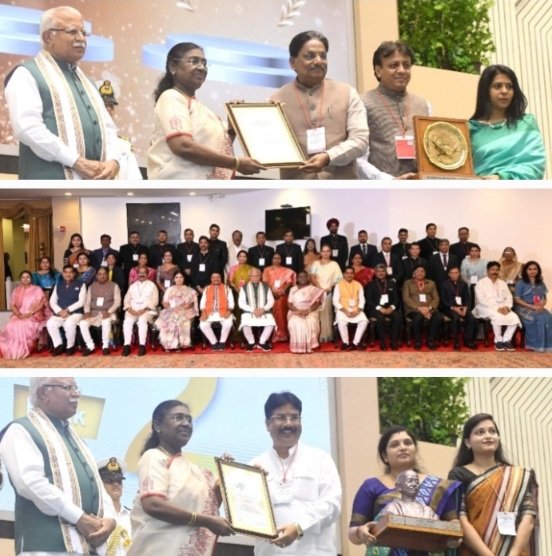
Results and Awards were announced at the function in New Delhi today presided over vmby President of India Droupadi Murmu.
In Uttarakhand, state capital Dehradun, which once ranked among the country’s top clean cities, has now slipped to 13th place within the state.
Towns like Lalkuan, Rudrapur, Mussoorie, Doiwala, and Pithoragarh have leapfrogged past it, backed by stronger citizen feedback scores and better waste collection systems.
Bhimtal, Bhowali, Vikasnagar, Chinyalisaur, Barkot, and Kotdwar also fared better—clear signs that the capital is losing touch with the basics of urban cleanliness.
The real sting lies at the bottom. Ghansali, Padli Gujjar, Rampur, Piran Kaliyar, and Nainital Cantonment scored abysmally low, signalling that in several towns, Swachh Bharat is still only a slogan.
In Himachal Pradesh, things are no better. Despite the High Court of Himachal Pradesh repeatedly fixing accountability on local urban bodies for solid waste management, conditions on the ground remain stuck.
Not even the state capital Shimla, which should lead by example, has managed to pull up its act.
If this is the state of affairs in the queen of hills, one can imagine what’s happening in towns like Solan, Mandi, Dharamshala, Hamirpur, Bilaspur, and Una, which have consistently failed to impress in national rankings.
One can’t help but ask—what are the Mayors, Deputy Mayors, and elected Councillors really doing?
When court orders, funds, and frameworks are all in place, yet cities continue to stink—both literally and administratively—it points to a deep failure of political will and daily oversight.
As Anoop Nautiyal, urban policy expert and president of SDC Foundation, puts it: “The Himalayan states have underestimated what it takes to remain competitive in Swachh Survekshan.
It’s not just about sweeping markets or painting slogans on walls. Municipal bodies must deliver on scientific waste treatment, citizen grievance redress, and consistent monitoring.”
The Swachh Survekshan 2024 evaluated cities on a 12,500-point scale, tracking everything from digital reporting and garbage processing to public toilet availability and open defecation status.
Yet, most hill towns couldn’t cross even the basic benchmarks. Segregation at source remains a myth, data dashboards are outdated or missing, and citizen feedback continues to be poor.
The real Achilles’ heel? Unscientific landfills, unchecked roadside dumping, non-functional composting plants, and little or no citizen engagement.
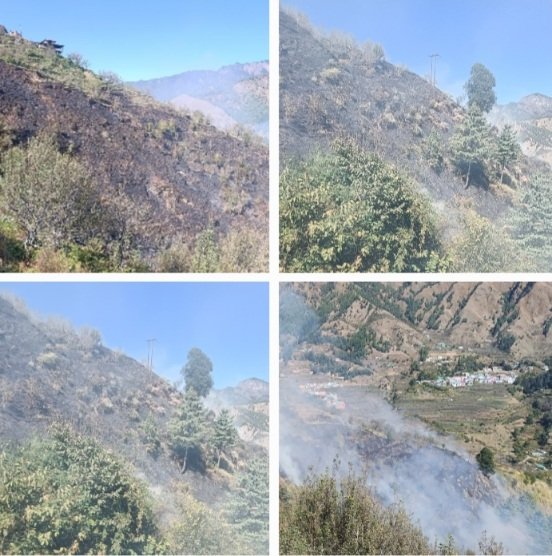
In many towns, forest fringes are becoming dumping grounds.
Even today, some municipalities still rely on age-old methods of open burning and manual collection—violating both health norms and the National Green Tribunal’s orders.
Moving forward, cities like Dehradun and Shimla need more than token gestures.
They need honest leadership, modern systems, and empowered municipal staff.
Waste workers need to be trained, public grievance redress must be visible and prompt, and sanitation budgeting should be made public and participatory.
The Swachh Survekshan isn’t just a competition—it's a reflection of who’s doing their job and who’s merely holding office.
Right now, most Himalayan municipalities and ULBs are failing the test.
Are Mayors and Deputy Mayors listening and learning lessons from their counterparts in top performing cities and towns?
#SwachhSurvekshan2024 #UrbanSanitation #HimalayanTowns #Dehradun #Shimla #CleanCitiesReform