
Politics Over Policy: Sibal’s Ladakh Talk Misses the Mountain Ground
New Delhi/Leh/Shimla:
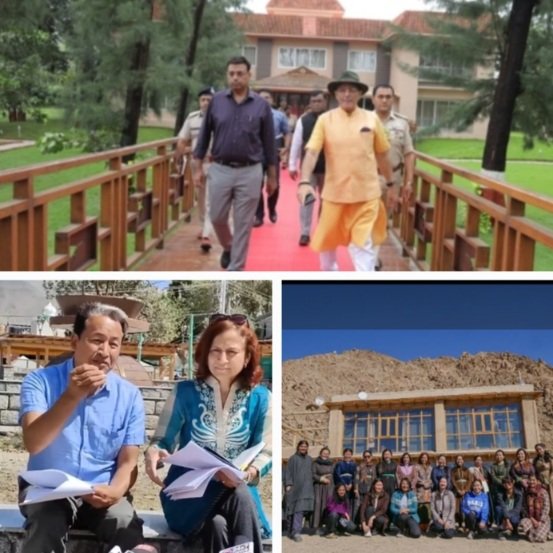
Ladakh today remains peaceful, with both the Leh and Kargil Hill Councils along with Leh Apex Body observing a guarded silence after preventive detention of Ladakhi activist Sonam Wangchuk in September last
The Centre has pumped in close to ₹38,000 crore in infrastructure and solar projects over the past few years — roads, renewable grids, and border connectivity that underline its strategic focus on the region.
Yet, a section of anti-BJP activists is trying to turn Ladakh’s governance debate into a political flashpoint — playing the minority card with the Muslim-majority Kargil and Buddhist-majority Leh leadership.
They now project themselves as one front, demanding statehood and Sixth Schedule status, expressing solidarity with Wangchuk and his supporters.
But when they speak of “outside forces” exploiting Ladakh, without naming anyone — are they hinting at the Indian Army or some corporate or something else?
The question itself exposes the confusion within.
Strategic Frontier, Political Faultline
Ladakh is not an ordinary administrative unit. It’s India’s critical northern frontier, straddling China and Pakistan — two hostile neighbours that have fought wars and continue to provoke through incursions like Galwan and terrorist attacks across India.
Both are now cosying up under Beijing’s Belt and Road project, raising the stakes even higher.
No one questions the patriotism of Ladakh’s people or the valour of the Ladakh Scouts guarding those icy borders.
But the current discourse, led by some activists and amplified by Delhi’s drawing-room panels, risks blurring national security with political opportunism, political suitability and convenience.
From Ecology to Politics
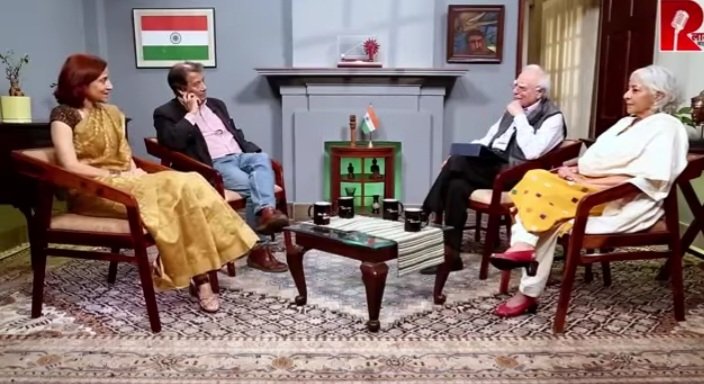
That was exactly what unfolded Saturday night when senior veteran advocate Kapil Sibal, Congress MP moderated a debate meant to discuss Ladakh’s ecology and democracy but was aimed at making a strong ground for getting the release of Sonam Wangchuk.
The panel included Prof. Siddiq Wahid, Dr. Gitanjali Wangchuk, Sonam Wangchuk’s wife and Anuradha Bhasin, former interlocuter of the Dr Manmohan Singh Government on Jammu and Kashmir.
What began as a talk on September Leh Violence and LG Ladakh monopoly in administration, and on glaciers and governance soon turned into a political sermon — echoing the familiar Congress tone of dissent, “Delhi control,” and “loss of democracy.”
The Sixth Schedule Fixation
Sibal’s panel pressed hard for Sixth Schedule status — a constitutional safeguard originally meant for tribal areas of the Northeast.
But this demand is misplaced and can trigger chain reactions across India.
The Sixth Schedule was never designed for Union Territories and states other than NorthEast.
If Ladakh gets it, Jammu and Kashmir will ask for the same tomorrow, setting off a domino effect across the hills of Himachal’s Lahaul-Spiti and other tribal belts.
The Sixth Schedule isn’t a political prize to be handed out — it’s a constitutional framework with a very specific purpose.
For now, Delhi’s stand remains clear: Ladakh will continue as a Union Territory under a Lieutenant Governor. Security first. Stability next. Reform when ready.
Academia or Activism?
The debate’s tone raised eyebrows when Prof. Siddiq Wahid quoted a relative of one of the Ladakh firing victims as saying, “Nobody is born a terrorist; it’s the situation that makes one.”
The remark drew immediate criticism. “Such narratives inflame emotions in a border-sensitive zone rather than heal wounds,” said a retired officer who once served in Leh.
Even after 78 years of independence, he said, “we’re still setting narratives that divide instead of solving.”
Sonam Wangchuk and the Solo-Leader Syndrome
Sibal’s panel painted Sonam Wangchuk’s preventive detention as a sign of state intolerance. They conveniently ignore Ladakh’s strategic sensitivities, but played up demands of statehood and SixthSchedule.
Wangchuk has indeed contributed to sustainable innovations — ice stupas, solar housing, mud architecture, and pasture protection for pashmina goats — all worthy of replication on a larger scale.
But portraying him as the lone saviour of Ladakh is an overstatement. Climate change is a global reality, from the Arctic to the Himalaya, not a regional conspiracy.
The glaciers are retreating, and rainfall patterns are shifting — but that’s true across the world, not just in Ladakh.
Politics Over Policy
ISibal also discussed glacier melt, tourism stress, and jobless youth. But this panel focused more on Delhi-bashing than data. Dr. Gitanjali Wangchuk spoke passionately about the environment but offered little on how the Sixth Schedule would solve it.
They also alleged corruption in LG offices but didn’t back it up with facts. The functioning of the Hill Councils — the core of local democracy — was barely acknowledged.
Delhi’s Dilemma, Ladakh’s Lesson
Sibal even invoked the India-China-Pakistan triangle, warning Delhi not to alienate Ladakhis — a statement that sounded more like political posturing than policy caution.
For those tracking Ladakh closely, the debate was more about creating headlines than solving issues.
“Ladakh doesn’t need lectures from Delhi’s drawing rooms,” said a Leh local watching the broadcast.
“We need roads, jobs, and water — not more panels quoting each other.”
Reality Over Rhetoric
The truth is plain: Ladakh’s ground reality is far more stable than what the political noise suggests. Its councils function, its borders hold, and its people remain among the most patriotic in the country.
The Sixth Schedule debate may earn soundbites in Delhi — but on the ground, it’s constitutionally hollow and politically risky.
In the end, Ladakh’s story isn’t about dissent or Delhi’s dominance. It’s about discipline, development, and defending a frontier that India cannot afford to politicize.
#LadakhDebate #KapilSibal #SixthSchedule #SonamWangchuk#UTGovernance