Nepal Flood Crisis raise concern of Himachal’s Nepalese Community
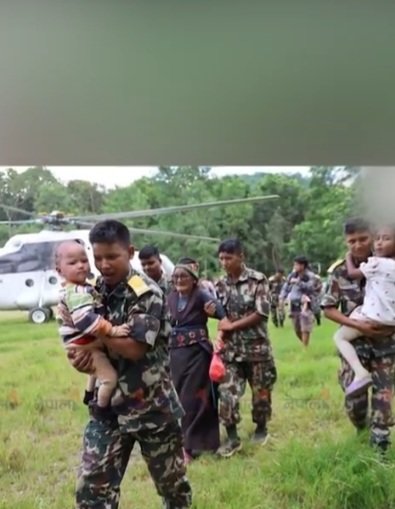
SHIMLA/KATMANDU: The Nepali Army has rescued and evacuated 2,465 people so far as nearly 6,700 soldiers remain deployed in one of the largest rescue operations following the devastating floods in Rasuwa and adjoining areas.
The Army said 2,265 people have been evacuated by air and 200 through ground operations, while 1,706 injured people have received medical treatment.
Search and rescue operations, medical assistance and relief distribution continue across the affected areas.
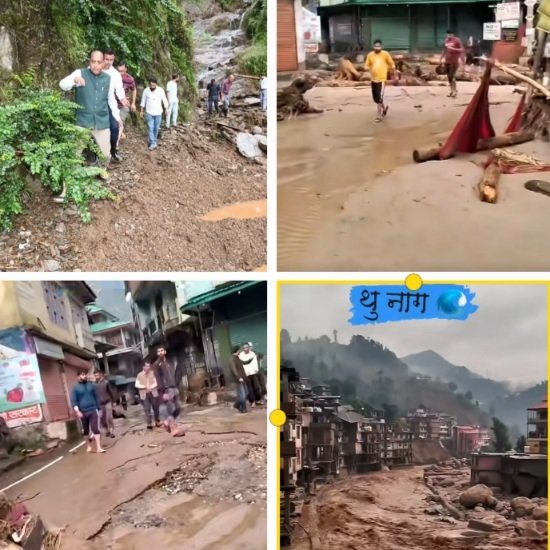
The operation has involved soldiers working in extremely difficult conditions, including icy mud, boulders, uprooted trees, collapsed houses and heavily flooded tunnels.
Rescue teams have been entering areas where debris has accumulated several feet deep to locate people trapped by the floods.
The Army has also been conducting operations around damaged hydropower infrastructure and other isolated locations cut off by the disaster.
Helicopters are being used extensively where roads and bridges have been destroyed or access remains difficult.
At Devighat Speaking to an Indian news agency, Nepal Finance Minister Swarnim Wagle said the government was tackling the devastating flood crisis in phases, with the immediate priority being the rescue of stranded people and those trapped in hydropower projects.
“We are looking at this crisis in phases. The immediate priority is to rescue people who can be saved, including those stranded or trapped in hydropower plants,” Wagle said.
He said the Nepal Army had airlifted 1,930 people, including many foreigners, to safety.
He said the government was now focusing on airlifting relief supplies to Dhunche, Rasuwa and Syaphru Besi, which have been cut off after roads were rendered non-functional by the floods.
“A major challenge is managing the bodies swept downstream towards Chitwan and Nawalpur and possibly across the border,” Wagle said, highlighting the difficulties facing authorities as the floodwaters carried casualties downstream.
The next phase would focus on early recovery, including temporary shelters and cash-for-work programmes, before Nepal moves towards the larger task of rebuilding damaged infrastructure and communities.
“The next phase will focus on early recovery, including temporary shelters and cash-for-work programmes, followed by the daunting task of reconstruction,” he said.
Asked whether Nepal would seek assistance from other countries, Wagle said international support would be crucial. “Absolutely. The Government of India and Prime Minister Modi have been exceptionally generous,” he told the Indian news agency.
Recalling India's response to the 2015 earthquake, Wagle said, “I was in the government when the 2015 earthquake struck, and I recall the generosity of the Indian government was really noteworthy.”
He said India had already extended emergency assistance during the latest crisis, with special supplies flown from New Delhi. “Special supplies have also been flown in from New Delhi at this time,” Wagle said.
Wagle said India had also indicated its readiness to provide substantial assistance during Nepal's reconstruction phase.
“For reconstruction, the Government of India has indicated that it would provide very generous assistance, and such support has also been forthcoming from all our neighbours,” he said.
The disaster has affected an estimated 17,000 children who have been displaced from their homes, while the death toll and number of missing persons continue to remain a major concern as search operations proceed.
Nepalese workforce in Himachal follows rescue operation
The disaster has drawn particular attention among the large Nepalese workforce in Shimla district and other parts of Himachal Pradesh.
Nepalese workers are extensively employed in apple orchards, hydropower projects, road construction and other infrastructure activities across the state.
Their contribution is particularly visible in difficult mountain areas. Many work on projects involving challenging terrain and harsh weather conditions, while thousands are engaged in Himachal’s apple economy during the horticulture season.
Several Nepalese workers in Shimla have shared visuals of the rescue operation and their reactions with Himbumail,
Voice of Himalayan People. The Army’s efforts have been closely followed by workers concerned about relatives and communities back home.
For many, communication with Nepal remains their primary source of information as the disaster has disrupted normal connectivity and transport in several affected areas.
Himbumail Take
The Nepal disaster also highlights the close social and economic links between Nepal and Himachal Pradesh.
Nepalese workers have become part of the workforce in apple orchards, hydropower projects, roads, construction and other sectors, particularly across the Shimla region.
Against this backdrop, the absence of any prominent public statement so far from the Himachal Pradesh Government on the Nepal disaster has been noticed within the Nepalese community.
A formal expression of solidarity from the state would have acknowledged the presence and contribution of thousands of Nepalese workers living and working across Himachal.
Meanwhile, the rescue operation in Nepal continues, with 6,700 Army personnel deployed and 2,465 people already brought to safety.
The immediate focus remains on locating those still missing, evacuating stranded residents, treating the injured and providing relief to communities displaced by the floods.