SHIMLA/DEHRADUN/ ITANAGAR:
Tiny Himalayan state Arunachal Pradesh has triggered a debate across mountain states after announcing a sweeping 12-point austerity and governance reform package aimed at cutting administrative expenditure and improving efficiency.
The move comes at a time when Himalayan states are facing a perfect fiscal storm — shrinking central support, rising debt, escalating infrastructure costs, recurring natural disasters and growing public concern over corruption and poor-quality public works.
Arunachal's measures include a one-year ban on foreign travel by ministers and officials, a 50 per cent cut in ministerial convoys, a Virtual First policy for meetings, restrictions on new government vehicle purchases, promotion of car-pooling, mandatory 5-star energy-efficient equipment, and complete paperless e-office implementation by March 2027.
The timing is significant for Himachal Pradesh, which is facing one of its most serious fiscal challenges in decades.
Under the 15th Finance Commission, Himachal Pradesh received around ₹37,199 crore as Revenue Deficit Grant (RDG) between 2021 and 2026. However, the grant is scheduled to end after March 2026, creating a major financial vacuum.
Officials estimate that the state could face a shortfall of nearly ₹6,000 crore, while the loss of RDG support could severely impact its ability to manage salaries, pensions and development expenditure.
The state's debt burden has already crossed ₹1,03,994 crore in 2025-26 and is projected to rise to ₹1,12,319 crore in 2026-27.
Interest payments alone are expected to touch ₹7,271 crore, while nearly 80 per cent of the budget is consumed by salaries, pensions, debt repayment and interest liabilities, leaving limited fiscal space for development works.
The crisis is particularly acute because hill states face extraordinarily high costs in creating and maintaining infrastructure.
Roads, bridges, tunnels, water supply schemes, power lines and public buildings require far higher investment in mountainous terrain than in the plains.
Once built, they also require constant repairs due to landslides, cloudbursts, flash floods, snow damage and geological instability.
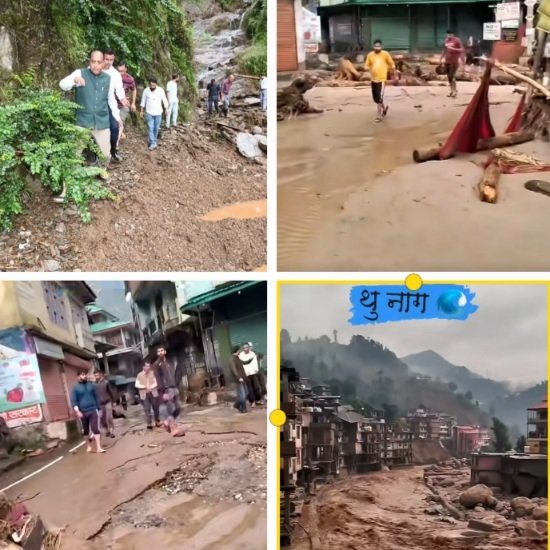
Every monsoon, states like Himachal Pradesh, Uttarakhand, Jammu & Kashmir and Ladakh spend hundreds and often thousands of crores restoring damaged roads, bridges and public infrastructure.
Climate change has further increased the frequency and intensity of these disasters.
At the same time, concerns continue to be raised about poor construction standards, project delays, cost overruns and allegations of corruption in infrastructure projects.
When roads collapse within a few seasons, retaining walls fail, drainage systems break down and public assets repeatedly require reconstruction, the burden on already stressed state finances multiplies.
This is where austerity becomes more than an accounting exercise.
Reducing expenditure on convoys, official travel, vehicle fleets, electricity consumption and administrative overheads creates fiscal space for investments in durable infrastructure, disaster resilience, schools, hospitals and drinking water schemes.
Equally important is Arunachal's emphasis on e-governance. A fully digital e-office system reduces paperwork, cuts stationery and storage costs, tracks files electronically and improves transparency.
Digital records make it harder for files to disappear, reduce bureaucratic delays and create accountability in decision-making.
Virtual meetings reduce travel expenditure while enabling quicker administrative responses.
Himachal claims it has launched digital governance putting over 360 services on online for public.
Experts argue that governance reforms can often save more money than tax increases.
But the bureaucratic culture continues in the Himachal Secretariat where files are pushed or dumped manually and digital governance exists more or less on paper only.
Faster approvals, transparent procurement, digital monitoring and reduced administrative waste improve efficiency without placing additional burdens on citizens.
As RDG support declines and debt continues to rise, Himalayan states may increasingly be forced to choose between administrative expansion and fiscal discipline. Arunachal Pradesh has already made its choice.
The question now confronting Himachal Pradesh, Uttarakhand, Jammu & Kashmir and Ladakh is whether they will continue with expensive administrative practices or embrace austerity, digital governance and efficiency reforms before financial pressures become even harder to manage.
For the fragile Himalayan economy, the message is becoming clear: the sooner governments cut wasteful expenditure and improve governance, the better equipped they will be to face debt pressures, disaster risks and development challenges in the years ahead.
Arunachal has made the first move. The rest of the Himalayas must now decide whether to follow the example or continue business as usual.
#ArunachalShowsTheWay
#HimalayanAusterity
#FiscalDiscipline
#GovernanceReforms