Himalayan GLOF Threat: Nepal Disaster Wakes India Up to a Bigger Himalayan Risk
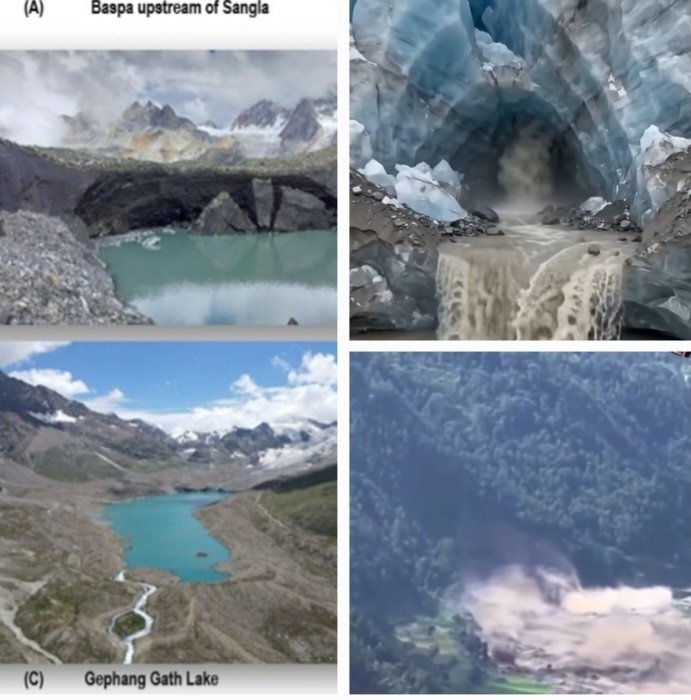
SHIMLA: The Nepal-China border flood disaster has sounded a fresh warning for India. Global warming is accelerating the melting and fragmentation of Himalayan glaciers, creating and expanding glacial lakes that can suddenly burst and unleash devastating floods downstream. The growing GLOF threat has now pushed the Centre and Himalayan states towards a coordinated preparedness and mitigation strategy.
A high-level meeting chaired by the Union Home Secretary has put GLOF preparedness on the national agenda. Representatives of the National Disaster Management Authority (NDMA), Central Water Commission (CWC) and Himalayan states discussed measures to assess, monitor and mitigate the threat from glacial lakes. The objective is to move from isolated monitoring to an integrated early-warning and disaster preparedness system.
Himachal Pradesh has sought ₹105 crore to establish an early-warning and mitigation network. The Jal Shakti Vibhag has prepared a detailed project report (DPR) of about ₹105 crore for installing Early Warning Systems (EWS) and undertaking other GLOF mitigation measures. The DPR will be submitted to NDMA for funding support.
Himachal has also sought technical scrutiny of its GLOF proposal. The state has proposed that CWC and NDMA technically review the DPR before implementation. The work would subsequently be executed through agencies identified by the Jal Shakti Vibhag through an Expression of Interest process.
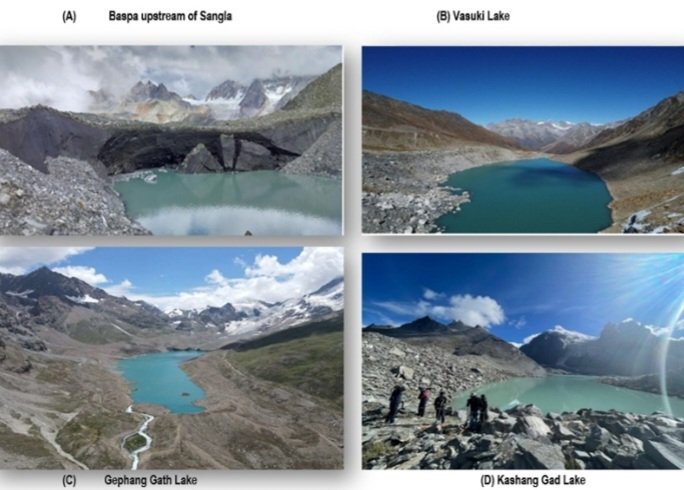
Cross-border coordination is another major concern for Himachal Pradesh. Of the 76 identified glacial lakes larger than 10 hectares, 59 are located in the Tibetan Himalayan region. Any major change in water levels or a lake breach in these areas could therefore have consequences downstream in India, making international hydrological information and coordination crucial.
Himachal has specifically sought early approval for an EWS at Gapang Lake. The demand reflects the state's concern that vulnerable lakes need real-time monitoring rather than periodic assessment. A warning system must provide sufficient time for downstream authorities, hydropower projects and communities to respond.
India has decided to undertake a comprehensive assessment of 681 identified glacial lakes. The CWC will conduct flow-path analysis and downstream risk assessment for all 681 lakes. NDMA will lead the development of an integrated risk-categorisation framework to identify lakes requiring priority intervention.
The Centre is also planning a long-term national GLOF programme. The programme will adopt a lake-to-lake approach and eventually cover all 681 identified glacial lakes. A dedicated GLOF workshop will also be organised to improve technical coordination and preparedness among Himalayan states and central agencies.
Technology and connectivity will form the backbone of the proposed warning system. Issues involving ISRO and C-DAC bandwidth and data connectivity for monitoring and early-warning systems will be taken up at the Ministry of Home Affairs level. Without reliable transmission of real-time data, even the best sensors and satellite monitoring systems cannot provide an effective warning on the ground.
The 2023 South Lhonak Lake disaster in Sikkim showed the consequences of a GLOF striking a heavily developed Himalayan valley. The outburst caused massive downstream destruction and severely damaged NHPC's Teesta hydropower infrastructure, with losses running into hundreds of crores. A reliable early-warning and evacuation system could have reduced the impact on people and critical infrastructure.
Satellite data alone cannot provide complete protection from GLOFs. Real-time water levels, lake expansion, moraine stability, weather conditions and downstream flood paths require continuous monitoring and field verification.
The danger is greatest when risk assessments remain confined to official files while vulnerable communities and infrastructure remain without a functional warning mechanism.
The Himalayan disaster risk is changing with the climate. Rising temperatures are accelerating glacier retreat and increasing the formation and expansion of glacial lakes. When unstable natural dams holding these lakes fail, enormous volumes of water, ice, rocks and debris can rush downstream within a short period.
Himachal faces particularly high exposure because its river valleys carry major hydropower projects, highways, bridges, settlements and tourism infrastructure. A GLOF upstream can therefore become both a humanitarian disaster and an infrastructure catastrophe downstream.
The scale of potential losses makes prevention and early warning far cheaper than post-disaster reconstruction.
The Nepal disaster should therefore become a turning point for Himalayan disaster preparedness. India now needs to move beyond identifying glacial lakes from satellites and establish ground-based monitoring, real-time communication, flood-path mapping and clear evacuation protocols.
The ₹105-crore Himachal proposal and the national assessment of 681 lakes will be an important test of whether India can build that system before the next GLOF strikes.