
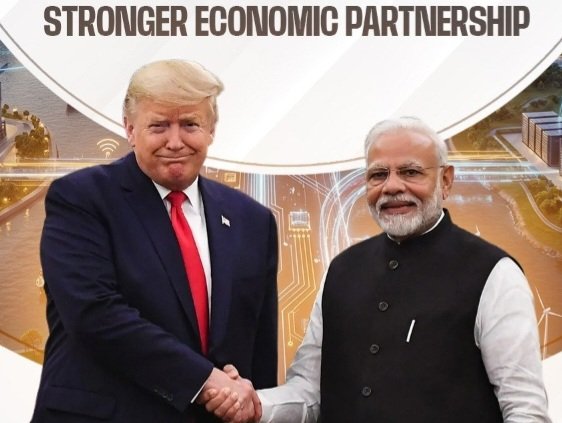
Opposition Slams Centre Over ‘Zero Tariff’ US Farm Imports, Experts Warn of Blow to Indian Agriculture. NDA government needs to clear the air.
New Delhi/Shimla:
The Congress and other opposition parties have sharpened their attack on the Modi government over reports suggesting that agricultural goods from the United States could enter Indian markets at zero import duty under a proposed India–US trade arrangement.
The opposition says the Centre’s silence on the issue has fuelled fears of a fresh assault on India’s already stressed farm economy.
Senior Congress leaders and MPs have raised the issue, seeking clear answers from Prime Minister Narendra Modi and the Agriculture Minister in Parliament.
While some opposition MPs, including Dr Shashi Tharoor, acknowledged that the US imposing nearly 20 per cent tariffs on certain Indian goods is a concern in itself, they questioned why India should even consider opening its farm sector to zero-duty imports from America.Breaking | US–India Trade Deal Triggers Political Storm
US President Donald Trump has claimed that Washington struck a trade deal with India to cut tariffs after New Delhi agreed to stop buying Russian oil, a claim that has sparked sharp reactions and raised questions over the deal’s fine print.
Critics say the move amounts to coercion, noting that India currently imports about 1.18 million barrels of Russian crude daily and that US consumers are already bearing a $287 billion tariff burden, up 192%.
Seeking to set the record straight, Union Commerce and Industry Minister Piyush Goyal said the India–US Trade Deal, finalised under PM Narendra Modi and President Trump, strengthens India’s economic power, global credibility, and the Viksit Bharat 2047 vision.
Goyal said India negotiated with confidence and strategic clarity, safeguarding national interests while boosting market access, investment, technology and jobs.
He slammed the opposition for “irresponsible behaviour” in Parliament, saying India now signs agreements on its own terms, not under pressure — a defining trait of the “New India.”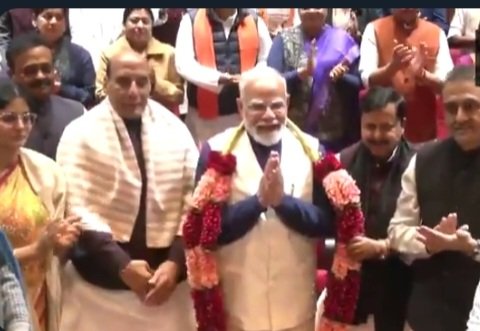
NDA and its Partners facilitated PM Modi in Parliament premises for India's trade deal with the US.
On the other hand Himachal Pradesh minister Vikramaditya Singh termed the reported move “deeply dangerous” for Indian farmers.
“Zero tariff on American agricultural goods puts the future of our farmers at serious risk. The Centre owes the nation an explanation—what is being negotiated, and at whose cost?” he asked, accusing the government of keeping Parliament and farmers in the dark.
The concern has been triggered by public statements from US President Donald Trump, who claimed that India has agreed to large-scale purchases of American energy, technology and agricultural products, along with easing tariff and non-tariff barriers.
Opposition leaders argue that if such commitments are being made without parliamentary scrutiny or consultations with states and farmer bodies, it amounts to a betrayal of crores of farmers and agricultural workers.
Agriculture experts have echoed these fears. “Indian agriculture is dominated by small and marginal farmers.
Asking them to compete with heavily subsidised, corporate-driven American agriculture is economically unfair and socially reckless,” said an agricultural economist.
Experts warn that zero-duty imports of US grains, oilseeds, pulses, fruits, vegetables and dairy products could crash domestic prices, squeeze farm incomes and worsen rural unemployment.
Dairy has emerged as a particular flashpoint. Farmer leaders point out that dairy is a sensitive sector that sustains millions of small households.
“Even a limited opening of the dairy market to US imports could destabilise cooperatives and destroy livelihoods,” said a farm policy analyst.
What has further angered the opposition is the Centre’s lack of transparency. So far, the government has not placed any draft of the proposed agreement in the public domain, nor clarified which agricultural products are being considered for zero-tariff treatment.
In contrast, the US Agriculture Secretary has reportedly assured American farmers of gains from the deal, reinforcing the perception that India’s interests are being compromised.
“The message going out is alarming,” said a former member of the Commission for Agricultural Costs and Prices.
“Indian farmers are facing rising input costs, climate shocks and stagnant MSPs. At such a time, treating agriculture as a bargaining chip in trade talks is extremely risky.”
Opposition parties have demanded that any trade agreement impacting agriculture must first be debated in Parliament, discussed with Chief Ministers of agrarian states and vetted through consultations with farmers’ unions, cooperatives and experts.
They argue that decisions taken “behind closed doors” weaken federalism and violate the government’s constitutional responsibility to protect farmers’ livelihoods.
In the absence of clarity from the Centre, critics warn that a zero-tariff regime for US agricultural goods could push India’s farm economy into deeper uncertainty.
“This is not just about trade,” an expert said. “It’s about food security, rural stability and the survival of millions who depend on agriculture.”
Unless the government comes out with a clear, firm and transparent position, the opposition says the issue is likely to intensify both inside and outside Parliament in the coming days.