SHIMLA/DEHRADUN/NEW DELHI: The Himalayas are no longer silent. They are today the centre stage of a strategic and economic churn that touches every peak, valley, and frontier pass.
From Ladakh to Arunachal, from Himachal to Nepal, the mountains are being reshaped by war drills, trade deals, tourism drives and natural disasters like the ones we see in Seraj in Himachal, Dharali in Uttarakhand and Choisit in Kishtwar in Jammu and Kashmir and GLOF in Sikkim earlier.
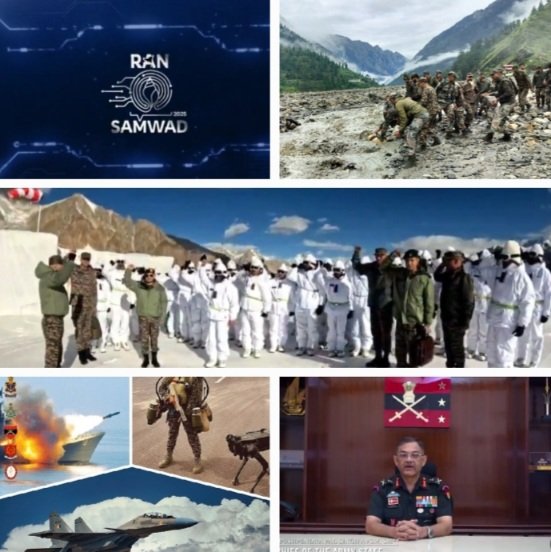
At the heart of this debate stands RANSAMWAD 2025. The Army War College at Mhow is hosting the two-day seminar where serving officers and Commanders are putting high-altitude warfare under the spotlight.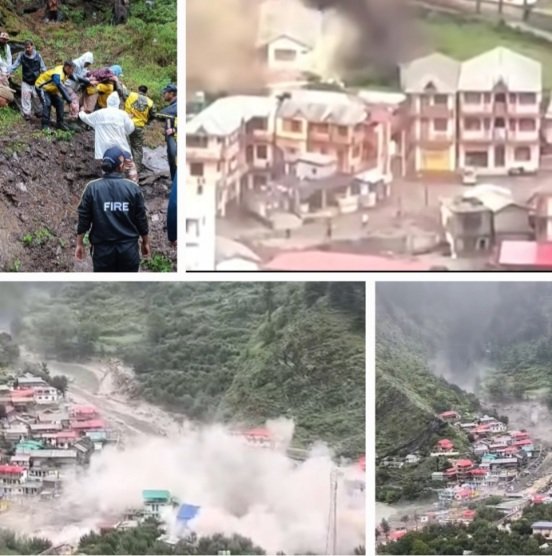
Lt General Pushpendra Pal Singh, Vice Chief of Army Staff, opened the session there on August 20 by calling it a platform for “authentic operational insights.”
Commanders and strategists are dissecting how modern wars are fought in the thin air of the Himalayas and in sands and seas.
High-altitude warfare is unforgiving. It means combat on snow deserts, glacial ridges, and oxygen-starved heights. It means soldiers carrying more weight on less breath.
It means tanks on icy rivers, drones over cliffs, and surveillance networks cutting through fog and snow.
For India, it means Ladakh and Arunachal and Jammu and Kashmir. For China, it means Tibet and Xinjiang. Both armies know that the Himalayas remain the sharpest edge of their rivalry.
Yet, while sharpening their bayonets, both sides are also talking trust. India and China are warming up diplomatically.
Border tourism at Shipki La. Talks on reopening the Kailash Mansarovar pilgrimage. Meetings of foreign ministers. Confidence-building gestures.
Trade remains the binding glue.The backdrop is global. Donald Trump’s new tariff threats have unsettled Asian markets.
His campaign of trade wars targets the three Eurasian giants — India, China, and Russia. For India, China is both a rival on the LAC and a top trading partner with commerce crossing $100 billion.
For China, India is a market too big to ignore. For Russia, India remains an old, trusted friend.
Prime Minister Narendra Modi has reaffirmed ties with both Beijing and Moscow.
President Xi Jinping has also spoken of stabilising trade with New Delhi.
Russia continues to anchor the India-Russia friendship with energy, defence, and new investments.
The triangle of engagement is clear: India leans on Russia for security, engages China for trade, and watches the U.S. tariffs with caution.
The Himalayan States are in the Churn. Ladakh is the frontline. Galwan in 2020 remains fresh in memory.
The Pangong Tso, Daulat Beg Oldie, and Siachen and even Aksai Chin are the highest battle fields and snowfileds and theatres of permanent vigilance. They are already in for major makeover.
India is responding in a big way to what China is doing in Himalaya.
China has built roads and airstrips close to the LAC under its Belt and Road project roping in Pakistan through its Karakoram Highway.
India has matched with bridges, forward logistics, and a stronger troop presence. Ladakh is the sharpest point of the spear as we have won Kargil war and taught intruder Pakistan a hard lesson third time in a row.
In Himachal Pradesh, picture is no different. Home to Dharamshala, the seat of the Tibetan government-in-exile since 1959.
The Dalai Lama’s presence makes it a political nerve centre for China.
Himachal also shares the Shipki La pass with Tibet, now being promoted as a border tourism hub. The state sits quietly but strategically in the India-China puzzle.
Uttarakhand is gateway for the Kailash Mansarovar pilgrimage. Its Lipulekh pass is a flashpoint not just with China but also Nepal.
Border roads are being cut through remote valleys. Border villages are now being made vibrant under Bharatmala.
Pilgrimage and military supply lines run side by side. Uttarakhand represents both the spiritual face and the security challenge of the Himalayas.
Sikkim is Small but strategic. The 2017 Doklam standoff showed how sensitive the tri-junction with Bhutan and Tibet is.
Roads here connect to the Siliguri Corridor — the “Chicken’s Neck” that links the northeast to the rest of India.
Sikkim is a fulcrum of both vulnerability and strength. Glof sent Tista river surging inundating vast territory and power projects, resulted in big loss of life, limb and property in 2023.
Arunachal Pradesh has always been a flashpoint and China has been notoriously keepin it on its map.
Beijing still calls it “South Tibet.” Skirmishes flare up frequently in Tawang and other high-altitude points.
China has been indulging in renaming of places in Arunachal and India has been firm in asserting every inch in Arunachal has been, is and will be ours.
China has patronized Nepal takinf advantage of its left regime. There are talks that communist giant has recruited Gurkha to its forces that would mean pitting Gorkha against Gurkha soldiers of India in case a conflict takes place.
India has also ramped up roads, tunnels, and forward bases there. Arunachal symbolises India’s refusal to cede ground. It is also a testing ground for high-altitude warfare doctrine.
The legacy of 1959, when India sheltered the Dalai Lama, still defines suspicion.
The 1962 war shadows every military briefing. Every dam China builds on the Brahmaputra, every road India lays in Arunachal, every face-off in Ladakh, adds to the tension.
But tourism and commerce are expanding. Nepal markets Everest as its golden ticket and send labour force to India.
Trekkers and climbers pour in. Himachal and Uttarakhand pitch border tourism. Himachal is pushing for Mansarovar yatra from Kinnaur side, as well, which is the shortest route.
Things have come to such a head in the mountains that pilgrims cross passes while bunkers dot the ridges.
The Himalayas are no longer just a natural frontier. They are a global marketplace that in turn threaten its icecaps and people and their sources of livelihoods.
The result is a paradox. The Himalayas are militarised and spiritual, commercial and contested, touristic and tense and in environmental shock— all at once.
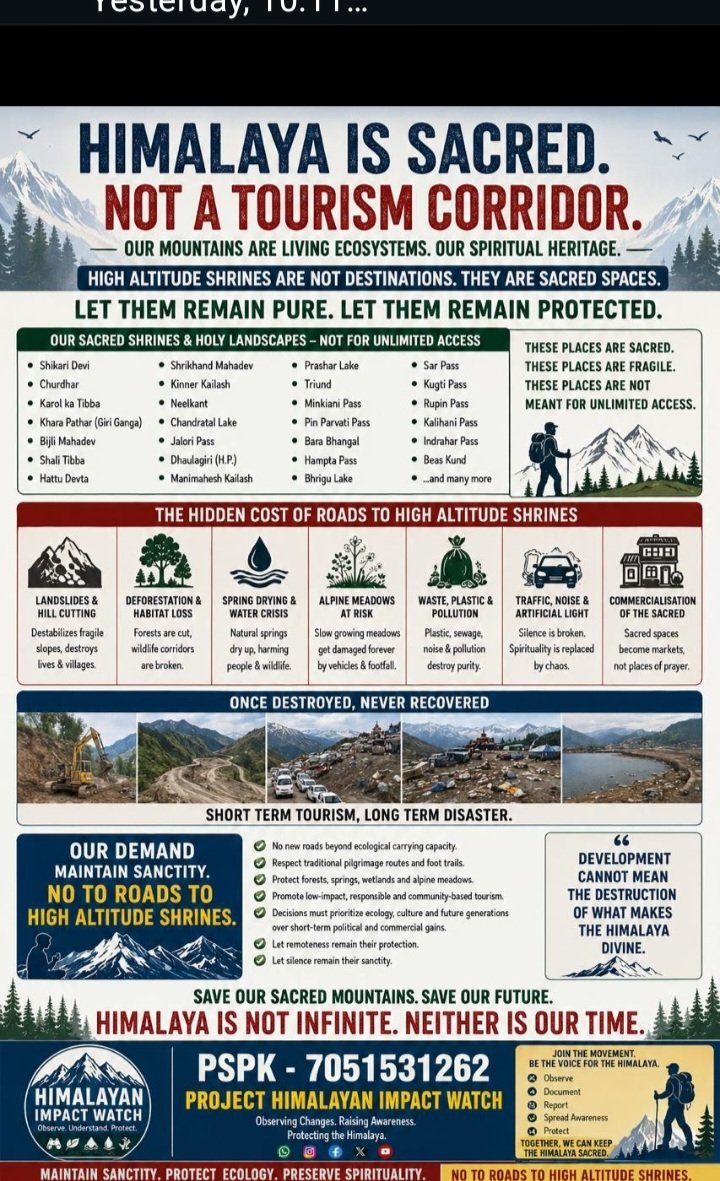
Environmentalists warn of disaster that has become a new normal. NGOs campaign against dams and over-tourism and trash and climate change.
But geopolitics and economics are the true drivers here for both India and China in the high moutintains. The churn is unstoppable.
The message from RANSAMWAD 2025 is blunt. India is preparing for war and to have peace in the highest mountains.
But India is also talking trade, trust, and ties across the same frontier.
The Himalayan states have become hotspots. The mountains are being remade by geopolitics. The Himalayas will never be the same again.
#HimalayanGeopolitics #IndiaChina #FutureWarfare #IndoRussia #StrategicChurning
RESPONSES:
Excellent presentation. The fury of nature and the resultant disaster looms large before our eyes. Never let it be forgot that the soul of India is the Himalayas.
-Maj Vijay Singh Mankotia(Analyst and War Veteran and Senior Leader)