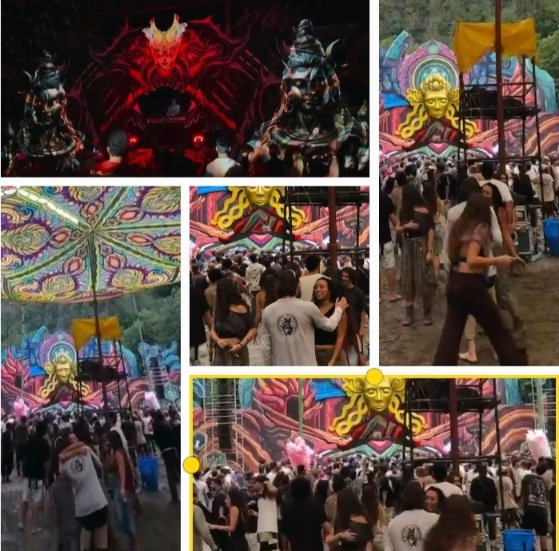
Blasting Beats, Sleepless Forests: Has the Parvati Valley Fallen Back Into the Grip of Counter-Culture Raves? Lord Shiva Cutout at Rave raise ire of the worshippers.
KASOL /KULLU June 8: The deafening thump of electronic music echoed through the forests of the Parvati Valley long after midnight as a controversial rave gathering near Grahan village turned one of Himachal Pradesh's most serene green valley into what critics describe as a "parallel kingdom" where nature, local culture and official regulations appear to have taken a back seat.
According to locals who filmed the event at 3 am today the revellors were semi nude as darkness advanced presenting all that is synonymous with the Hippie culture, with crass music ruining the solitude of the valley.
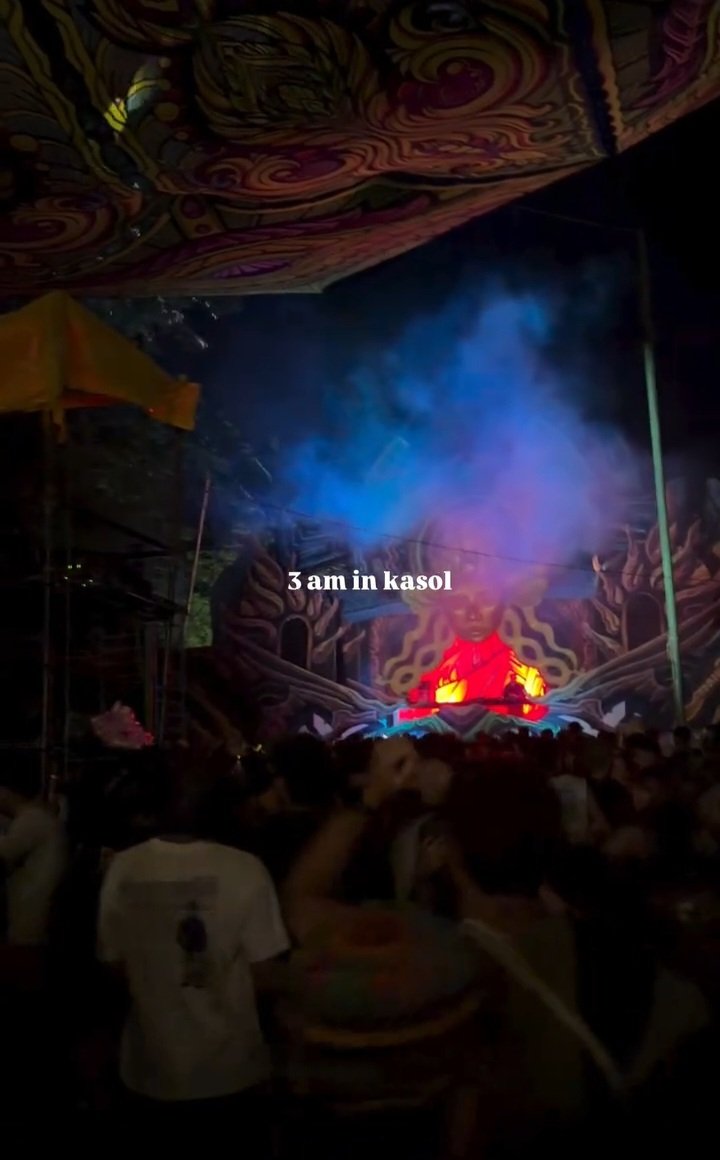
What many locals describe as particularly disturbing is the reported use of large cut-out images and iconography of Lord Shiva at the festival venue.
Residents say the imagery of Shiva—revered across the Himalayas as the embodiment of meditation, peace, renunciation, spirituality and harmony with nature—has been juxtaposed against an all-night rave environment marked by thundering music, psychedelic themes and commercial partying.
"The Parvati Valley derives much of its cultural identity from the legends of Shiva and Parvati. Using sacred imagery as a backdrop for a rave festival is deeply offensive to many local people," said a resident of the valley.
Several villagers termed it "blasphemous" and accused the organisers of appropriating Himalayan spiritual symbols while disregarding the values of silence, contemplation and reverence that these symbols represent.
Located nearly 5 to 8 kilometres from Kasol and surrounded by dense forests, mountain streams and trekking routes frequented by nature lovers heading towards Kheerganga, Tosh, Pulga, Kulga, Man Talai and Chandrakhani Pass, the Grahan valley has traditionally been known for its silence, solitude and pristine wilderness.
This weekend, however, the stillness of the valley was shattered by a noisy sound systems, illuminated stages and an influx of party-goers attending a rave event allegedly organised by foreign and local coordinators.
Locals and trekkers camping in the valley say the atmosphere was unlike anything associated with responsible mountain tourism.
"What we witnessed was not eco-tourism. People come here for peace, forests and spirituality. Instead, the entire valley reverberated with music till late in the night," said a trekker who was returning from Grahan.
Another visitor camping near the valley described the experience as "an assault on the senses in the middle of a forest ecosystem."
The controversy has reignited concerns over the return of the rave culture that once earned parts of the Parvati Valley an international reputation for narcotics, unregulated parties and counter-culture tourism.
Residents point out that authorities had imposed restrictions on such gatherings years ago following repeated concerns about drug abuse, environmental degradation and law-and-order issues. The latest event has therefore raised uncomfortable questions about enforcement and accountability.
"How can such a large gathering with elaborate stages, lighting, sound equipment and private security arrangements take place without the knowledge of authorities?" asked a local resident.
Photographs and videos circulating among residents show large festival structures and themed stages reportedly carrying names associated with psychedelic and alternative culture.
The visuals have triggered criticism from local communities who fear that the valley's identity is once again being overshadowed by a tourism model built around all-night parties rather than nature and culture.
Many villagers argue that while local communities struggle to obtain permissions for roads, small infrastructure projects and livelihood activities, large commercial events appear capable of operating in environmentally sensitive locations with little scrutiny.
Environmentalists have also questioned the impact of high-decibel music on wildlife and fragile mountain ecosystems.
"The Parvati Valley is not just a tourism destination. It is an ecological corridor, a cultural landscape and part of the spiritual heritage of Himachal Pradesh. Such activities raise serious questions about carrying capacity and environmental governance," said a conservation volunteer monitoring tourism pressures in the region.
The silence of official agencies has further fuelled criticism. Residents and activists are demanding answers from the district administration, police authorities and elected representatives regarding permissions, environmental safeguards and monitoring mechanisms.
Questions are also being raised about whether the authorities have conducted inspections of the venue and whether norms relating to noise pollution, waste management, public safety and forest protection are being enforced.
For many in the valley, the issue is larger than a single rave party.
"It is a battle over the future of the Parvati Valley," said a local nature guide. "People travel from across the world to experience the forests, rivers, mountains and culture of this region. If commercial rave tourism becomes the dominant identity of the valley again, it will destroy the very qualities that make this place special."
As the music continues to echo through the forests around Grahan, residents say they are waiting for one crucial response: whether the administration will act, or whether the valley's fragile ecology will once again be left at the mercy of a crass hypeie tourism culture that many believed had been consigned to history.
#ParvatiValley #Kasol #Grahan #HimachalPradesh #RaveCulture #EcoTourism #Kullu #Environment