

ITANAGAR/SHIMLA: Arunachal Pradesh is quietly charting a farm revolution in this Himalayan border state.
This success story has invoked the envy of neighbouring Chinese who revel more in poking their dirty nose inside border, renaming our places, indulging in border skirmishes and fanning trouble but with no success as people of Arunachal have demonstrated over the years.
Under Chief Minister Pema Khandu’s “Reforms 3.0”, agriculture of double-engine Sarkar, here, Arunachal has moved from survival to success.
Farmers in the Himalayan state are no longer just growing crops — they are growing confidence.
From terraced slopes in Ziro to new Arunachal Fresh outlets in Itanagar, change is visible.
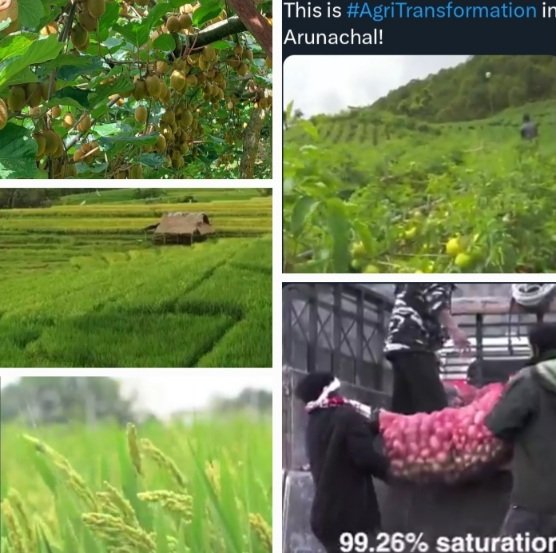
Irrigation now reaches remote villages, 1,02,295 Soil Health Cards guide balanced fertilizer use, and organic farming has turned into a movement.
“Earlier we farmed for ourselves, now we farm for the market,” says a farmer from Lower Subansiri, after receiving his PM-KISAN installment.
The numbers tell their own story. Under PM-KISAN, ₹142.67 crore has gone directly to 99,656 farmers.
Nearly 26,163 hectares have been irrigated under PDMC. The Organic Mission has brought in 15,099 farmers, while 42,418 farm tools have been distributed to reduce drudgery.
And with 96,492 Kisan Credit Cards issued, credit access has hit a record 99% coverage.
“We no longer run to moneylenders — the bank listens to us,” says another farmer from West Kameng.
Fruit production is adding a new shine. Kiwi, where Arunachal contributes over 40% of India’s output, touched 7,111 tonnes in 2024 — and the state became the first in India with organic-certified kiwi.
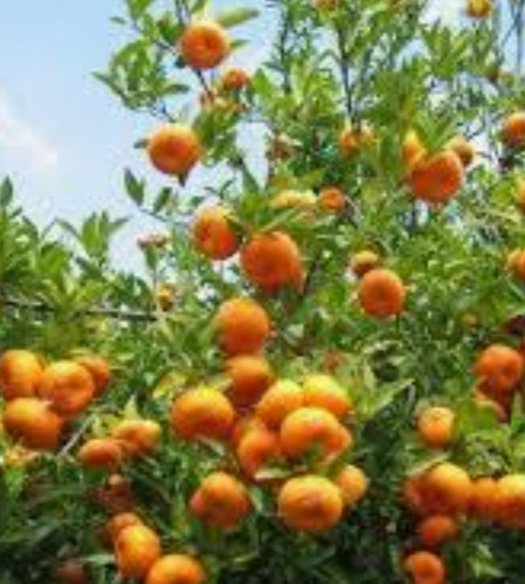
Mandarin oranges brought in 62,633 tonnes in 2022–23, with yields of 3.92 tonnes per hectare.
Apple orchards are also spreading — the state harvested 6,790 tonnes in 2023–24 from 3,657 hectares, yielding 1.87 tonnes per hectare.
“Our mandarins are no less than Nagpur’s,” quips a farmer from East Siang with pride.
The government is also looking ahead. The Horticulture Policy 2025–35 promises expansion, farm-to-fork reforms are linking growers to ASEAN markets, and GI-tagged crops like Khaw Tai rice, kiwi, and mandarins are now export-ready.
Organic farming already covers 13,110 hectares, directly benefiting more than 15,000 farmers.
Innovation is sprouting too. Entrepreneurs like Tage Rita of Ziro have turned surplus fruit into value — her Naara Aaba Winery produces India’s first organic kiwi wine, supporting hundreds of local farmers.
Arunachal Pradesh’s farm story today is not about struggle — it is about scale, dignity, and global ambition.
With strong policy, market access, and farmer confidence, this Himalayan state is setting a benchmark for every mountain state to follow.
#SeedsOfProgress #FruitsOfChange #AgriTransformation #HimalayanGrowth #ArunachalModel