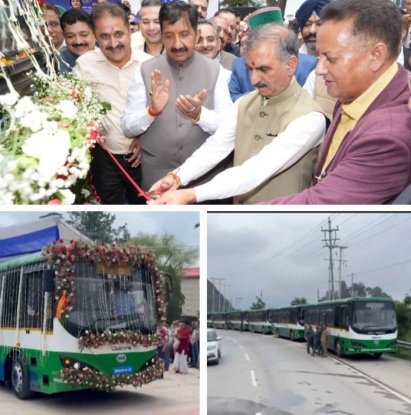
SHIMLA, JULY 30: The Himachal Road Transport Corporation (HRTC) on Thursday inducted 297 new electric buses into its fleet, taking the total number of electric buses in the state-run transport corporation to 507.
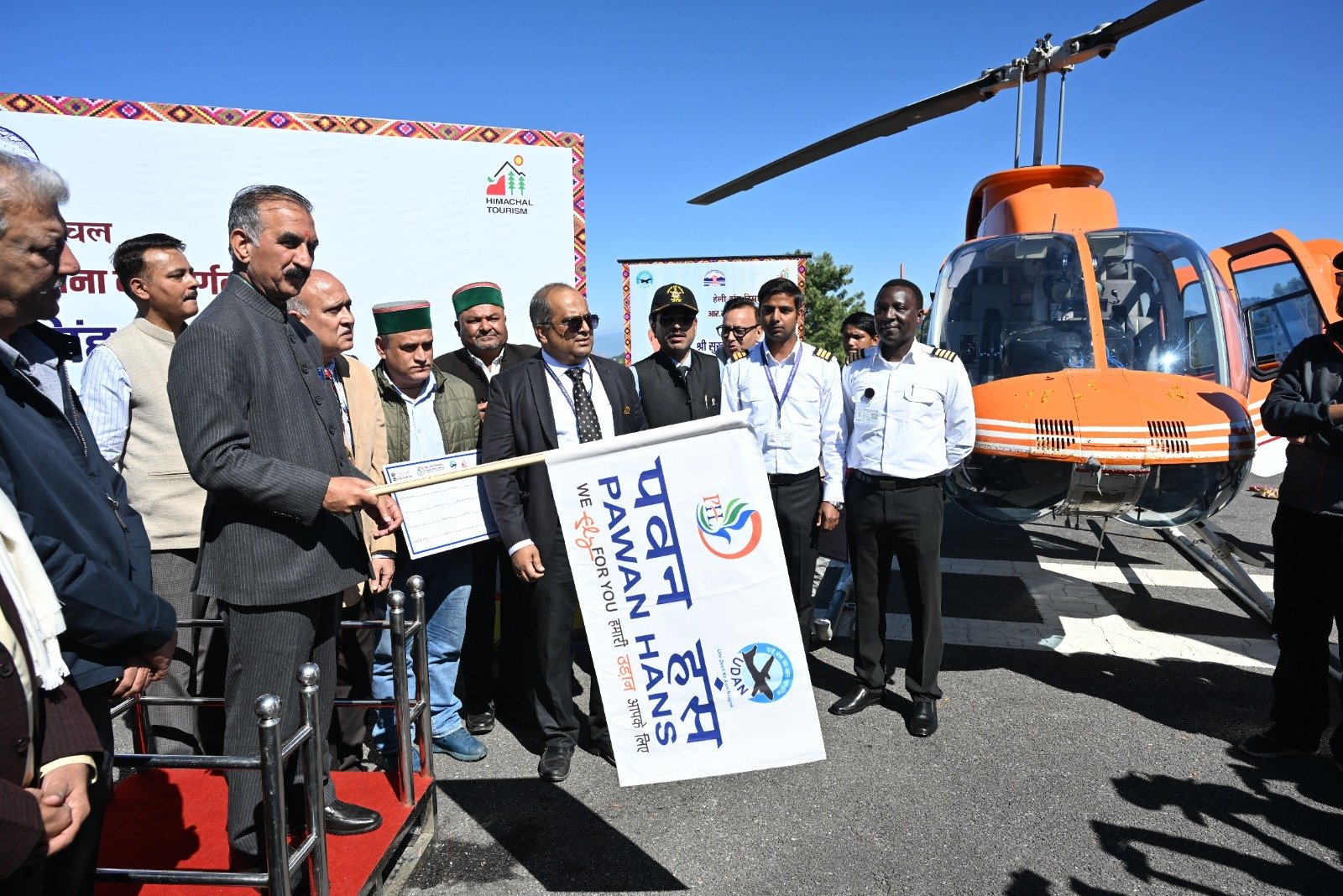
The fleet was flagged off at Kyarighat in Solan district by Chief Minister Sukhvinder Singh Sukhu and Deputy Chief Minister Mukesh Agnihotri, who described the move as a major step towards modernising public transport and making HRTC financially sustainable.
Announcing an ambitious roadmap, Agnihotri said the government plans to procure 1,000 electric buses in the coming years.
He also launched the HimBus Plus Card, a unified smart travel card priced at an annual subscription fee of Rs 365, which will integrate various HRTC travel concessions and can also be used on the Delhi Metro and bus services in Punjab and Haryana.
The Deputy Chief Minister said the newly inducted buses have been specially designed for Himachal's mountainous terrain.
He also highlighted measures taken for HRTC employees, including restoration of the Old Pension Scheme for over 9,000 employees, regularisation of contractual staff, fresh recruitments and clearance of pending financial dues.
While the induction of new buses has been welcomed, a larger question is being raised by commuters across the state: Will the new fleet be distributed equitably, or will some regions continue to be ignored? Or Will he nurse Haroli, Nadaun and Dehra only?
Among the worst-hit areas is Chopal subdivision in Shimla district, where passengers say they continue to travel in decades-old buses that suffer frequent mechanical failures.
Daily breakdowns have become routine, leaving commuters stranded on remote roads and causing repeated delays to students, office-goers, patients and apple growers during the peak horticulture season.
Residents allege that many buses operating on Chopal routes have long outlived their service life and require replacement rather than repeated repairs.
They argue that introducing electric buses in selected regions will have little meaning unless ageing "khatara" buses are phased out from neglected rural routes.
The announcement has also triggered political and public debate over whether the allocation of the new fleet will be balanced across all districts.
Since Mukesh Agnihotri represents Haroli in Una district, commuters from other regions are asking whether backward and remote subdivisions such as Chopal, Dodra-Kwar, Pangi and other difficult terrains will receive their fair share of modern buses.
Many passengers say HRTC should prepare a transparent district-wise deployment plan based on the condition and age of existing buses rather than political considerations.
The government maintains that electric buses are being introduced to improve passenger comfort, reduce operational costs and promote environmentally sustainable transport.
However, for thousands of daily commuters travelling on dilapidated buses in remote Himachal, the real test of the new policy will be whether the oldest and most unreliable vehicles are replaced first.
As the state celebrates the induction of 297 electric buses, the question echoing from neglected rural routes is simple: Is Deputy Chief Minister Mukesh Agnihotri listening to the commuters who continue to endure daily breakdowns, or will the benefits of HRTC's modernisation remain concentrated in a few favoured regions?