
BREAKING NEWS | India Strikes Back with 'Operation Sindoor' After Pahalgam Terror Carnage
New Delhi, May 7:
India has launched a major military response to the recent Pahalgam terror attack by carrying out precision strikes deep inside Pakistan and Pakistan-Occupied Kashmir (PoK).
In the early hours of Wednesday, Indian armed forces executed ‘Operation Sindoor’, targeting nine terror launchpads believed to be operated by Jaish-e-Mohammed (JeM) and Lashkar-e-Taiba (LeT).
This comes just two weeks after a deadly terror ambush in Pahalgam on April 22, where 26 lives were lost — 25 Indian citizens and one Nepali tourist. The brazen attack had shaken the nation and sparked nationwide outrage.
What We Know So Far:
Under Operation Sindoor, the Indian Armed Forces executed precision strikes on nine terrorist infrastructure sites across Pakistan and Pakistan-occupied Kashmir (PoK) in retaliation for the April 22 Pahalgam attack that claimed 26 civilian lives.
🎯 List of Terror Camps Targeted
-
Markaz Subhan Allah, Bahawalpur – Headquarters of Jaish-e-Mohammed (JeM), known for orchestrating major attacks including the Pulwama bombing.
-
Markaz Taiba, Muridke – Lashkar-e-Taiba’s (LeT) main base, linked to the 26/11 Mumbai attacks.
-
Syedna Bilal Camp, Muzaffarabad – A key training facility for LeT operatives.
-
Gulpur Camp, PoK – Used for militant infiltration and logistics.
-
Bhimber Camp, PoK – Associated with Hizbul Mujahideen activities.
-
Chak Amru Camp, Punjab – Known for training suicide bombers.
-
Bagh Camp, PoK – A launchpad for cross-border operations.
-
Kotli Camp, PoK – A hub for radical indoctrination and tactical training.
-
Sialkot Camp, Punjab – A logistical base for arms and ammunition supply.
These sites were selected based on intelligence inputs indicating their involvement in planning and executing terrorist activities against India. The operation aimed to dismantle the infrastructure supporting groups like JeM, LeT, and Hizbul Mujahideen.
The Indian Air Force utilized Rafale fighter jets equipped with SCALP cruise missiles and HAMMER precision-guided munitions to carry out the strikes without crossing into Pakistani airspace.
Pakistan reported civilian casualties and claimed to have shot down several Indian jets, though India has not confirmed these losses.
International reactions have been mixed, with calls for restraint from global leaders to prevent further escalation between the two nuclear-armed neighbors.
The operation underscores India's resolve to counter terrorism and protect its citizens from cross-border threats.
Indian jets and drones were deployed for the overnight operation, which reportedly struck terror infrastructure in Bahawalpur, Muzaffarabad, and other border sectors.
High-value targets, including a key JeM commander believed to be behind the Pahalgam attack, were neutralized, according to military sources.
Surveillance footage and satellite imagery were reportedly used to confirm hits on the camps.
There has been no official reaction yet from the Pakistan military or government.
Official Confirmation & Political Reactions: Government sources said the decision for the strikes was taken after conclusive intelligence proved the camps were gearing up for another series of attacks.
Union Home Minister Amit Shah posted a cryptic message on X : “Every drop of blood spilled will be avenged. This is New India.”
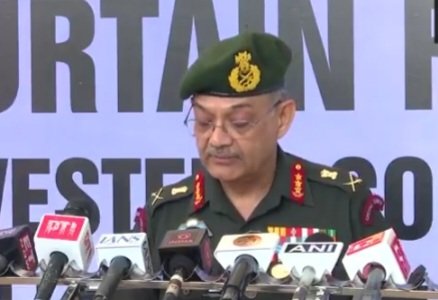
Meanwhile, Defence Minister Rajnath Singh held a high-level meeting with the armed forces and NSA Ajit Doval following the operation.
Why 'Sindoor'?
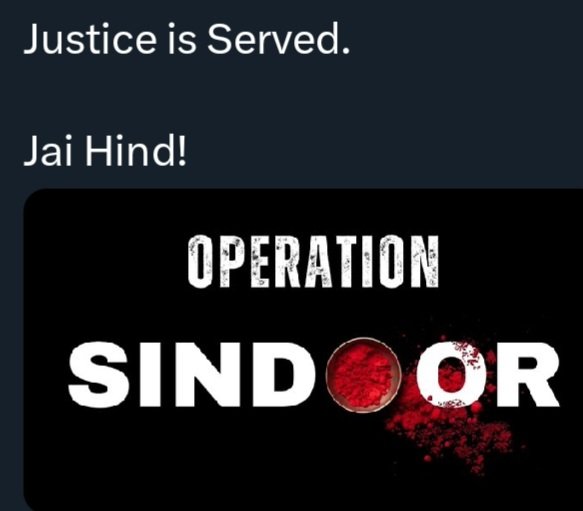
The operation's name—‘Sindoor’—symbolizes a red mark of sacrifice and valor, a tribute to the male civilians and soldiers lost in terror attacks. It reflects India's resolve to hit back with precision and purpose, say insiders.
Nation on Alert As a precautionary measure, all border forces remain on high alert. Major cities, airports, and railway stations are being monitored closely for any retaliatory actions.
This is one of the largest cross-border military actions since the Balakot airstrikes of 2019.