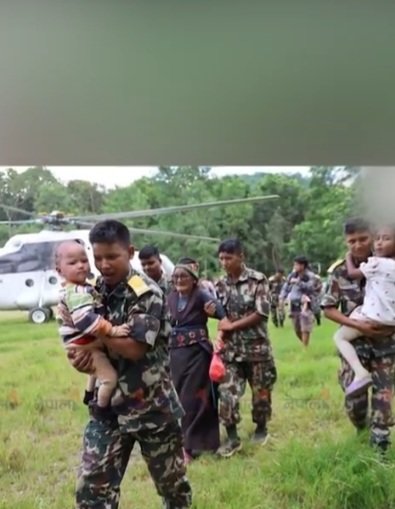
Kathmandu: The Nepal flash floods have left an estimated 17,000 children in urgent need of humanitarian assistance, with the disaster destroying not only homes and infrastructure but also the schools, communities and support systems on which thousands of children depended.
UNICEF said the August 26 floods across Rasuwa, Nuwakot and Dhading have disrupted the lives of children on a massive scale.
At least 10,000 school-age children require urgent support to continue their education, including temporary learning centres, replacement educational materials and psychosocial assistance for children and teachers.
Eighteen schools have been destroyed and another 20 damaged, according to UNICEF-linked reporting.
For these children, the catastrophe is far bigger than the loss of a classroom.
Homes have been swept away. Families have been separated. Roads and bridges have disappeared, health facilities have been damaged and basic water and sanitation systems have been disrupted.
Children who survived the torrents now face the secondary dangers that follow a major disaster — disease, malnutrition, psychological trauma, exploitation and the loss of access to education.
UNICEF says it is deploying emergency supplies, medical support, hygiene kits, newborn kits, therapeutic food and psychosocial teams while working with the Nepalese government and humanitarian partners to identify and reunite children separated from their families. Emergency cash assistance is also being planned for affected households.
The UN children's agency has appealed for US$17.2 million to sustain its emergency response and early recovery programme. UNICEF has warned that without swift and flexible funding, its ability to provide essential services to vulnerable children will be severely constrained.
But the appeal also comes at a time when humanitarian organisations face growing public scrutiny over how donations are administered.
Questions are frequently raised in disaster responses worldwide about administrative expenditure, intermediary costs and how much of donated money ultimately reaches victims.
Such concerns should be addressed through transparent, independently verifiable accounts rather than allowing suspicion to undermine legitimate humanitarian assistance.
For Nepal's displaced children, the immediate requirement is clear: they need more than temporary shelter.
They need safe homes, functioning schools, healthcare, psychological support and the restoration of the social ecosystem that was destroyed within minutes.
The challenge now is to ensure that the money raised in their name reaches them quickly, transparently and in sufficient volume to help rebuild their childhoods — not merely their shelters.