As Chitta Cases Jump 9%, Himachal Launches New Anti-Drug Campaign Amid Alarming Lapses in Enforcement
Shimla, Nov 4:
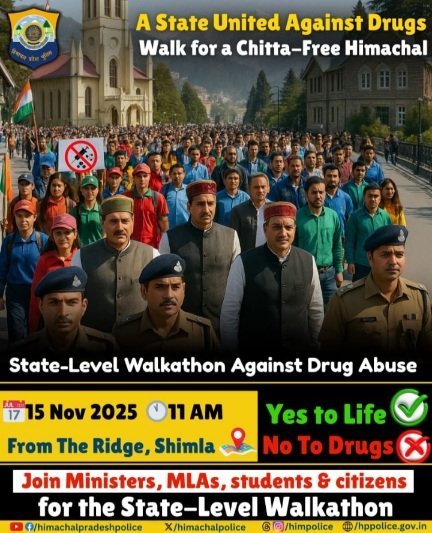
Logging a worrying nine percent rise in Chitta cases in 2024–25, the Himachal Pradesh Police has rolled out yet another massive anti-drug push — a state-level walkathon led by Chief Minister Sukhvinder Singh Sukhu and DGP Ashok Tewari.
But behind the banners and slogans, a harsher reality keeps surfacing: Chitta smugglers are running faster than the system meant to stop them, and enforcement gaps continue to widen the crisis.
The police admit that synthetic heroin, locally called Chitta, is tightening its grip across Shimla, Kangra, Una, Solan, and Mandi, the very districts repeatedly flagged as high-risk zones.
More than 1,300 NDPS cases were registered in the past year, many linked to synthetic opioids, yet the supply chain continues uninterrupted. Officers on the ground privately concede that seizures represent only a fraction of what actually slips through Himachal’s borders every day. Interstate routes from Punjab, Haryana, and Delhi remain active, taking full advantage of porous checkpoints and inconsistent vigilance.
Even though the Narcotics Control Bureau has repeatedly declared North India a hotspot for heroin and synthetic drugs, inter-state coordination remains sluggish and reactive, often swinging into action only after a major death or social media outrage.
Intelligence-sharing is slow, joint raids are rare, and drug networks regroup faster than enforcement agencies dismantle them.
The result: a thriving underground economy where a few hundred rupees can buy a packet of Chitta delivered through social media contacts with the ease of a food order.
The rising addiction among teenagers and young men is fuelled by unemployment, peer pressure, and easy access to small packets sold cheaply.
Villages close to state borders have quietly become micro-trading points, feeding a growing market that has outpaced awareness campaigns and periodic police drives.
Walkathons and school lectures have helped create visibility, but traffickers remain unfazed. Awareness may save victims — but only aggressive, coordinated enforcement can break the supply chain, something the state has yet to achieve consistently.
Additional SP (Vigilance) Narvir Singh Rathour detailed strict NDPS penalties — from one year in jail for small quantities to twenty years for commercial quantities — and highlighted asset seizures worth crores.
But cases often collapse due to weak investigations, delayed sampling, and loopholes exploited by defence lawyers. Peddlers secure bail with ease while kingpins continue to operate from the shadows, ensuring that the real masterminds remain untouched even as small carriers fill the jails.
Against this grim backdrop, the state government’s new walkathon campaign — beginning November 15 from The Ridge to Vidhan Sabha and Chaura Maidan — aims to rally public support and push for collective action. Similar events are being rolled out across districts in the coming weeks.
Yet, unless Himachal, Punjab, Haryana, Delhi and central agencies work as a single force, the crisis is unlikely to slow down.
Chitta has already claimed young lives, shattered families, and carved fear into rural and urban communities alike.
The message of the campaign — “Say No to Drugs, Yes to Life” — is powerful, but the fight needs more than slogans. It needs sharp intelligence, firm coordination, and continuous policing that hits the supply chain where it hurts the most.
#DrugFreeHimachal #ChittaAlert #StopSyntheticDrugs #YouthAtRisk